May 28: Canada Rises, China Expands, Ukraine Rearms

– 3 min read

KEY DEVELOPMENTS
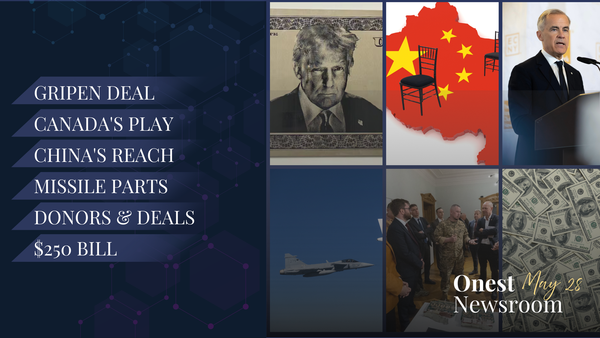
1. Ukraine is getting Gripens.
Ukraine and Sweden launched a major defense agreement that includes the potential purchase of up to 20 Gripen E/F fighter jets and the future transfer of 16 Gripen C/D aircraft. Sweden also announced its largest military aid package to Ukraine to date, including long-range weapons, ammunition, electronic warfare systems, and defense innovation support. Read more.
2. Mark Carney made Canada’s case in New York.
Speaking at the Economic Club of New York, Prime Minister Mark Carney outlined Canada’s strategy to become a leading energy, critical minerals, defense, AI, and infrastructure power. He argued that countries can no longer rely on old assumptions and must build resilience, sovereignty, and trusted partnerships. ONEST attended the event. Read more.
3. China is expanding influence while Washington leaves chairs empty.
A new Asia Society study examining perspectives from 66 countries argues that China is increasingly experienced through infrastructure, AI, education, logistics, payment systems, and digital platforms rather than traditional geopolitics alone. China now operates the world's largest diplomatic network while the United States still has more than 100 ambassadorial positions vacant. Read more.
4. Ukraine showed European ambassadors foreign parts inside Russian missiles.
Ukrainian officials displayed components recovered from Russian missiles and drones that were manufactured in countries including Germany, Switzerland, the United States, the United Kingdom, Japan, and China. Kyiv says Russia's military production continues to rely on foreign technology despite sanctions and is calling for stronger enforcement and tighter controls. Read more.
5. Donors, Deals & Defense
The Pentagon awarded a $9.7 billion Microsoft-Dell software agreement as the Trump administration expands relationships with major technology and defense firms. The award comes amid growing scrutiny of the overlap between White House donors, Trump-linked initiatives, and companies receiving major federal contracts. Read more.
6. Trump’s proposed $250 bill faces a legal obstacle.
Administration officials have reportedly explored designs for a $250 bill featuring Donald Trump. Current U.S. law prohibits living individuals from appearing on American currency, meaning Congress would first have to change the law before such a note could be issued. Read more.
7. Canada launched consultations on protecting Indigenous and regional products.
Ottawa opened a national consultation on expanding geographical indication protections beyond food and beverages to include traditional crafts and industrial products. The initiative could strengthen protection for Indigenous knowledge, cultural expressions, and place-based products while creating new export opportunities.
8. Canada and China are reopening high-level dialogue.
Chinese Foreign Minister Wang Yi arrives in Ottawa for the first visit by a Chinese foreign minister in roughly a decade. Prime Minister Mark Carney is expected to meet Wang as Canada explores how to diversify partnerships, manage strategic competition, and reduce dependence on any single market.
Today’s ONEST Newsroom is also available as a video briefing.
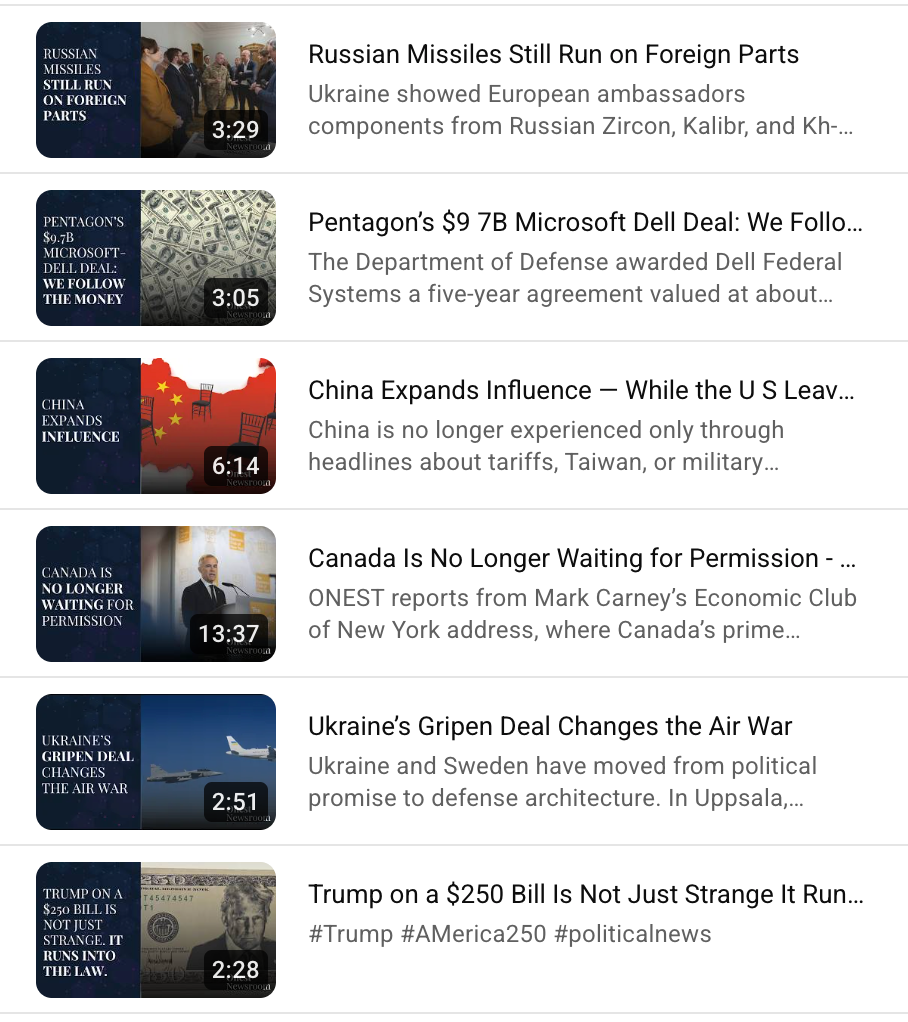
You can watch the breakdown of all stories right HERE.
The common thread today is strategic positioning.
Ukraine is rebuilding its air force. Canada is redefining its role in the global economy. China is embedding influence through infrastructure and diplomacy. The United States is pouring billions into the digital architecture of future warfare.
Behind each story is the same question:
Who will shape the systems others depend on?
The next phase of global competition is no longer only about territory or military power. It is increasingly about supply chains, technology, information, energy, infrastructure, and trust.
Countries are not simply preparing for the next crisis.
They are deciding where they want to stand when it arrives.