Daily Brief: US–Iran War Expands as Ukraine’s Government Shake-Up Draws Protests

– 4 min read

The United States expanded its strikes deeper into Iran on Thursday, Ukraine installed a new prime minister amid protests over the dismissal of its defense minister, and Canada committed nearly C$2 billion to expanding its domestically produced armored vehicle fleet.
Elsewhere, more than 500 people are feared dead following two reported shipwrecks off Myanmar, while the World Health Organization warned that the Ebola outbreak in the Democratic Republic of the Congo is outpacing the international response.
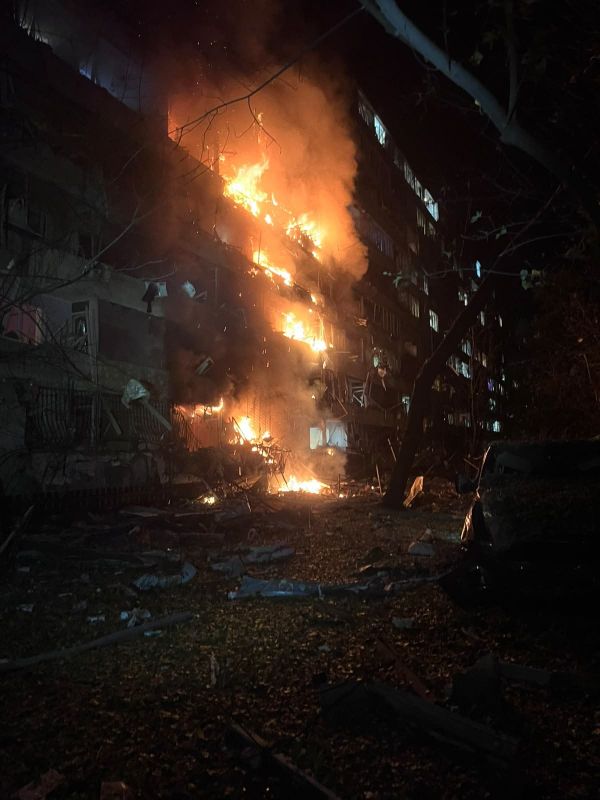
US forces struck targets farther north in Iran and disabled a vessel Washington accused of attempting to breach its renewed naval blockade. Iran responded with missile and drone attacks against Bahrain and Kuwait and warned that further attacks on Iranian infrastructure could trigger strikes across the Gulf.
The escalation comes days after the breakdown of an interim agreement intended to ease the conflict. Iran has described control of the Strait of Hormuz as a “red line,” while some shipping companies are reportedly declining US military-guided passage through the waterway because of the continuing danger.
The operational contradiction is becoming harder to ignore: Washington says its blockade is intended to restore freedom of navigation, but the fighting surrounding its enforcement is making commercial transit more dangerous. The conflict is also spreading geographically while its political objective remains unclear.
Senate Democrats, meanwhile, blocked advancement of the annual $1 trillion defense bill in protest against the war. The official US military death toll has risen to 14.
Ukraine’s parliament approved Naftogaz chief Serhii Koretskyi as prime minister, giving the energy executive 289 votes and placing defense, economic stability and EU integration at the center of his mandate. He becomes Ukraine’s third prime minister since Russia launched its full scale invasion.
The appointment was overshadowed by public anger over President Volodymyr Zelenskyy’s dismissal of Defense Minister Mykhailo Fedorov after six months in office. Thousands reportedly demonstrated across Ukraine in a rare wartime protest.
Fedorov was widely credited with accelerating drone production and the technological transformation of Ukraine’s military. His removal followed a deepening dispute with Commander-in-Chief Oleksandr Syrskyi, whom Fedorov accused of obstructing reforms and relying on outdated military practices. Major General Yevhenii Khmara, associated with Ukraine’s long-range operations, has been named acting defense minister.
The dispute is larger than a personnel change. It concerns which model of warfare Ukraine will prioritize: the centralized military establishment represented by Syrskyi or the decentralized, technology-driven approach associated with Fedorov. ONEST will examine the consequences once the defense leadership is formally settled.
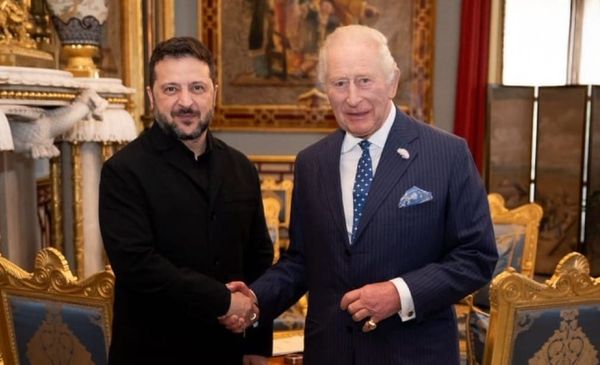
Keir Starmer traveled to Kyiv during his final week as British prime minister, pledging that the United Kingdom’s support for Ukraine would continue after his departure.
Starmer announced €300 million in British support for the joint UK-Swedish delivery of 16 advanced aircraft to Ukraine. Since July 2024, Britain says it has delivered more than 250,000 drones, approximately 8,000 missiles and 350,000 artillery rounds.
Britain and Germany have also assumed leadership of the Ukraine Defense Contact Group from the United States, while London helped establish the Coalition of the Willing and recently joined the EU’s €90 billion Ukraine Support Loan.
These structures are increasingly designed to survive changes in individual governments — a necessity for security commitments intended to last far longer than any leader’s term in office.
Get briefs like this delivered daily — free.
Prime Minister Mark Carney announced a nearly C$2 billion, four-year partnership with General Dynamics Land Systems–Canada to produce 190 additional Armored Combat Support Vehicles.
The order will expand Canada’s fleet from 360 to 550 vehicles. Ottawa says the program will create or sustain more than 6,000 jobs annually over eight years and involve more than 600 Canadian suppliers across 100 communities.
General Dynamics becomes the first company selected under Canada’s new Strategic Partnership Framework. Participating companies commit to domestic research, supply chains and employment; the federal government serves as an anchor customer and helps open export markets.
The announcement turns Canada’s increased defense spending into industrial policy: public procurement is being used not only to equip the armed forces, but to preserve manufacturing capacity that Canada can control during a crisis.
More than 500 people — most of them believed to be Rohingya refugees — are feared dead after two vessels reportedly capsized off Myanmar.
The boats departed Rakhine State in late June, with some passengers believed to have traveled from refugee camps in Bangladesh. One disappeared shortly after departure; the other is believed to have sunk near the Ayeyarwady coast on July 8.
Aid reductions, continuing violence and the absence of safe routes are pushing more Rohingya into dangerous maritime crossings. Nearly 900 people were reported dead or missing along the route in 2025.
Ukraine and European Partners Launch Joint Anti-Ballistic Missile Program
Washington Pulls Back — Then Calls Allied Adaptation a ‘Distraction’
US Launches Campaign to ‘Dismantle’ International Criminal Court
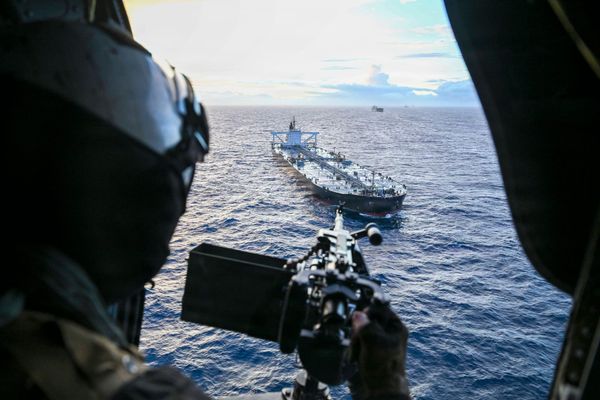
Daily Brief Cover Photo: US forces approach the sanctioned vessel MT Davina during a maritime interdiction operation in the Indian Ocean on June 4, 2026. The image is illustrative of expanding US maritime enforcement; it does not depict Thursday’s operation involving Iran. (USINDOPACOM/Courtesy)