Middle East Brief: The Hormuz Standoff Returns the Region to War

– 7 min read

The United States and Iran exchanged another round of attacks across the Gulf over the weekend, effectively dismantling the short-lived diplomatic framework that was supposed to create 60 days for negotiations.
U.S. Central Command said it completed its latest wave of strikes against Iranian coastal surveillance systems, missile and drone facilities, naval assets and other sites used to threaten commercial shipping. Iran responded by claiming attacks on U.S. military facilities across Bahrain, Kuwait, Jordan and Oman.
The immediate trigger was an Iranian attack on the GFS Galaxy, a container ship operating near Oman. A fire forced the crew to abandon the vessel, and one Indian crew member remained missing. The incident followed several previous attacks on commercial vessels in and around the strait.
The attack triggered another expansion of the U.S. military campaign against Iran.
On July 11, U.S. Central Command said American forces struck approximately 140 Iranian military targets, including missile and drone sites, naval capabilities, ammunition storage facilities, communications networks and coastal surveillance positions. Across three nights of strikes that week, CENTCOM said it hit more than 300 targets.
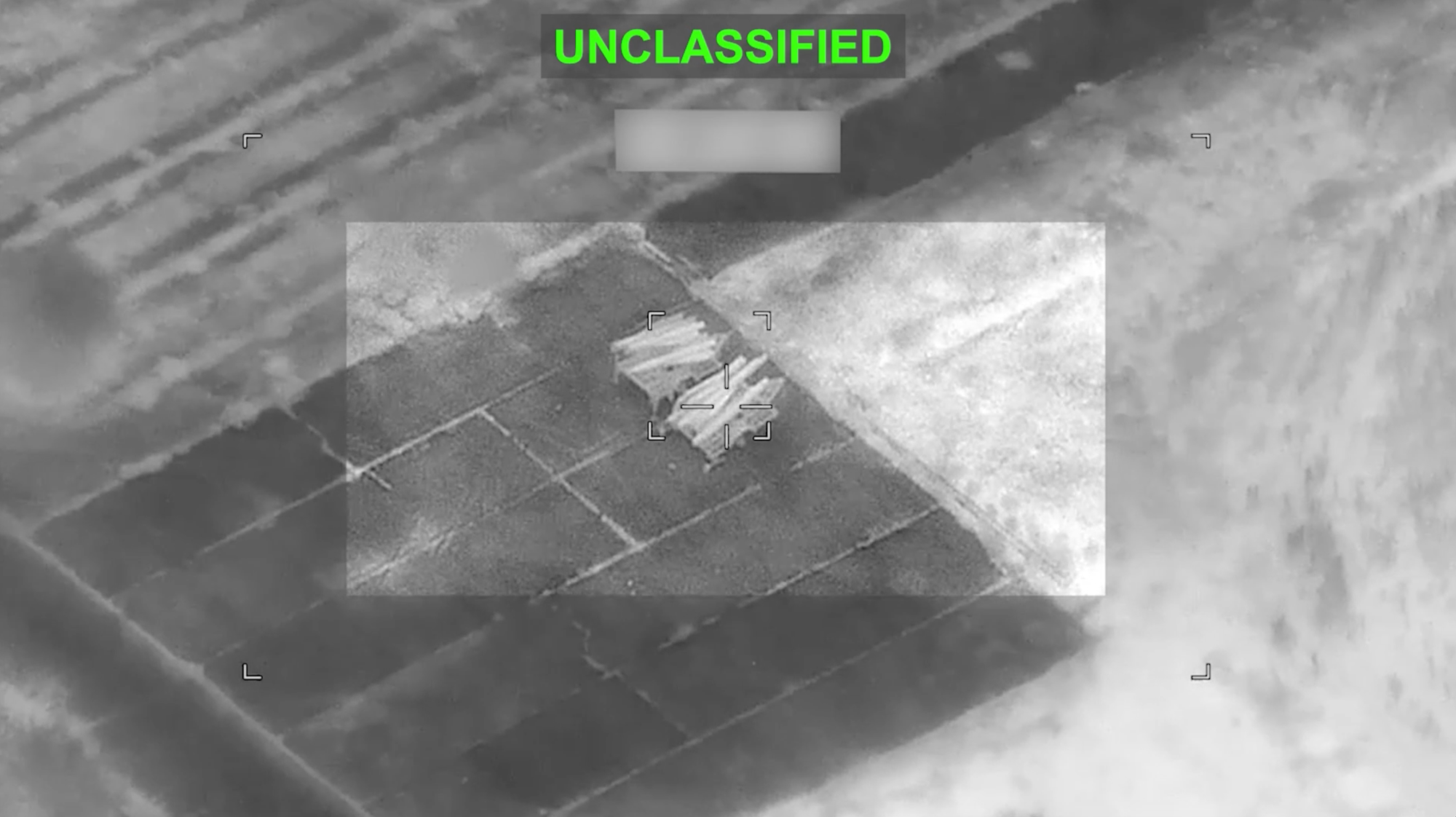
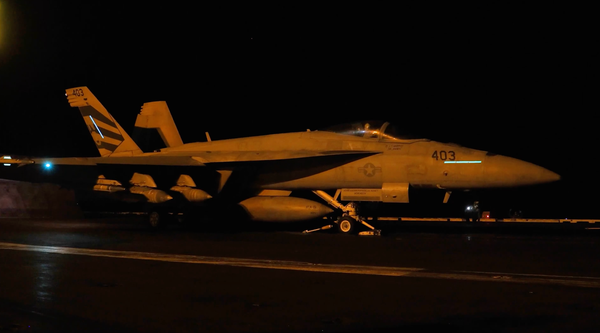
A further wave followed on July 12. CENTCOM said U.S. forces struck dozens of Iranian air-defense systems, coastal radar sites, missile and drone capabilities and small boats. The operation involved fighter aircraft, naval vessels and one-way attack aerial drones, as well as one-way attack sea drones used for the first time.
U.S. Central Command footage of strikes on Iranian military targets following attacks on commercial vessels transiting the Strait of Hormuz, taken and released July 12, 2026. Credit: U.S. Central Command / Department of Defense
CENTCOM says U.S. forces have helped facilitate the passage of more than 800 commercial vessels carrying 400 million barrels of crude oil through the Strait of Hormuz since early May.
Iran says the Strait of Hormuz is closed to vessels that have not received its authorization. Washington rejects Iran’s authority to regulate passage and says the waterway remains open under U.S. military protection.
Both claims are misleading without context.
CENTCOM says approximately 20 vessels passed through the strait during the latest 24-hour period. Commercial traffic, however, has fallen dramatically, with only six vessels reportedly making the passage on Sunday — the lowest number in five weeks. The strait may not be physically sealed, but it is no longer functioning as a normal international shipping corridor.
The International Maritime Organization has verified at least 46 attacks on international shipping around the Strait of Hormuz since the conflict began on February 28. It says approximately 20,000 seafarers, port workers and offshore personnel are now affected by the security crisis.
Markets reacted immediately. Brent crude climbed above $79 per barrel on Monday, while Gulf stock markets fell and airline shares came under pressure. The market response remains significant but controlled, suggesting traders still expect the strait to remain at least partially navigable.
Update (7/13, 11:00am ET): Hours later, President Donald Trump outlined what appears to be a broader U.S. strategy for the Strait of Hormuz. In a post on Truth Social, he declared that the waterway “will remain OPEN,” announced the reinstatement of what he described as the "Iranian blockade", and said the United States would serve as the “Guardian of the Hormuz Strait.” Trump also proposed that commercial cargo transiting the strait reimburse the United States “at the rate of 20%” for providing maritime security, although the administration has not yet explained how such a system would be calculated, collected or enforced.
Get briefs like this delivered daily — free.
Iraqi Prime Minister Ali al-Zaidi is visiting Washington on Monday, where Baghdad expects to sign several oil and gas memorandums with U.S. companies.
The agreements are designed not only to increase Iraqi production capacity but also to develop alternative export routes that would reduce Iraq’s exposure to disruptions in the Strait of Hormuz. Oil provides approximately 88 percent of Iraqi government revenue, leaving Baghdad particularly vulnerable when Gulf export routes are interrupted.
The visit will also cover military cooperation and the strengthening of Iraq’s armed forces.
That places Baghdad in an increasingly difficult position. Iraq remains economically and politically connected to Iran, while simultaneously relying on Washington for security cooperation, investment and access to Western financial systems. The Hormuz crisis is forcing Iraq to move more openly toward economic diversification away from Tehran’s regional infrastructure.
Israel will hold a national election on October 27, according to coalition chairman Ofir Katz.
It will be Israel’s first national election since the October 7, 2023 Hamas attack and the wars that followed in Gaza, Lebanon and Iran. Netanyahu’s coalition is currently projected to lose its parliamentary majority, although opposition parties have not yet demonstrated that they can assemble a governing coalition of their own.
The announcement means virtually every major decision taken by the Israeli government over the next three months — including military operations, settlement policy, hostage negotiations and relations with Washington — will also unfold inside an election campaign.
Meanwhile, Israeli fire in Gaza killed at least six Palestinians on Sunday, including a nine-year-old girl, according to local health officials.
EU foreign ministers are discussing three possible measures targeting trade with Israeli settlements in the occupied West Bank:
No decision is expected immediately. EU governments remain divided over whether such action would require unanimous approval or could be adopted by qualified majority vote.
The discussion nevertheless represents a shift. Until now, European measures have largely targeted individual violent settlers and organizations. Trade restrictions would begin addressing the economic structure supporting settlement expansion rather than only sanctioning particular people.
The debate comes days after U.S. Democratic Congressman Ro Khanna said armed settlers prevented his delegation from leaving an area near the Palestinian village of Khirbet Zanuta for more than an hour. Israeli authorities dispute Khanna’s characterization that he was detained by the military.
Syria’s new parliament met for the first time in Damascus on Sunday, 19 months after forces led by President Ahmed al-Sharaa removed Bashar al-Assad.
The chamber has 210 seats. Two-thirds of its members were selected through regional electoral colleges, while one-third were appointed directly by al-Sharaa. Women hold approximately 10 percent of the seats, and four seats remain unfilled, including three representing Druze-majority Sweida.
The parliament can propose and approve legislation and is expected eventually to participate in drafting a permanent constitution. Its immediate authority, however, remains limited under Syria’s transitional constitutional framework.
The first session is therefore institutionally important but not yet evidence of representative government. Al-Sharaa still controls the appointment of a substantial part of the chamber, while parts of the country remain outside Damascus’s effective political control.
Qatar’s former emir, Sheikh Hamad bin Khalifa Al Thani, died Sunday at the age of 74.
Sheikh Hamad ruled from 1995 until his voluntary abdication in 2013. During that period, Qatar developed its liquefied natural gas industry, established Al Jazeera, expanded its sovereign investments and built the diplomatic network that later made Doha a central mediator in conflicts across the region.
His death comes as Qatar is again attempting to mediate between Washington and Tehran — a diplomatic role made possible largely by the foreign policy architecture created during his rule.
The United States has loosened export controls on the UAE, making it easier to transfer advanced Nvidia artificial intelligence chips, selected military equipment, commercial satellites, spacecraft and certain dual-use technologies.
The UAE is now the only country outside the principal multilateral export control regimes to receive this level of preferential access.
The decision strengthens the UAE’s position as Washington’s primary advanced-technology partner in the Arab world. It also connects U.S. military cooperation, AI infrastructure, energy policy and commercial investment into a single strategic relationship.
The unresolved issue is oversight. U.S. officials argue that the arrangement will anchor Emirati technology development to American companies. Critics warn that advanced technology could still be diverted or become accessible to Chinese-linked entities.
Egypt’s current-account deficit widened to $5.1 billion in the first quarter of 2026, compared with $2.3 billion during the same period last year.
The increase reflects the pressure created by energy imports, external financing needs and wider regional instability. Egypt is also exposed to disruption in maritime trade, tourism and energy markets — precisely as Cairo is being asked to play a larger diplomatic role in talks involving Iran, Gaza and regional security.
The central question is no longer whether the Strait of Hormuz is technically “open” or “closed.”
It is whether international shipping can continue using it without navigating two competing systems of authority: Iranian authorization on one side and U.S. military protection on the other.
The 60-day U.S.–Iran framework did not resolve that question. It appears to have postponed it while leaving the most consequential disagreement — who controls passage through the strait — undefined.
Iran is trying to convert its geographic position into recognized regulatory authority. The United States is attempting to preserve freedom of navigation through force. Commercial vessels and Gulf states are left between them.
Trump’s announcement pushes that contest further. By describing the United States as the “Guardian of the Hormuz Strait” and proposing that commercial cargo reimburse Washington “at the rate of 20%,” the administration is moving beyond a temporary freedom-of-navigation mission toward an effort to organize, protect and potentially charge for access to one of the world’s most important maritime corridors. The legal basis, method of calculation and international support for such a system remain unclear.
This is also why the regional responses matter. Iraq is seeking alternative export routes. Saudi Arabia is examining greater Red Sea capacity. The UAE is deepening its strategic relationship with Washington. Qatar is trying to restore negotiations. These are not temporary emergency measures. They are early signs that regional governments are planning for the possibility that the Strait of Hormuz will remain contested even after the current round of fighting ends.
The diplomacy failed because it treated the violence as something that could be paused before the underlying structure was settled. The next agreement will have to address navigation, inspections, sanctions, Iran’s nuclear program and the regional military presence together. If Lebanon remains part of the package, Israel would also need to be a signatory — or formally bound through a linked agreement — rather than leaving Washington to make commitments on its behalf. Otherwise, Israel could once again argue that it was neither consulted nor legally bound by the arrangement.
Otherwise, every commercial ship entering the strait will remain a potential trigger for the next war.
If this kind of on-the-ground analysis is useful to you, ONEST+ members get Deep Dives, Diplomatic Notes, and more — starting at $19.99/month.