Treasury Launches Trump Accounts App as Billionaire-Backed Investment Program Goes Live

– 2 min read

The U.S. Treasury has officially launched the Trump Accounts mobile app, allowing eligible families to open and manage federally administered investment accounts for children.
According to Treasury, the app enables users to track account balances, monitor investment performance, make contributions, and access financial literacy resources. The accounts are designed to receive a one-time $1,000 federal seed contribution for eligible children, while also allowing additional contributions from parents, employers, charities, state and local governments, and private donors.
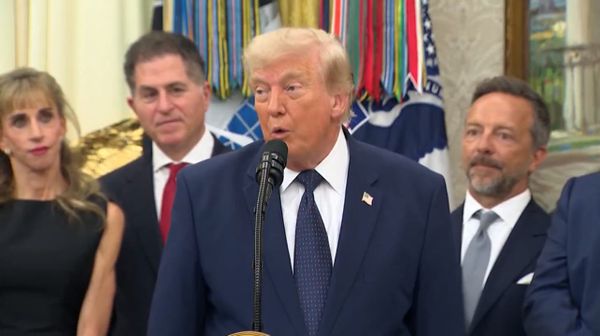
The announcement also highlighted major private support for the initiative, including Michael and Susan Dell's previously announced $6.25 billion commitment to the program.
The launch follows another significant development involving Dell. In May, Dell Federal Systems was awarded a five-year Pentagon technology contract with a ceiling value of $9.7 billion, covering Microsoft software and related services across the Department of Defense, intelligence agencies, and the Coast Guard. The department said "the agreement is intended to consolidate procurement and reduce costs".
Trump Accounts represent a new model of public-private partnership: a federally administered investment program funded not only by taxpayers, but also by some of America's wealthiest individuals and largest corporations.
That makes transparency essential.
Michael and Susan Dell announced a $6.25 billion commitment to the program. Months later, Dell Federal Systems received a Pentagon contract with a ceiling value of $9.7 billion. There is no public evidence that the two events are connected. But the sequence illustrates why oversight matters.
Many of the companies and executives supporting Trump Accounts were also major financial supporters of President Trump's election campaign. That raises a broader question extending well beyond this program: Are corporate leaders simply benefiting from policies adopted by the administration, or are their financial and political relationships giving them disproportionate influence over which policies are pursued in the first place?
Those questions deserve clear disclosure and independent oversight — not because wrongdoing has been established, but because public trust depends on understanding where philanthropy ends and political influence begins.