Editor's Note | America 250
– 4 min read

Two hundred and fifty years ago, America was founded on an idea.
Not an idea of wealth.
Not an idea of military strength.
Not even an idea of geography.
It was founded on the belief that free people could govern themselves. That power should never belong to one family or one ruler. That liberty required responsibility. That institutions would outlive individuals. That a republic would only survive if its people chose to keep it.
Those ideas rest on something we rarely discuss:
Trust.
Trust that elections matter.
Trust that institutions serve the public.
Trust that laws apply equally.
Trust that expertise has value.
Trust that people entrusted with responsibility will honor it.
Every generation redefines what that trust looks like.
Today, we live in extraordinary times. Technology develops faster than institutions can adapt. Social media rewards attention more readily than expertise. Wealth and influence have become increasingly concentrated. People with fortunes exceeding the economies of entire nations shape markets, public debate, and increasingly, public policy. Recent years have also raised difficult questions about the relationship between wealth, political influence, public institutions, and the long-term trust citizens place in them.
These are not reasons for despair.
They are reasons to reflect.
Because every generation inherits the responsibility of deciding what kind of republic it will leave behind.
I'll admit something.
This is the third time I've written this editor's note.
The first version was angry.
The second was analytical.
Neither reflected what I truly wanted to say.
Yesterday changed that.
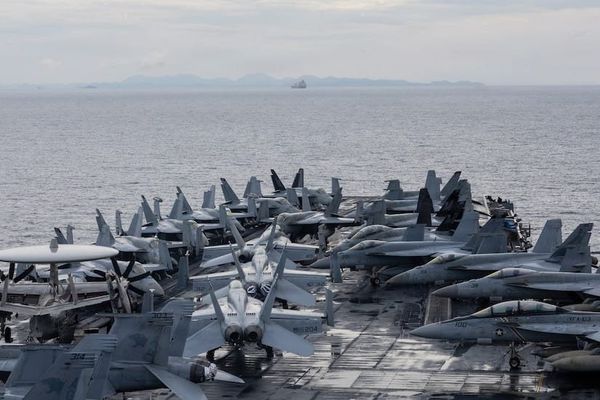
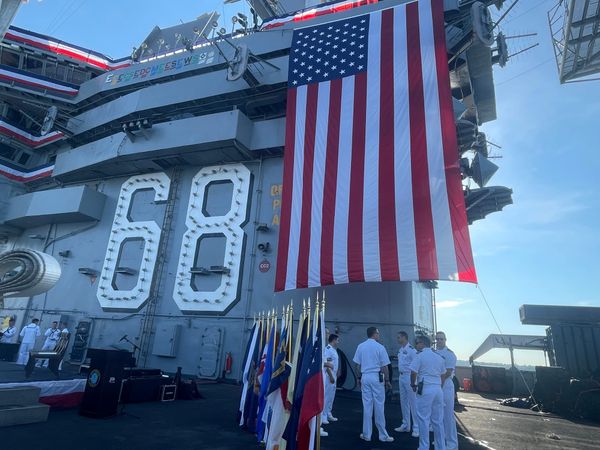
I had the privilege of spending America's 250th Independence Day aboard the USS Nimitz.
I expected to document one of the most recognizable aircraft carriers in the world.
Instead, I found myself documenting people.
Nearly 4,000 people live and work aboard that ship.
Pilots.
Mechanics.
Deck crews.
Medical staff.
Communications specialists.
Engineers.
Leaders.
Professionals whose names rarely appear in headlines despite carrying extraordinary responsibility every single day.
One by one, I asked them to describe their job without revealing their title.
They smiled.
They paused.
They laughed.
One woman described her role simply as:
"I play Tetris with big machines."
I promise you I'll remember that far longer than her official title.
Then she told me she was born in Vietnam, came to America as a child, and that her parents would never have imagined their daughter would spend eighteen years serving aboard the USS Nimitz.
Another interview ended with a helicopter pilot thanking me.
He had just spoken with another national news outlet.
Yet after our conversation he simply said,
"Thank you. This made my day."
Others spoke to me after the cameras stopped.
Some thanked me for asking questions they had never been asked before.
Some spoke about being away from home for months.
Some cried.
What stayed with me wasn't military power.
It wasn't aircraft.
It wasn't strategy.
It was a single idea that kept appearing in different forms throughout every conversation.
Trust.
Trust that someone beside you has mastered their craft.
Trust that every person will do their job with discipline.
Trust that excellence matters.
Trust earned through experience.
Walking off the ship, I realized something.
We spend enormous amounts of time discussing institutions.
We spend remarkably little time discussing the people who make those institutions work.
The same is true almost everywhere.
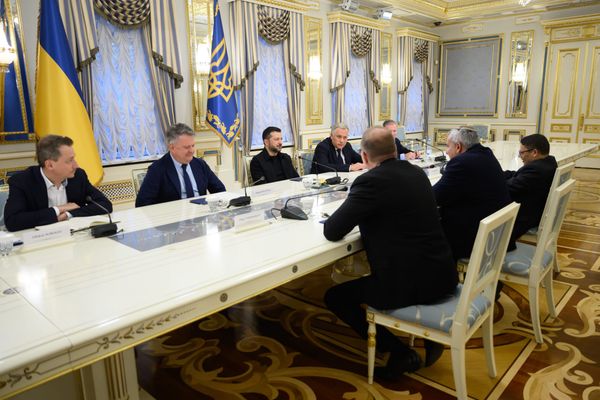
Behind every NATO summit.
Behind every United Nations meeting.
Behind every hospital.
Behind every airport.
Behind every city.
Behind every extraordinary moment...
...are ordinary people doing extraordinary work.
That realization became People Behind the Moment.
A journalism project dedicated to documenting the people whose expertise, dedication, and values quietly make our world function.
Not because they are famous.
But because they are essential.
Some will wear military uniforms.
Others will operate cranes.
Some will coordinate summits.
Others will clean streets before dawn.
Different professions.
The same purpose.
To remind us that institutions are only as strong as the people inside them.
I don't believe our greatest challenge is technology itself.
Technology is a tool.
The real question is what we choose to value.
If we celebrate popularity more than expertise...
If we reward attention more than dedication...
If we replace experience with confidence...
...we should not be surprised when future generations inherit less wisdom than we were given.
Knowledge matters.
Experience matters.
Excellence matters.
Character matters.
Truth matters.
And perhaps most importantly...
People matter.
People Behind the Moment started here, aboard the USS Nimitz — the first in a series about the people who carry our institutions, rarely asked to tell their own story. If it moved you, ONEST+ members help fund what comes next.
Benjamin Franklin was famously asked what form of government had been created.
His answer has echoed through American history ever since:
"A republic, if you can keep it."
Keeping it is not only the responsibility of presidents, judges, members of Congress, or generals.
It belongs to all of us.
By valuing truth over noise.
Expertise over performance.
Character over popularity.
And by remembering the people who quietly dedicate their lives to making our institutions work.
Let's keep it.
By learning from one another.
By listening before shouting.
By making excellence worth aspiring to again.
By making expertise something we celebrate again.
By putting the people behind the moment into the spotlight.
Yesterday was the beginning.
The first episode of People Behind the Moment, filmed aboard USS Nimitz, is now in production and will be released soon.
More stories will follow.
More professions.
More conversations.
More reasons to believe that the quiet work of dedicated people is still one of America's greatest strengths.
Spend your time watching something that inspires you rather than something that leaves you believing the world cannot be fixed.
I hope you'll join me.
Prefer to give once instead? Any amount is welcome.