America Turns 250, Russia Strikes Kyiv, and Canada Deepens Its Indo-Pacific Push

– 11 min read


Good evening.
The United States is preparing to celebrate its 250th birthday this weekend with major events across Washington, New York and cities throughout the country.
But the festivities are arriving alongside extreme heat, extensive security operations and — particularly in New York — an extraordinary concentration of major events.
Here is what you need to know.
Washington will host President Donald Trump’s main July 4 celebration, including a concert, military demonstrations and 33 flyovers throughout the afternoon, a presidential address and a fireworks display expected to last approximately 40 minutes.
The celebration comes as temperatures in Washington are forecast to approach 101°F, with high humidity and possible thunderstorms. Visitors should expect airport-style security checks, restrictions on bags and extensive closures around the National Mall.
New York’s celebrations begin on July 3, when the Times Square Ball will drop eight times — once as midnight reaches each American time zone, beginning with Guam and ending with American Samoa.
The main Times Square drop will take place at 11:59 p.m. Eastern Time, accompanied by concerts, confetti and fireworks. It will be the first time the famous ball has been used for an Independence Day celebration.
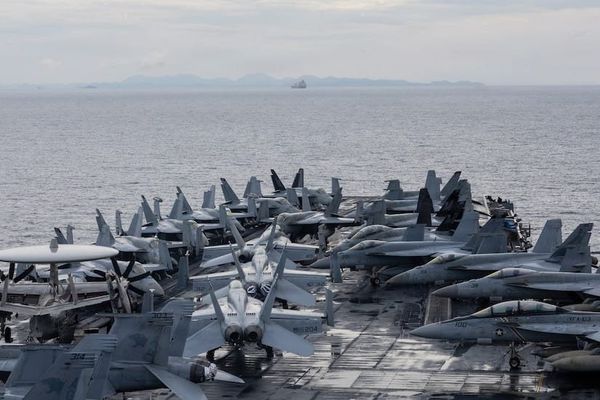
The city will also host the Sail4th tall ships flotilla, an expanded Fleet Week, military aircraft demonstrations and the 50th Macy’s Fourth of July Fireworks show.
And then there is Madison Square Garden.
Taylor Swift and Travis Kelce are widely reported to be holding their wedding celebrations at MSG on July 3, with approximately 1,000 guests expected. The venue and precise arrangements have not been officially confirmed by the couple, and some reports suggest MSG could be hosting only part of the celebration — or serving as a decoy location. Either way, authorities are preparing for additional crowds and security around Penn Station and Midtown Manhattan.
All of this means New York will be managing tall ships, military aircraft, concerts, ball drops, fireworks, celebrity crowds and extensive security restrictions during a dangerous heatwave.
If you are attending an event, bring water, wear light clothing and plan for delays. If you have pets — or simply value your hearing — prepare for prolonged aircraft and fireworks noise throughout the weekend.
Behind the celebrations is one of the most complicated public safety and logistical operations the country has undertaken in recent memory.
Stay safe and enjoy the anniversary.
Tomorrow, I will dedicate the first ONEST Editor’s Note to America’s 250th birthday — and explain exactly what I think this anniversary represents.
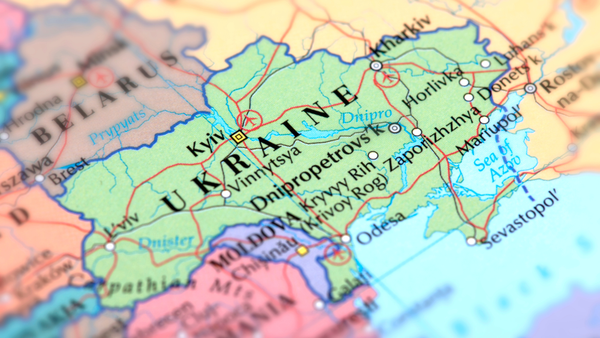
At least 22 people were reported killed after Russia launched another large scale missile and drone attack against Ukraine overnight.
Kyiv was the main target, although strikes were also recorded in the Sumy, Dnipro, Kharkiv, Kyiv, Zaporizhzhia and Cherkasy regions.
According to Ukrainian President Volodymyr Zelenskyy, Russia launched 74 missiles — almost half of them ballistic — and 496 attack drones. Ukrainian forces said they intercepted 48 missiles and 476 drones.
More than 100 residential buildings were reportedly damaged across the country.
In Kyiv alone, authorities recorded damage at more than 130 sites, including approximately 60 residential buildings, an ambulance station, a research institute, a hotel and several businesses.
A direct missile strike destroyed 64 apartments in one nine-story building in Kyiv’s Darnytskyi district. Seventeen residents were rescued, including seven pulled from beneath the rubble, while four people were killed at that location.
Zelenskyy said Ukraine’s continuing shortage of systems capable of intercepting ballistic missiles must become a central issue at the upcoming NATO Summit.
He specifically called for additional Patriot systems and renewed Ukraine’s proposal to license Patriot production in Europe or Ukraine.
“Russia has no argument left for its war other than its ballistic missiles, this kind of terror,” Zelenskyy said.
Speaking separately to CBS News, Zelenskyy said Ukrainian officials remain in contact with U.S. envoys Jared Kushner and Steve Witkoff, but urged both men to visit Ukraine and see the destruction personally.
“We need more — more than words,” he said.
Canadian Prime Minister Mark Carney announced today that Ottawa will formally advance Alberta’s proposal for a new west coast oil pipeline through the federal Major Projects Office.
The proposed pipeline would carry approximately one million barrels of oil per day to global markets, largely following the existing Trans Mountain corridor.
Ottawa and Alberta would hold equal stakes in the project, while a meaningful ownership share would be reserved for Indigenous Peoples. Trans Mountain Corporation would lead development, with Pembina Pipeline Corporation participating as a private sector investor.
The federal government said the project would fully respect the Oil Tanker Moratorium Act, although the precise export route and terminal arrangements have not yet been detailed.
The Major Projects Office will now consider whether to designate the pipeline as a project of national interest under the Building Canada Act. Such a designation would streamline federal approvals while maintaining environmental assessments and consultations with Indigenous communities, British Columbia and other affected jurisdictions.
At the same time, Canada, Alberta and the Oil Sands Alliance reached an agreement to advance the Pathways carbon-capture project.
The proposed system would capture and store emissions from oil sands operations and is expected to reduce annual emissions by approximately 16 million tons.
Together, the pipeline and carbon-capture projects are projected by the government to create roughly 175,000 jobs across Alberta, British Columbia and the rest of Canada.
Carney presented the announcement as part of a broader strategy to position Canada as a major global supplier of both conventional and lower-carbon energy while reducing its dependence on the United States as an export market.
The government estimates that the projects could unlock approximately C$200 billion in new investment.
The announcement reflects a significant political compromise: Alberta gains a path toward expanded oil exports, while Ottawa links that expansion to one of the world’s largest proposed carbon-capture projects and to Indigenous equity ownership.
The difficult questions now move to implementation — particularly consultations with Indigenous communities, opposition in British Columbia, the cost and effectiveness of the Pathways project, and whether private investors are prepared to support construction at the scale envisioned.
Canadian Prime Minister Mark Carney welcomed Philippine President Ferdinand Marcos Jr. to Vancouver today — the first official Canadian visit by a Philippine head of state in 11 years.
The two leaders agreed to elevate relations to a Canada–Philippines Strategic Partnership, covering trade, energy, defense, cybersecurity, maritime security, critical minerals, food security and migration.
A central objective is completing negotiations on a bilateral free trade agreement by the end of 2026.
Canada estimates that the agreement could increase bilateral trade by nearly 200% by 2035.
The two countries are also seeking to conclude the broader Canada–ASEAN free trade agreement this year, during the Philippines’ chairmanship of ASEAN. Ottawa estimates that agreement could add nearly C$2 billion to the Canadian economy and create approximately 14,000 jobs.
Security cooperation is also expanding.
A Status of Visiting Forces Agreement is expected to enter into force soon, allowing Canadian and Philippine forces to train and participate in joint exercises more easily.
The two governments also reaffirmed support for the 2016 South China Sea arbitration ruling, which rejected several of China’s expansive maritime claims and is legally binding on the parties.
Additional agreements announced today cover:
More than one million Canadians are of Filipino descent, making the relationship significant both strategically and domestically.
Carney was invited to attend the ASEAN Summit in Manila in November.
The European Union is offering tariff-free access for approximately 80% of Armenian exports as part of an effort to strengthen Armenia’s economic resilience and reduce its exposure to Russian pressure.
European Commission President Ursula von der Leyen announced the measures during a visit to Yerevan following Armenia’s recent elections.
Once approved by the European Parliament and EU member states, the temporary trade measures would cover almost 99% of Armenian fruit, vegetable and plant exports currently sent to Russia, as well as more than 91% of its beverage and spirits exports.
The EU will send trade experts to Armenia by mid-July to help producers meet European standards and identify alternative markets.
Brussels has also announced:
The EU said it would support transport, energy and digital infrastructure intended to reinforce the emerging peace process between Armenia and Azerbaijan and Armenia’s normalization of relations with Türkiye.
The move is also a broader geopolitical signal: Brussels is providing Armenia with an economic alternative as the country continues distancing itself from its traditional dependence on Russia.
The United States and Japan concluded their 11th Cyber Dialogue in Washington after agreeing to deepen cooperation on artificial intelligence, critical infrastructure, cloud systems and cybercrime.
The two governments committed to:
The emphasis on post-quantum cryptography reflects preparations for a future in which sufficiently advanced quantum computers could potentially break many of the encryption systems used today.
The countries also intend to coordinate more closely with private technology companies and improve interoperability between their security systems.
U.S. Secretary of State Marco Rubio spoke today with Chinese Foreign Minister Wang Yi.
According to the State Department’s brief readout, Rubio discussed building what the Trump administration described as a relationship of “strategic stability” based on fairness and reciprocity.
No specific agreements, disputes or follow-up meetings were announced.
The brevity of the statement makes the call notable largely for what it does not reveal, particularly as economic, technology and regional security tensions between Washington and Beijing remain unresolved.
China has added 20 Japanese entities to its dual-use export control list and placed another 20 on a watchlist.
The affected organizations include Mitsubishi Heavy Industries, Mitsubishi Electric and Japan’s National Institute for Defense Studies.
Chinese companies and individuals are prohibited from transferring controlled goods with potential military applications to the listed entities.
Beijing said the restrictions were intended to deter what it called Japan’s pursuit of “new militarism.”
Relations have deteriorated since Japanese Prime Minister Sanae Takaichi suggested that a Chinese attack on Taiwan could require Japan to respond in self-defense.
China supplies approximately 60% of Japan’s rare-earth imports and dominates global rare earth processing and permanent magnet production. That gives Beijing substantial economic leverage as Tokyo increases defense spending and attempts to reduce its dependence on Chinese supply chains.
China has released its 15th Five-Year Plan for developing what it calls a “new-type energy system.”
The plan aims for non-fossil sources to generate half of China’s electricity by 2030.
However, the document largely consolidates existing policies rather than substantially accelerating the country’s energy transition.
It emphasizes grid stability and energy security while preserving an important role for coal and coal-derived fuels.
China has installed renewable capacity rapidly, but its electrical grid has struggled to absorb all of the new generation. The new strategy therefore focuses heavily on storage, transmission and grid flexibility.
Because China is simultaneously the world’s largest investor in clean energy and its largest greenhouse-gas emitter, the speed of this transition will have global consequences.
Chinese technology company Meituan has open-sourced LongCat-2.0, a 1.6-trillion-parameter artificial intelligence model that it says was trained and deployed entirely on a cluster of 50,000 domestically produced chips.
If independently verified, this would mark the first time a Chinese model of that scale completed both training and inference without Nvidia hardware.
The system had reportedly already been operating under the name Owl Alpha on the OpenRouter developer platform, where it reached the top three globally by daily usage before Meituan disclosed its identity.
Meituan has not identified the domestic chip manufacturer involved.
The development does not mean U.S. semiconductor restrictions have had no effect. Those controls can still increase costs, reduce efficiency and complicate large-scale training.
But it does suggest that restrictions alone may not prevent Chinese companies from developing frontier-adjacent models, particularly as China’s domestic semiconductor ecosystem expands.
Hong Kong became the world’s second-largest initial public offering market during the first half of 2026, trailing only Nasdaq.
Fundraising on Hong Kong’s main board increased by more than 80% compared with the same period last year.
The growth was driven primarily by mainland Chinese technology companies, particularly firms already listed in mainland China that issued additional shares in Hong Kong to obtain offshore capital.
The rebound reinforces Hong Kong’s position as the principal international fundraising venue for Chinese companies facing political and regulatory uncertainty around U.S. listings.
However, many offerings were heavily supported by cornerstone investors, raising questions about how much of the recovery reflects genuine market demand.
Major investor lock-up periods expire later this year, providing an important test of whether the gains will hold.
Rescue workers in Venezuela have pulled Hernán Alberto Gil Flores alive from the rubble eight days after two devastating earthquakes struck the country.
Gil Flores, a security guard in his early forties, had been trapped beneath the collapsed Galerías Playa Grande complex in La Guaira.
Crews spent several days tunneling through unstable debris to reach him. He was conscious and reportedly in good condition when rescuers finally freed him early Thursday.
The United States says more than 310 American search-and-rescue specialists are operating in Venezuela and have rescued at least five survivors.
U.S. officials also reported that approximately 2,000 American military personnel are supporting operations by land, air and sea, while total U.S. humanitarian assistance has exceeded $300 million.
Officials said the military response is larger than the deployment following Hurricane Melissa but smaller than the American response to Haiti’s 2010 earthquake.
Search teams remained focused on finding survivors, while longer-term needs include shelter, sanitation, water supplies, power generation and the removal of debris from hundreds of collapsed or severely damaged buildings.
Canada has awarded a C$74.7 million contract for three new coastal patrol vessels for the Royal Canadian Mounted Police.
The vessels will be built by Ocean Pacific Marine in Campbell River, British Columbia, in partnership with Camarc Design.
The 24-to-25 meter aluminum vessels will use jet propulsion and are expected to enter service beginning in 2028.
They will operate along British Columbia’s approximately 26,000-kilometre coastline, including Vancouver Island and Haida Gwaii, supporting border security, law enforcement, major-event policing and engagement with coastal and Indigenous communities.
Seventy percent of the project’s funding will come from British Columbia under its Provincial Police Service Agreement.
More than 180 experts representing over 70 anti-corruption, law-enforcement and regulatory organizations met in Budapest for the first European regional conference organized by the International Association of Anti-Corruption Authorities.
Participants discussed corruption investigations, asset recovery, governance standards and methods for measuring anti-corruption performance.
Hong Kong’s Independent Commission Against Corruption also signed a memorandum of understanding with the International Anti-Corruption Academy to expand professional exchanges and training programs.
The meeting comes as European governments work to align national anti-corruption institutions, penalties and enforcement practices under new EU rules.
The United Kingdom’s Government Actuary’s Department has partnered with the Centre for Disaster Protection to strengthen the Pacific Catastrophe Risk Insurance Company.
The work includes reviewing proposed capital, governance and risk management regulations in the Cook Islands and assessing the organization’s long-term financial model.
The insurance system is intended to provide Pacific Island governments with rapid financing after cyclones, earthquakes and other disasters, allowing assistance to be released without waiting for lengthy international fundraising efforts.
As climate-related disasters increase in frequency and intensity, governments are increasingly treating pre-arranged disaster financing as part of essential national infrastructure.
That is your briefing for Thursday, July 2.
Stay safe through the heat and the holiday weekend — and look out for tomorrow’s special ONEST Editor’s Note marking America’s 250th anniversary.
ONEST is independent, ad-free and reader-supported. Reporting across countries matters because it shows us not only what governments say, but what others are already doing. If this kind of global reporting is valuable to you, please consider joining ONEST+ or supporting the ONEST Newsroom Fund. Every contribution helps keep the reporting accessible to everyone.