ONEST Brief: Iran’s Fragile Deal, China’s Expanding AI Power and Europe’s Shadow Fleet Crackdown

– 8 min read

The United States and Gulf states publicly rallied behind the preliminary agreement with Iran today, even as Tehran asserted control over shipping routes through the Strait of Hormuz and questions grew over what Washington has actually secured.
Here is what happened today.
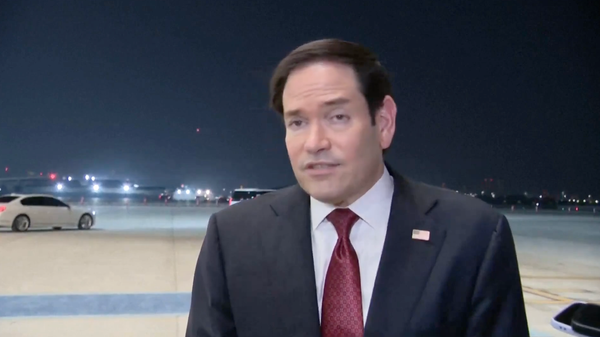
Secretary of State Marco Rubio met Gulf Cooperation Council foreign ministers in Bahrain, where the United States attempted to reassure regional partners that their security would not be sacrificed in negotiations with Iran.
The ministers welcomed the June 17 memorandum of understanding between Washington and Tehran, while emphasizing that any longer-term agreement must prevent Iran from acquiring a nuclear weapon and address its missiles, drones and support for regional armed groups.
They also declared that navigation through the Strait of Hormuz must remain free, unconditional and unrestricted. Trade and investment with Iran, they said, would be conditional and reversible.
Rubio delivered the same message more directly.
“We want a deal, but we don’t want a deal at any price.”
He said the United States would not accept Iranian tolls or fees for passage through the strait and insisted that any final arrangement must be verifiable and protect Washington’s Gulf partners.
But Tehran is already testing that position.
Iran’s Islamic Revolutionary Guard Corps said today that commercial vessels must use routes approved by Iran when passing through the Strait of Hormuz. Oman, meanwhile, has announced a temporary maritime corridor, and Qatar’s prime minister travelled to Muscat to prepare possible talks involving Iran, Iraq and Gulf states over navigation through the waterway.
The GCC also welcomed an Oman–International Maritime Organization plan to evacuate more than 11,000 seafarers stranded in the region.
When Rubio was asked about Washington’s relationship with Oman, the exchange captured the broader contradictions surrounding the negotiations.
Reporter: How is the bilateral relationship with Oman?
Rubio: Our relationship with Oman is fine.
Reporter: Just a few weeks ago Trump threatened to bomb them, so it didn’t seem to be okay then.
Rubio: I can only talk about today.
Oman and Iran recently agreed to establish a joint working group to manage shipping and transit through the Strait of Hormuz. The arrangement follows the broader U.S.–Iran memorandum, with Oman saying that future shipping arrangements through the strait will remain free of transit fees.
The preliminary accord is also encountering resistance inside President Trump’s own party.
Trump reportedly engaged in a shouting match with Republican Senator Bill Cassidy during a closed-door meeting after Cassidy argued that the administration had not explained how the agreement fulfilled the goals presented at the beginning of the Iran war.
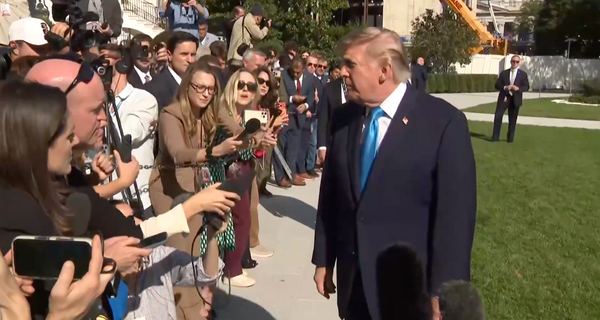
Trump later claimed that the Senate had reversed an Iran-related vote from 50–48 against to 50–47 in favor after Rand Paul and Bill Cassidy changed their positions. He thanked Republican leaders and declared that the vote “puts Iran on notice,” though his post did not explain precisely what measure had been decided.
Trump separately said "it may never be known" who was responsible for the February 28 strike on an Iranian girls’ school that killed scores of children.
Rubio was also questioned about the presence of Michael Boulos — another of President Trump’s sons-in-law — at official meetings in Kuwait despite holding no government position or security clearance, raising further questions after Jared Kushner’s prominent role in the Iran talks.
Rubio said Boulos was in the country because his brother lives there and because the two men are friends.
The United States reopened its embassy in Kuwait this week, months after operations were suspended following Iranian attacks.
The United States and GCC states welcomed continuing negotiations between Lebanon and Israel and called for the restoration of Lebanese state authority throughout the country.
Lebanese President Joseph Aoun said Beirut is waiting for Israeli approval of a pilot plan under which Israeli forces would withdraw from certain occupied positions and the Lebanese military would take control.
Israeli and Lebanese officials have confirmed that the discussions include a U.S.-backed proposal to transfer some territory currently occupied by Israel to the Lebanese Armed Forces.
The GCC statement went further, calling for the disarmament of all non-state armed groups and the restoration of the Lebanese state’s monopoly over military force.
The United States and Gulf states reaffirmed support for "President Trump’s Gaza plan" and said responsibility for the territory should eventually pass to an independent Palestinian technocratic committee.
They stated that no one would be forced to leave Gaza and that those who voluntarily depart must be allowed to return. They also linked Palestinian self-determination and statehood to Gaza’s reconstruction and reforms by the Palestinian Authority.
On Syria, the ministers promised continued assistance to restore basic services, counter terrorism and enable the voluntary return of displaced people.
U.S. Central Command also announced that an American airstrike in northwestern Syria killed a senior Islamic State leader last week.
The ministers condemned attacks by Iranian-backed groups in Iraq and supported the new Iraqi government’s efforts to bring weapons under state control.
Separately, a former Iraqi provincial governor was arrested after a senior oil official reportedly confessed in a corruption and embezzlement investigation.
The U.S. Treasury sanctioned a network accused of working with the Rwanda-backed M23 movement to smuggle minerals from eastern Democratic Republic of the Congo into Rwanda.
Washington said the trade finances M23’s operations and worsens the humanitarian crisis in eastern Congo.
The sanctions are also intended to reinforce the December 2025 U.S.-brokered Washington Accords between the DRC and Rwanda, which included plans for greater regional economic integration and more transparent critical-mineral supply chains.
Lockheed Martin received a contract worth as much as $35.35 billion to quadruple production of the THAAD missile-defense system.
At the same time, the company delivered six F-35B aircraft to the U.S. Marine Corps without their new radars because of continuing upgrade delays.
The Air Force is also considering an expanded financial-incentive arrangement with Boeing for the troubled T-7 Red Hawk training aircraft program. Internal assessments reportedly show that the plan could cost taxpayers more than $1 billion.
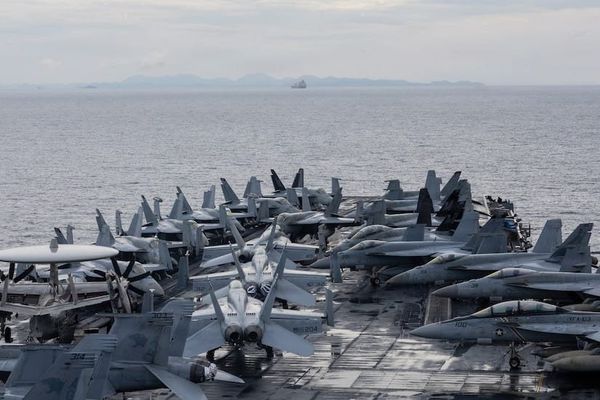
A separate think-tank report warned that existing and near-term Chinese artificial intelligence capabilities could replicate or counter aspects of how the U.S. military plans complex operations, including coordinated strike packages similar to those recently used in Iran.
The United States, Britain, France and Germany also expressed concern over Chinese Coast Guard activity near Taiwan, warning that it threatens regional stability and freedom of navigation.
At the "Summer Davos" meeting in Dalian, Chinese Premier Li Qiang rejected warnings of a new “China shock” driven by Chinese technology and industrial production.
Instead, he presented what he called “China Opportunity 2.0” — an innovation-led development model that Beijing says will create new markets and technological opportunities for foreign businesses.
China is promoting the beginning of its 2026–2030 Five-Year Plan as a period of greater economic opening, while introducing a 15-measure plan intended to attract and retain foreign investment.
The message is clear: while the United States increasingly describes Chinese technological progress as a military and economic challenge, Beijing is presenting the same capabilities as an engine of global growth.
The French Navy intercepted the tanker Deliver near Sicily over an alleged violation of maritime law.
France described the vessel as part of Russia’s shadow fleet and said the operation, following a similar British action, demonstrated Europe’s willingness to disrupt shipping used to evade sanctions and finance Russia’s war.
Britain also used an OSCE meeting to reject Russia’s demand for a new European security architecture.
Deputy Ambassador James Ford argued that Europe already has a shared framework based on sovereign equality, territorial integrity and the right of states to choose their own security arrangements.
“The principles did not fail,” he said. “Russia violated them.”
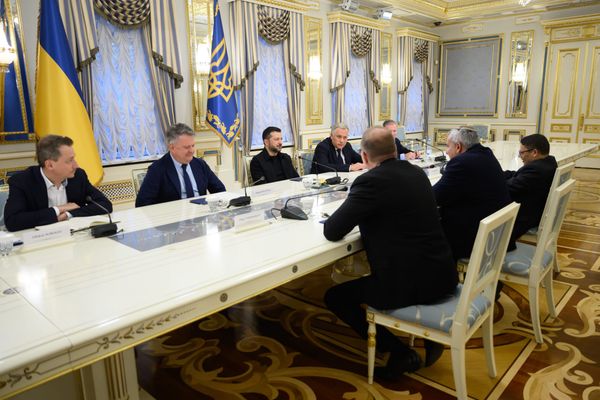
Ukrainian President Volodymyr Zelenskyy and European Commission President Ursula von der Leyen also discussed weapons supplies, civilian protection and Ukraine’s resilience against continued Russian attacks.
More than 40 countries are participating in NATO’s CWIX exercise in Poland, testing whether military communications, command systems and operational data can function together across national forces.
Thousands of engineers, military personnel and technology specialists are conducting tens of thousands of tests across cyber, air, maritime, space, medical and command systems.
The United Kingdom has doubled the number of capabilities it is contributing to this year’s exercise.
Separately, more than 2,000 personnel from 32 NATO and partner countries completed a large medical exercise in Estonia. The training covered battlefield treatment, casualty evacuation, blood resupply, medical logistics and coordination with civilian healthcare systems.
Among the technologies tested were offline-accessible medical records, NATO patient-tracking software and unmanned vehicles for evacuating casualties.
NOTE: Both CWIX and Exercise Vigorous Warrior were scheduled multinational training exercises designed to test interoperability and readiness; they were not launched in response to a new emergency or imminent military operation.
Canada signed a five-year public safety memorandum with Qatar covering cooperation against human trafficking, money laundering, cybercrime, terrorism financing and the trafficking of weapons and drugs.
The agreement is expected to deepen cooperation between the Royal Canadian Mounted Police and Qatar’s national police.
Canada also joined Australia and the United Kingdom in the new Electrify Now initiative, which promotes clean electricity, expanded grids, storage capacity and resilient clean-energy supply chains.
At international climate meetings in Brussels and London, Canada said it intends to provide $13 billion in climate-related support to developing countries over the next five years.
Ottawa is increasingly presenting climate policy not only as an environmental commitment, but as an industrial, investment and energy-security strategy.
The U.S. Supreme Court cleared the way for the Trump administration to end Temporary Protected Status for more than 350,000 Haitians and roughly 6,100 Syrians, removing protections from deportation and work authorization while legal challenges continue. The Court ruled that lower courts could not keep the terminations on hold during the litigation.
The European Commission preliminarily concluded that Amazon Web Services and Microsoft Azure should be regulated as gatekeepers under the Digital Markets Act. The Commission cited their entrenched market positions, high switching costs and growing control over the cloud infrastructure supporting artificial intelligence.
The United States announced a major disaster response following Venezuela’s earthquakes, including two urban search-and-rescue teams, military logistical support and $150 million in humanitarian assistance. United Nations teams are also assisting as rescue workers search collapsed buildings for survivors.
Eastern Libya’s authorities banned entry for citizens of Sudan, Eritrea, Ethiopia and Somalia, apparently as part of an effort to limit migration routes toward Europe.
Türkiye is preparing legislation intended to accelerate the disbandment of the PKK. President Recep Tayyip Erdoğan also said he expects to meet President Trump during next month’s NATO summit in Ankara.
The Trump administration is reportedly preparing to approve the sale of dozens of jet engines to Türkiye despite objections in Congress.
Today’s statements were designed to project unity: Washington and the Gulf states support negotiations, oppose an Iranian nuclear weapon and insist that the Strait of Hormuz must remain open.
But beneath that unity, nearly every major issue remains contested.
Washington says Iran cannot impose routes, tolls or conditions in an international waterway. Iran says ships must follow Tehran-approved routes. Oman is operating a temporary corridor. Qatar is preparing another negotiating track. More than 11,000 seafarers remain stranded.
The United States says regional partners will be protected. Gulf governments are simultaneously building their own channels with Iran and demanding guarantees covering missiles, drones, proxies and trade.
And inside Washington, members of the president’s own party are still asking what the agreement accomplished.
Rubio’s answer on Oman may therefore be the most accurate description of the entire diplomatic process:
“I can only talk about today.”
The problem is that a durable security agreement must also survive tomorrow.