ONEST Brief: Iran Talks Move Markets, Starmer Steps Down, and Europe Opens the Door to the Taliban

– 10 min read

The United States and Iran left Switzerland without a final agreement, but Washington is already presenting the talks as a diplomatic victory.
Britain is preparing for its seventh prime minister in a decade.
And Europe’s new focus on deportations has brought Taliban officials to Brussels for the first EU-hosted meeting with the group since it returned to power.
Here is what matters today.
U.S. Vice President JD Vance emerged from the Switzerland negotiations claiming that all four of Washington’s objectives had been achieved, including progress on Iran’s nuclear program, sanctions, Lebanon and navigation through the Strait of Hormuz.
That is not what Qatar and Pakistan announced.
Their joint statement described an agreement on a roadmap toward a possible final deal within another 60 days. Working groups will now address nuclear issues, sanctions and monitoring, while separate mechanisms are being established for commercial shipping through Hormuz and deconfliction in Lebanon.
In other words, the negotiations produced a structure for further negotiations.
The distinction matters because the Trump administration is already speaking as though the central disputes have been settled.
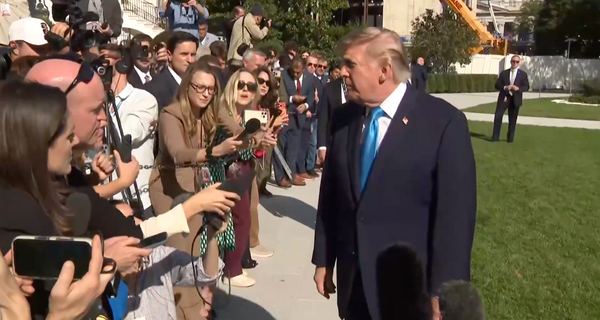
At the White House, President Donald Trump defended the possibility of renewed military action if Iran does not comply, arguing that the danger of a nuclear weapon outweighs the economic consequences of another strike.
Iran, meanwhile, said its delegation briefly ended direct engagement after Trump made threatening remarks during the talks. Iranian Parliament Speaker Mohammad Bagher Ghalibaf said the delegation refused to return to the room with the Americans and communicated through Qatari and Pakistani mediators instead.
Iranian Foreign Minister Abbas Araghchi later announced progress that included temporary permission for Iranian oil and petrochemical exports, limited access to frozen assets and a proposed reconstruction and development program.
The United States has now issued a temporary 60-day lisence allowing Iranian oil sales and associated financial, insurance and transport services.
That is a meaningful concession. It is not proof that a final nuclear or regional security agreement exists.
Vance also described a proposal developed with Jared Kushner and Qatar under which "released Iranian assets could be used to purchase American wheat, corn and soybeans".
The administration is presenting the structure as a way to feed Iranians while benefiting American farmers and preventing Tehran from freely controlling the money.
But Iran has indicated that released funds may be available for a broader range of non-sanctioned imports. And Tehran has not abandoned its support for Hezbollah or other regional partners.
The mechanism may restrict particular transactions. It does not, by itself, prevent Iran from redirecting other state resources toward military activity.
The proposed Lebanon deconfliction cell may become the earliest test of whether the Switzerland framework can survive contact with events on the ground.
Hezbollah leader Naim Qassem said Israel must leave Lebanese territory and warned that the group would respond to Israeli violations.
Israeli Defense Minister Israel Katz said Israeli forces would remain in what Israel calls a "security zone" and would continue acting without restriction against perceived threats.
Iranian media subsequently reported that Tehran would not support reopening the Strait of Hormuz unless the Lebanon ceasefire is respected.
That leaves a central contradiction unresolved: Washington is promising maritime stability while the parties are still openly disputing what constitutes compliance in Lebanon.
Qatar’s prime minister separately argued that Israel remains the central obstacle to any broader agreement because of its continued military operations and presence in Lebanon, as well as its actions in Syria.
Rubio will now travel to the United Arab Emirates, Kuwait and Bahrain from June 23 to 25 to sell the preliminary framework to Gulf partners. He will also meet the Gulf Cooperation Council in Bahrain.
Those governments support de-escalation, but they are being asked to accept an agreement that could release Iranian money, restore Iranian exports and potentially leave Tehran’s missile program and regional alliances largely intact.
Markets responded to the prospect of renewed Iranian oil exports and safer passage through Hormuz before negotiators resolved the underlying disputes.
That may be the most immediate achievement of the talks.
The administration created enough confidence to move prices without yet producing a final agreement capable of guaranteeing the conditions behind that movement.
The danger is that political messaging and market expectations are now running ahead of diplomacy.
At the same time, an explosion at Qatar’s Ras Laffan industrial complex killed 13 workers and injured dozens during efforts to restart operations. Qatari authorities said the LNG facilities themselves were not damaged, but the accident underscored how vulnerable global energy markets remain after months of regional disruption.
Saudi officials are increasingly explicit that Riyadh will pursue its own interests in both the West and the East rather than organize its foreign policy around Washington’s preferences.
That does not mean Saudi Arabia has left the Gulf Cooperation Council. It has not.
Nor does it mean Riyadh has abandoned the United States. American security ties, weapons, technology and investment remain central to the Saudi state.
But China is now indispensable to Saudi economic strategy.
China is a major buyer of Saudi crude, a source of investment and industrial capacity, and an increasingly important partner in infrastructure, technology and energy. Beijing also mediated the restoration of Saudi-Iranian diplomatic relations in 2023, giving it a political role that extends beyond trade.
Saudi Arabia has simultaneously increased oil production as OPEC+ gradually unwinds earlier voluntary cuts. That provides additional supply during a global energy crisis, protects Saudi market share and strengthens Riyadh’s leverage with both consuming countries and fellow producers.
The Saudi position is therefore not a pivot from Washington to Beijing.
It is a refusal to choose.
Riyadh wants American security, Chinese trade, control over its own oil strategy and enough diplomatic distance from both powers to negotiate with each on Saudi terms.
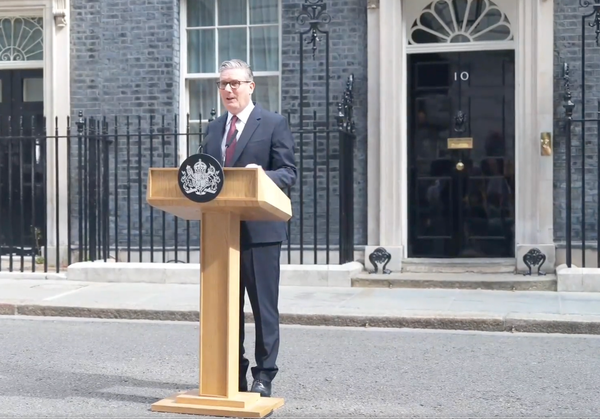
Keir Starmer announced that he will resign as leader of Britain’s governing Labour Party and leave Downing Street once a successor is selected.
He said a new leader would be in place before Parliament returns in September.
His departure clears the way for Britain’s seventh prime minister in a decade and reopens the leadership of a party that won a commanding parliamentary majority less than two years ago.
Starmer’s resignation follows months of internal pressure, electoral setbacks and the return of Andy Burnham to Parliament. Burnham is widely expected to enter the leadership contest with substantial support among Labour MPs.
The immediate process may be orderly. The broader political signal is not.
Britain is once again replacing a prime minister between general elections, reinforcing the sense that large parliamentary majorities no longer guarantee stable leadership.
The political transition comes as the UK Health Security Agency issues only its second red heat-health alert.
London, the South East, South West, East of England, East Midlands and West Midlands will be under the alert from early Wednesday through Thursday night.
A red alert indicates possible disruption extending beyond health services to transport, energy, water, food supplies and businesses, with a potential risk to life even among otherwise healthy people.
The government also launched two street-level analytical tools mapping where extreme heat, flooding, air pollution, limited green space and socioeconomic deprivation overlap.
The timing makes the connection difficult to ignore: extreme weather is no longer only an environmental question. It is an infrastructure, public health and inequality question.
Belgium has issued five tightly restricted visas to Taliban representatives attending a technical EU migration meeting in Brussels.
The meeting will focus on the possible return of Afghan nationals without legal status in Europe, particularly people convicted of serious crimes or considered security threats.
The European Commission insists that the engagement does not constitute recognition of the Taliban government.
But the meeting follows the European Parliament’s approval last week of a broader return regulation that expands detention and accelerates deportation procedures.
Europe is therefore moving rapidly from debating who should be admitted to constructing the institutions, agreements and external relationships required to remove those it rejects.
That now includes direct technical engagement with a regime European governments do not recognize and whose record on women, dissent and fundamental rights has generated repeated international condemnation.
Human rights groups warn that deportations could expose Afghans to persecution while giving the Taliban additional legitimacy and leverage.
This is the practical consequence of Europe’s new removal-focused migration system: enforcement requires counterparties, including governments and armed authorities that Europe otherwise considers unacceptable.
Read my analysis of the EU’s new immigration and deportation system here.
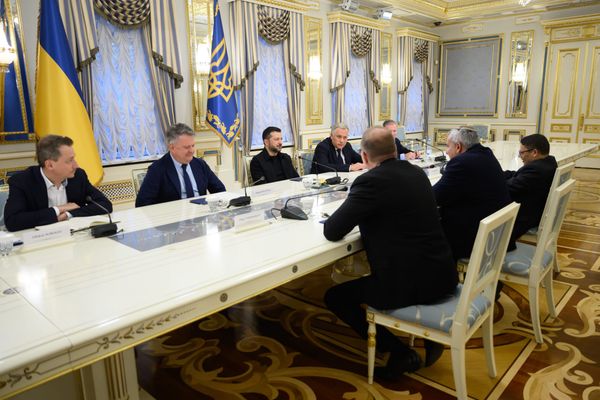
President Volodymyr Zelenskyy used June 22, the anniversary of Nazi Germany’s invasion of the Soviet Union, to challenge Russia’s appropriation of Second World War memory.
He accused Moscow of beginning the day not by honoring wartime victims but by launching attacks that killed civilians in the Sumy, Zaporizhzhia and Odesa regions and struck several other parts of Ukraine.
His message was aimed at the mythology surrounding Russia’s war as much as the attacks themselves: a state invoking victory over imperial aggression while conducting an imperial war against its neighbor.
Ukraine also issued a direct warning to Belarus over relay stations that Kyiv says help Russian and Iranian drones strike Ukrainian targets more accurately.
Zelenskyy said Belarus had repeatedly received private demands to end the technical assistance. If the equipment is not removed, he warned, Ukraine may remove it itself.
That is both a military warning and a political escalation. Kyiv is signaling that Belarusian support infrastructure may no longer be treated as beyond the active battlefield.
Russia also attacked a Türkiye-owned cargo vessel in the Black Sea, killing an Egyptian crew member. Ukrainian forces rescued Turkish and Indian members of the crew. Two other vessels sailing under the flags of Palau and Belize were damaged.
The attacks widen the security question beyond Ukraine by directly affecting international crews, foreign-owned vessels and freedom of navigation.
Ukraine’s cultural diplomacy continues alongside the war.
Five more European countries introduced Ukrainian-language audio guides this year, bringing the worldwide total to 122 guides across 59 countries.
Another 25 Ukrainian Bookshelves opened internationally. The program now includes more than 390 shelves holding over 100,000 books in 73 countries and at UNESCO headquarters.
Ukraine is also moving closer to beginning construction of the Museum of the Revolution of Dignity and the Memorial to the Heroes of the Heavenly Hundred.
Officials say legal obstacles have been removed, with a contractor and funding expected to be finalized by the end of 2026 so construction can begin in 2027.
These may appear to be cultural projects beside a military war. They are not separate from it.
Russia has repeatedly attacked museums, libraries, religious buildings, film facilities and cultural heritage sites. Ukraine is responding by expanding the international presence of its language while building institutions that preserve the origins of its modern democratic identity.
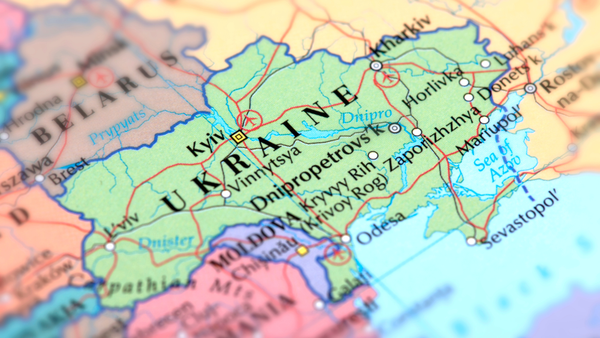
Ukraine is also intensifying its campaign against Russian military production and the supply networks sustaining the occupation of Crimea.
Ukrainian forces struck an electronics plant in Voronezh that Kyiv says manufactures components for Russian missile systems, including the Iskander. Russian authorities said five people were killed and dozens injured, while nearby residential buildings were also damaged.
Russia separately reported intercepting more than 300 Ukrainian drones, including 84 approaching Moscow. The attacks temporarily disrupted operations at several Moscow airports and followed a recent strike on the city’s only oil refinery.
But the most strategically significant pressure is developing in occupied Crimea.
Ukraine has targeted oil facilities, ferries, roads, bridges and other transport links connecting the peninsula to mainland Russia. Russian-installed authorities have now restricted civilian fuel sales, canceled public events, reduced street lighting and suspended children’s summer camps as shortages deepen.
The objective appears broader than destroying individual military targets.
Kyiv is attempting to isolate Crimea, disrupt the movement of fuel and equipment to Russian forces in southern Ukraine and make the occupation increasingly expensive to sustain. Traffic on some supply routes has fallen sharply, while attacks on ferries and connecting bridges have reduced the alternatives available to the Kerch Bridge.
The campaign is also damaging Crimea’s summer economy, with widespread cancellations reported across the tourism sector.
Ukraine is therefore applying pressure on several levels simultaneously: striking military industry inside Russia, forcing Moscow to divert air defenses toward its own cities and gradually tightening the logistical space around Crimea.
Zelenskyy has described the strategy as bringing the consequences of the war back to Russia.
Kyiv is making the argument that Russia cannot continue launching mass attacks across Ukraine while treating its own military production centers, oil infrastructure and occupation supply routes as protected territory.
Canada announced a broad series of investments spanning defense, energy, entrepreneurship, connectivity, food security and criminal justice.
The largest strategic move is a formal C$2.5 billion arrangement with Australia and BAE Systems Australia to acquire over-the-horizon radar technology for Arctic surveillance.
Unlike conventional radar, the system can detect airborne and maritime objects beyond the curvature of the Earth by refracting signals through the ionosphere.
Work begins July 1, with initial operational capability planned for December 2029. Canada estimates the program will support approximately 2,270 jobs annually between 2026 and 2033.
Ottawa also released a new Nuclear Energy Strategy intended to expand reactor construction, uranium production, exports, research and the nuclear workforce. The government wants to double the sector’s workforce by 2050 while preserving sovereign Canadian capabilities, including an updated CANDU reactor design.
Other investments include:
Canada’s Bail and Sentencing Reform Act has also passed into law. Its more than 80 Criminal Code changes will make bail harder to obtain in certain repeat, violent and organized-crime cases and strengthen sentences for offenses including violent auto theft and extortion.
The reforms take effect July 15, but their impact will depend heavily on provincial implementation, including courts, prosecutors, police, jails, bail supervision and victim services.
A new Asia Society Policy Institute paper argues that U.S.–China biotechnology competition is being misunderstood as a single contest with one eventual winner.
The United States retains major advantages in foundational science, first-in-class drug discovery, research universities, capital markets, regulation and global standard-setting.
China has become increasingly competitive in clinical trials, manufacturing, research scale, commercialization and global licensing.
The authors warn that copying semiconductor-style restrictions across the entire biotechnology sector could damage American research, disrupt medical supply chains and slow innovation that directly affects patients.
Their proposed strategy is more selective: protect genuinely sensitive data and dual use technologies, rebuild domestic manufacturing, invest in scientific research, shape international standards and preserve bounded cooperation in areas such as cancer, rare diseases, biosecurity and clinical trial regulation.
The broader lesson extends beyond biotechnology.
Not every form of interdependence is a vulnerability, and not every field can be governed through blanket separation.
The World Health Organization warned that nearly three million children and adolescents are at risk in eastern Democratic Republic of the Congo as confirmed Ebola cases reach 1,000.
Pope Leo visited the World Food Program in Rome and described adequate food as a fundamental human right, urging governments to renew efforts against hunger and malnutrition.
At the UN Security Council, officials warned that Russia’s intensifying drone and missile attacks are driving a dangerous cycle of escalation in Ukraine, with civilian casualties in June on course to exceed May’s already devastating total.
Sudan’s Rapid Support Forces are advancing toward army-held El Obeid in North Kordofan, prompting warnings that an assault could trigger another wave of atrocities against civilians.
These days, the news cycle feels a little like a buffet.
It offers solid reporting and meaningful developments. It also offers empty calories, manufactured outrage and the occasional story capable of upsetting your stomach for the rest of the day.
The good part is that, much like food, you still decide what you consume.
What you feed your body matters. What you feed your mind matters too.
Choose carefully.
And if you appreciate ONEST helping you separate the substantial from the distracting, please consider supporting my independent reporting.