ONEST Brief: Canada Rewrites the Law, China Consolidates Power, and the Middle East Truce Falters

– 13 min read

Canada enacted major criminal justice and election-security reforms, China consolidated political control while preparing its economy for prolonged geopolitical pressure, and renewed fighting in Lebanon disrupted the first steps toward implementing the U.S.–Iran memorandum.
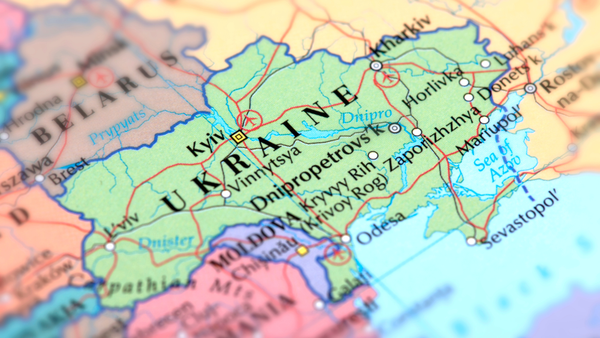
Ukraine, meanwhile, pressed Europe to turn political support into EU membership, long-term military financing and concrete protection against another winter of Russian attacks.
Canada’s Protecting Victims Act received Royal Assent Thursday, introducing one of the country’s most extensive Criminal Code reforms in decades.
The law creates a new offense of coercive control in intimate relationships, targeting patterns of threats, isolation and manipulation before they escalate into physical violence.
It also makes killings involving coercive control, hate, sexual violence or exploitation first-degree murder. When the victim is a woman, the offense will be formally recognized as femicide.
The legislation criminalizes threats to distribute non-consensual intimate images, including AI-generated sexual deepfakes, and increases penalties for sexual assault, voyeurism and the non-consensual distribution of intimate material.
Protections for children are also expanded. The law creates new offenses targeting online sextortion and the recruitment of minors into criminal activity, while giving investigators more time to preserve and obtain digital evidence in child-exploitation cases.
Internet service providers will be required to preserve relevant data for 365 days rather than 21 days.
The law also restores mandatory minimum prison sentences that had previously been struck down by courts while allowing judges limited discretion in rare cases where applying the prescribed sentence would be grossly disproportionate.
Beyond the individual provisions, the reform reflects how rapidly the definition of abuse is changing.
Coercive control, deepfakes, online exploitation and technologically enabled intimidation are no longer being treated as peripheral concerns. They are being written directly into criminal law.
A separate law, the Strong and Free Elections Act, also received Royal Assent.
The legislation prohibits sophisticated deepfakes intended to impersonate or misrepresent candidates and other electoral actors.
It also closes potential channels for anonymous and foreign political financing and expands protections against unlawful attempts to influence voters beyond the formal election period.
Party leadership and candidate-nomination contests will receive stronger protections against foreign influence, bribery and intimidation.
Federal political parties will also face new privacy-policy requirements and will be required to disclose significant data breaches.
The reforms follow recommendations from Canada’s public inquiry into foreign interference and from federal election authorities.
Canada is responding to a central problem facing modern democracies: manipulation does not begin when an election is officially called.
Foreign financing, data theft, manufactured candidates and AI-generated deception can shape the political environment months or years before voters reach the ballot box.
Canada also used major defense trade shows in Berlin and Paris to promote Canadian manufacturers and deepen industrial cooperation with European allies.
Secretary of State for Defense Procurement Stephen Fuhr represented Canada at the ILA Berlin Air Show and Eurosatory in Paris, where officials discussed air defense, military innovation and greater integration between Canadian and European supply chains.
Fuhr promoted Canada’s new Defense Investment Agency, which is intended to accelerate procurement, engage manufacturers earlier and align Canadian purchases more closely with allied production.
At Eurosatory, Canada co-hosted an EU–Canada defense industry dialogue and presented itself as a trusted NATO supplier.
This is not simply about purchasing military equipment faster.
Canada is attempting to place its own companies inside Europe’s rapidly expanding defense market at a time when governments are increasing military spending, rebuilding industrial capacity and questioning their dependence on unpredictable suppliers.
A high-level Communist Party conference in Beijing has formally elevated Xi Jinping’s approach to governing and disciplining the Party into a distinct ideological framework known as “Xi Jinping Thought on Party Building.”
Cai Qi, Xi’s chief of staff and one of China’s most powerful officials, said the doctrine should serve as the fundamental guide for strengthening the Communist Party.
The framework is described as having developed since Xi took power at the 18th Party Congress in 2012. It addresses how the Communist Party can preserve centralized authority, ideological discipline and its ability to govern over the long term.
The attendance list underscored the political importance of the meeting.
Senior officials responsible for internal discipline, personnel appointments, propaganda and economic reform were present, including Li Xi, Shi Taifeng, Li Shulei, Liu Jinguo and Mu Hong.
The meeting did more than add another slogan to China’s political vocabulary.
By consolidating Xi’s record into a formally named doctrine, the leadership is defining how his political legacy will be institutionalized and how loyalty, discipline and centralized control will be enforced ahead of the 21st Party Congress in 2027.
Cai’s expanding authority is also significant. His responsibilities now extend across much of the Party’s administrative, organizational and ideological machinery, concentrating extraordinary influence in the hands of one of Xi’s most trusted allies.
Xi Jinping’s renewed emphasis on Party power is also shaping China’s foreign policy.
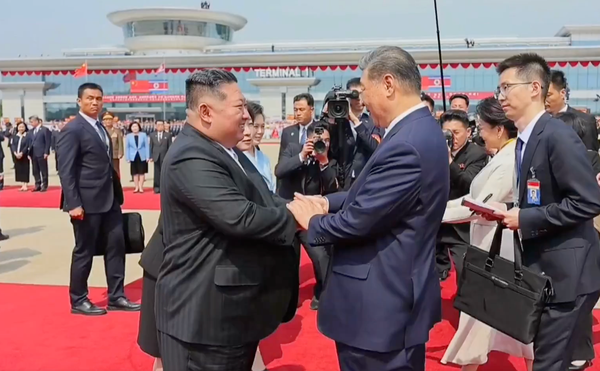
During a two-day state visit to Pyongyang on June 8 and 9 — his first trip to North Korea in seven years — Xi placed unusual emphasis on the relationship between the Chinese Communist Party and North Korea’s Workers’ Party.
Xi and Kim Jong Un visited the Workers’ Party Central Cadres School, where future North Korean officials are trained, and jointly planted a tree symbolizing the relationship between the two countries.
Chinese state coverage repeatedly emphasized socialism, political trust and cooperation between the two ruling parties.
What it largely omitted was equally significant: North Korea’s nuclear program.
During Xi’s previous visit in 2019, denuclearization and the political settlement of the Korean Peninsula were central themes. This time, they were almost entirely absent.
Instead, Xi declared that China’s support for Kim Jong Un’s leadership of North Korea’s socialist system would not change.
That represents a meaningful shift.
North Korea has strengthened its military and political ties with Russia, sent troops to support Moscow’s war and used its relationship with Vladimir Putin to reduce its dependence on Beijing.
Xi’s visit appears designed to remind Kim that Russia can provide weapons, energy and battlefield cooperation, but it cannot replicate the deep Party infrastructure and ideological relationship North Korea shares with China.
Rather than competing for control over Pyongyang, Beijing, Moscow and North Korea increasingly appear to be operating as part of the same strategic axis.
Their relationships are not identical, and each side is still protecting its own leverage. But the broader direction is clear: China provides political and economic weight, Russia offers military integration, and North Korea contributes weapons, personnel and geographic pressure in Northeast Asia.
Xi’s visit therefore looked less like an attempt to pull Kim away from Moscow than an effort to reinforce the Party-to-Party foundation of an emerging authoritarian alignment.
The European Union has publicly verified reports that the Chinese military trained Russian personnel for operations connected to the war in Ukraine.
EU foreign policy chief Kaja Kallas described Beijing as a “decisive enabler” of Russia’s war and said the bloc was assessing the implications of the training.
Earlier reporting indicated that approximately 200 Russian personnel had received instruction in China involving drones, electronic warfare, army aviation and armored infantry — disciplines directly applicable to Russia’s operations in Ukraine.
China has denied the allegations.
The significance goes beyond the flow of Chinese components and dual-use goods into Russia’s defense industry.
If Russian personnel directly involved in the war are being trained by the Chinese military, Beijing’s role is no longer limited to providing the commercial and industrial foundation that allows Russia to keep fighting.
It would represent direct military knowledge transfer to forces engaged on the Ukrainian battlefield.
The EU has sanctioned additional Chinese entities and says reducing strategic dependence on China is now both necessary and urgent.
Europe therefore faces an increasingly difficult contradiction: China remains one of its most important trading partners while simultaneously helping sustain the largest war on the continent since the Second World War.
China has released its agricultural and rural modernization plan for 2026-2030, setting a goal of raising grain-production capacity to approximately 725 million tonnes by the end of the decade.
The plan also seeks to raise the contribution of scientific and technological progress to agricultural productivity to 67 percent and maintain a product-safety inspection pass rate of at least 98 percent.
Beijing is prioritizing advanced breeding, artificial intelligence, agricultural biotechnology, new-energy machinery and the expanded use of drones and other low-altitude systems.
China produced approximately 714.9 million tons of grain in 2025, meaning the new target does not represent a dramatic increase in volume.
The more important shift is structural.
Beijing is treating food security as a long-term strategic vulnerability shaped by limited land and water, dependence on imported soybeans, climate disruption, trade friction and the possibility that foreign supplies could become unreliable during a geopolitical crisis.
Agricultural modernization is therefore being folded into the same national-resilience strategy as semiconductors, energy, critical minerals and military technology.
The objective is not simply to grow more food. It is to reduce the number of external pressure points that could be used against China during a crisis.
China is expanding financial support for its domestic artificial-intelligence sector without necessarily allowing commercial investors greater influence over the companies they finance.
Enflame Technology, one of China’s major domestic graphics-processing-unit designers, received approval for an initial public offering on Shanghai’s STAR Market.
The company is backed by Tencent, China’s national semiconductor fund and several state-linked investment vehicles. It remains unprofitable but occupies a strategically important position as China attempts to reduce its dependence on foreign AI chips.
DeepSeek, meanwhile, has reportedly raised more than $7 billion in its first external funding round, valuing the company at more than $50 billion.
The reported structure is unusual.
Commercial investors face a five-year lockup and receive no voting rights. Their money is reportedly being placed into a limited partnership managed by DeepSeek founder Liang Wenfeng rather than invested directly into the company.
China’s national AI investment fund is the notable exception, reportedly investing directly and retaining voting rights.
Every detail of the arrangement had not been independently verified.
Taken together, Enflame and DeepSeek illustrate how Beijing can alter its approach according to the maturity and strategic value of a company.
Private investors may absorb financial risk while a company is developing. Once it becomes strategically important, however, ownership can be structured to prevent commercial capital from translating into political or managerial control.
This is not conventional state ownership.
It is a more flexible system in which Beijing can attract private money, preserve oversight and prevent strategic companies from escaping the state’s political orbit.
Heavy rainfall has caused major flooding across Guangdong, Guangxi and other parts of southern China, disrupting transportation and forcing tens of thousands of residents from their homes.
Some areas recorded accumulated precipitation of several hundred millimeters, overwhelming roads, farmland and urban drainage systems.
Authorities issued emergency warnings, deployed response teams and ordered evacuations in the hardest-hit areas.
The flooding reinforces the pressure behind China’s wider resilience planning.
The same government attempting to secure food production and modernize agriculture is confronting increasingly destructive weather capable of damaging crops, infrastructure and supply chains simultaneously.
Technological self-reliance and food security may be national strategies, but climate disruption remains a force no government can fully control.
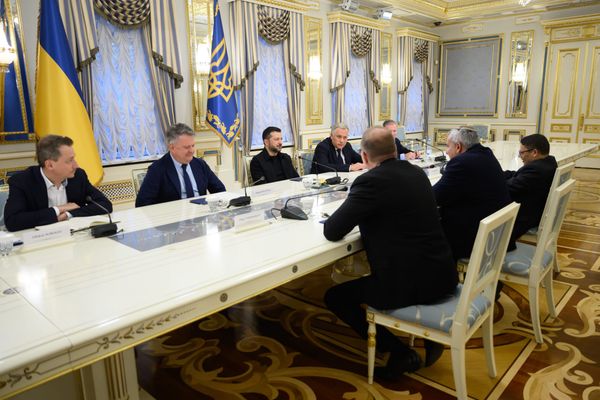
President Volodymyr Zelenskyy told European leaders that Ukraine’s path into the European Union must move beyond symbolic participation.
Speaking to the European Council, Zelenskyy called for an accelerated accession process and argued that prolonged uncertainty gives Russia additional space to destabilize both Ukraine and Europe.
The first negotiating cluster for Ukraine and Moldova opened on June 15. Zelenskyy urged the European Union to open the remaining five clusters in the coming weeks.
He welcomed the release of €6 billion from the European Peace Facility and called for the money to be used rapidly for air defense, long-range munitions and other capabilities already proven on the battlefield.
Zelenskyy also asked Europe to consider long-term financial instruments for the Ukrainian military, covering salaries, maintenance, equipment and weapons contracts.
The argument is increasingly direct: Europe cannot continue describing the Ukrainian army as the foundation of its security while financing it through temporary packages and emergency decisions.
Zelenskyy also urged European governments to adopt legislation allowing them not only to stop tankers carrying Russian oil but to confiscate their cargo.
He said Ukraine still wants to end the war through diplomacy before winter but warned that Kyiv must prepare for the possibility that Russia will continue its attacks.
That preparation would include energy supplies and at least 300 anti-ballistic missiles to protect Ukraine through several months of large-scale strikes.
The warning matters, but today’s larger message was not simply about winter.
Ukraine is asking Europe to turn political solidarity into permanent structures: membership, military financing, air defense and a clear place for Europe at any future negotiating table.
Zelenskyy also hosted Honduran President Nasry Asfura in Kyiv — the first visit by a Honduran president since Ukraine regained independence and the first leaders’ meeting in the history of bilateral relations.
Asfura, who took office in January, has shifted Honduras toward stronger support for Ukraine at the United Nations.
The two leaders discussed agriculture, digital government, trade and Ukrainian defense technology, including drones.
The meeting is significant beyond the currently limited trade relationship.
Ukraine has spent years trying to counter Russian influence across Latin America and the Global South, where Moscow has relied heavily on diplomatic networks, information campaigns and inherited political relationships.
Kyiv is now offering something more concrete in return: digital infrastructure, agricultural expertise and battlefield-tested technology.
Planned talks between the United States and Iran in Switzerland were postponed after renewed fighting between Israel and Hezbollah in Lebanon.
The talks were intended to begin addressing the most difficult issues left unresolved by the preliminary U.S.–Iran memorandum, including Iran’s nuclear program and the future status of regional military operations.
Iran had linked progress on the wider agreement to an end to Israeli military operations in Lebanon.
After Hezbollah killed four Israeli soldiers, Israel launched extensive retaliatory strikes. Dozens of people were reported killed in Lebanon.
A renewed ceasefire was later announced following mediation by the United States and Qatar, with Iranian assistance.
Reports of additional strikes after the ceasefire’s scheduled start immediately raised questions about whether it would hold, although the fighting appeared to subside later in the day.
Israel maintains troops inside southern Lebanon and continues to insist that it must retain the ability to act against Hezbollah.
Iran and Hezbollah continue to demand an Israeli withdrawal.
Those positions remain fundamentally incompatible.
Israeli National Security Minister Itamar Ben-Gvir called for all of Lebanon to “burn” and said that for every Israeli mother’s tear, a thousand Lebanese mothers should weep.
Those were not the words of an unofficial extremist operating outside government.
They came from a sitting national security minister while the United States was attempting to preserve a regional diplomatic arrangement.
Secretary of State Marco Rubio separately spoke with Lebanese President Joseph Aoun and backed direct negotiations between Lebanon and Israel.
The next round is scheduled for June 23-25 in Washington.
Rubio said Lebanon must disarm Hezbollah and restore state control over its entire territory. The administration is presenting those negotiations as the only viable path toward reconstruction and economic recovery.
But the sequencing remains unresolved.
Israel says its forces must remain to prevent further attacks. Iran says Israeli withdrawal is central to de-escalation. Hezbollah retains its weapons. Lebanon is being told that reconstruction depends on negotiations with the state still occupying part of its territory.
Iran’s Islamic Revolutionary Guard Corps warned vessels not to approach the Strait of Hormuz during the renewed fighting in Lebanon and threatened ships attempting to cross without authorization.
Iran’s Foreign Ministry later said the strait remained open.
Commercial traffic subsequently increased, but passage has not returned to its pre-war form.
Ships are required to submit transit requests in advance and coordinate their routes and schedules with Iran’s newly established Persian Gulf Strait Authority.
Iran says transit, security, environmental and insurance-related fees will be waived during the 60-day negotiation period.
That means Hormuz has reopened, but under rules created by Tehran.
Iran is testing whether leverage gained through a military blockade can be converted into a lasting regulatory role over one of the world’s most important international waterways.
The United States has lifted its blockade of Iranian ports, but mines, inspections, advance-permission requirements and competing interpretations of the memorandum continue to limit normal shipping.
Iran’s supreme leader has endorsed face-to-face negotiations with the United States despite acknowledging that he does not agree with every provision of the preliminary memorandum.
That approval matters because the memorandum is not a legally binding peace agreement.
It creates a 60-day negotiating period during which the most difficult issues — including Iran’s nuclear program, sanctions, verification and the future of Lebanon — must still be resolved.
The Switzerland meeting was intended to begin that work.
Its postponement, followed by renewed efforts to resume the negotiations, demonstrated how dependent the entire process remains on events outside the room.
The memorandum may have paused direct confrontation between Washington and Tehran, but it did not settle the regional conflicts capable of pulling them back into it.
President Donald Trump told Italian television that Prime Minister Giorgia Meloni had “begged” him for a photograph during the G7 summit and that he agreed because he felt sorry for her.
Meloni immediately rejected the account, saying neither she nor Italy begs.
Italian Foreign Minister Antonio Tajani then canceled a planned visit to the United States, and an upcoming U.S.–Italy business event was called off.
The dispute is more than a personal exchange.
Meloni had been considered one of Trump’s closest political allies in Europe.
Italy’s reaction shows that even governments ideologically closer to the White House have limits when public humiliation becomes part of American diplomacy.
NASA selected the DAPHNE mission concept to study how Earth’s lower atmosphere affects the ionosphere, space weather and technologies including GPS and low-Earth-orbit satellites.
The mission would use two identical satellites to collect coordinated measurements of winds, temperature and atmospheric composition.
It will face a confirmation review in 2027 and, if approved, could launch no earlier than 2029.
Defense Secretary Pete Hegseth will travel to San Diego to serve as honorary starter for a NASCAR event at Naval Air Station Coronado.
The United States marked Juneteenth, commemorating the end of slavery and the continuing pursuit of freedom, equality and justice.
Today’s developments exposed the widening gap between what governments announce and the systems of power they are actually building.
Canada is writing modern threats — coercive control, sexual deepfakes, online exploitation and electoral manipulation — into law. At the same time, it is trying to place Canadian companies inside Europe’s expanding defense economy.
Ukraine is asking Europe to stop treating its survival as a series of temporary emergencies. EU accession, military financing, energy security and air defense are no longer separate questions. Together, they determine whether Europe is building a lasting security structure or simply managing one crisis package at a time.
China is preparing differently.
Beijing is strengthening internal Party control, building domestic chip and AI capacity, treating agriculture as a national-security asset and structuring private investment so that capital does not necessarily produce influence.
At the same time, the European Union says China has moved beyond supplying Russia with dual-use components and is now training Russian military personnel.
These are not disconnected developments.
They reflect a political system preparing for prolonged geopolitical competition while reducing the economic, technological and food-security vulnerabilities that other countries could use against it.
And in the Middle East, the limits of the U.S.–Iran memorandum became visible almost immediately.
A ceasefire dependent on Israeli restraint, Hezbollah’s disarmament, Iran’s leverage, Lebanon’s sovereignty and American enforcement is not yet a settlement. It is a collection of incompatible expectations held together by a document that is not legally binding.
The talks were postponed because events on the ground moved faster than the diplomacy designed to contain them.
Hormuz reopened, but under disputed conditions. Israel accepted another ceasefire while maintaining troops inside Lebanon. Iran endorsed direct negotiations while continuing to use access to the strait as leverage.
Across all four regions, the same pattern is emerging: governments are speaking the language of law, diplomacy and stability while preparing for a harder, more centralized and increasingly transactional international system.
Zooming out, the pattern is increasingly clear: governments around the world are learning from the American example and adjusting accordingly — while the United States itself appears least willing to adapt to the system it helped create.