ONEST Brief: U.S.-Iran MOU, Ukraine’s Winter Warning, and NATO’s Quiet Handoff

– 5 min read

The day after the G7, the diplomatic map moved fast.
Ukraine pushed Europe for speed, Iran published the text of its reported agreement with the United States, and NATO’s transition toward a Europe-led conventional defense continued without much public drama — which may be exactly the point.
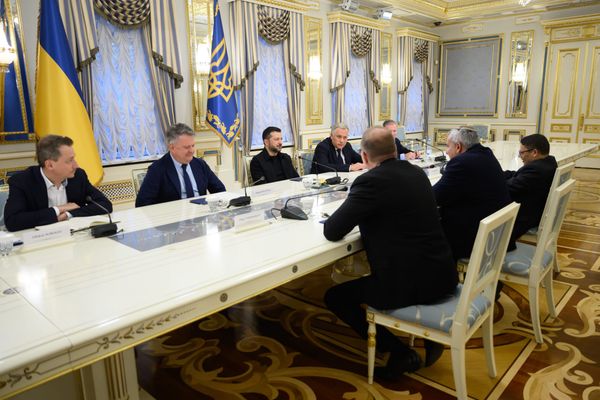
President Volodymyr Zelenskyy addressed the European Council with a clear message: Ukraine’s EU path cannot remain symbolic.
He called for a fast-track route to membership, the opening of the remaining five negotiating clusters, and urgent use of the newly unlocked €6 billion from the European Peace Facility.
The request was practical, not ceremonial: air defense, long-range munitions, protection of energy infrastructure, and preparation for another winter of Russian attacks.
Zelenskyy also warned that there can be no negotiations with Russia that exclude Europe. In his words, contacts with Moscow may happen in one format or another, but Europe must avoid creating chaos that Putin can exploit.
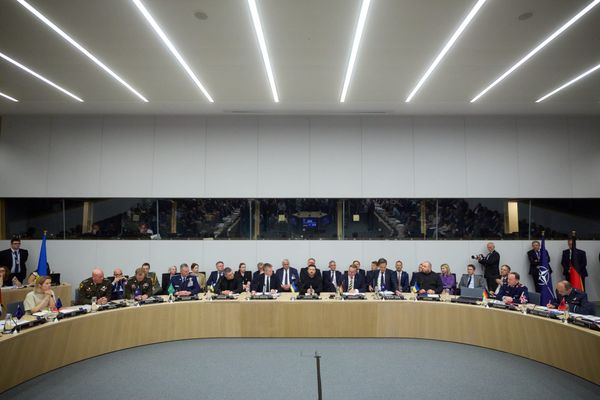
At the Ukraine Defense Contact Group in Brussels, the emphasis was even sharper: anti-ballistic defense. Zelenskyy said Ukraine’s counter-drone system is now more than 90% effective, but ballistic missile defense remains the central gap.
Nine countries announced more than $1 billion in new contributions to the PURL program, while Norway, Denmark, Luxembourg, and Spain pledged more than $500 million for long-range shells. The UK, the Netherlands, and Norway will also allocate around $1 billion for Ukrainian drones and missiles.
The message from Kyiv is simple: diplomacy matters, but winter is coming, and Ukraine needs decisions before the next wave of strikes begins.
Iranian President Masoud Pezeshkian published the text of the U.S.-Iran Memorandum of Understanding, calling it a historic document and a message from “a powerful Iran.”
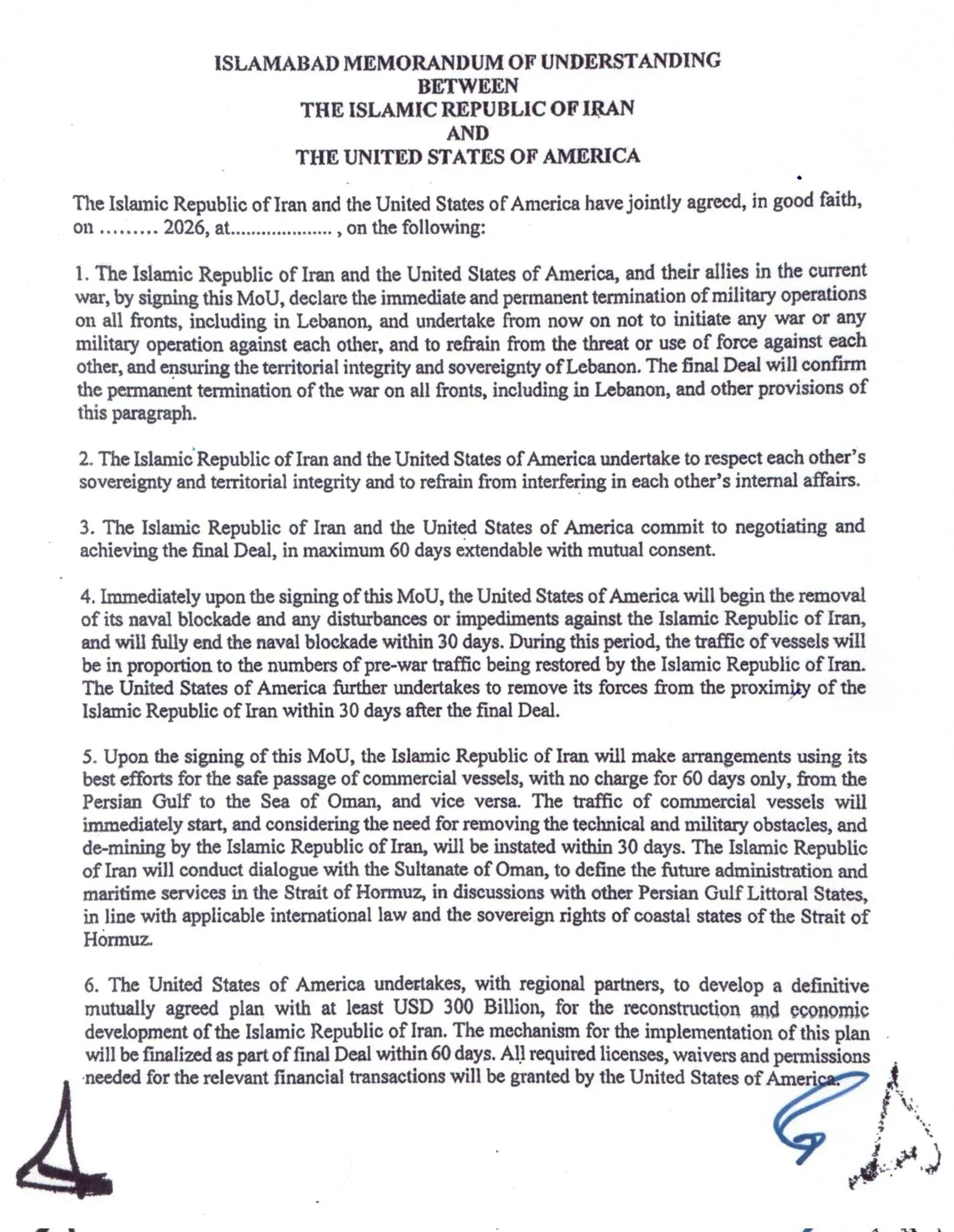
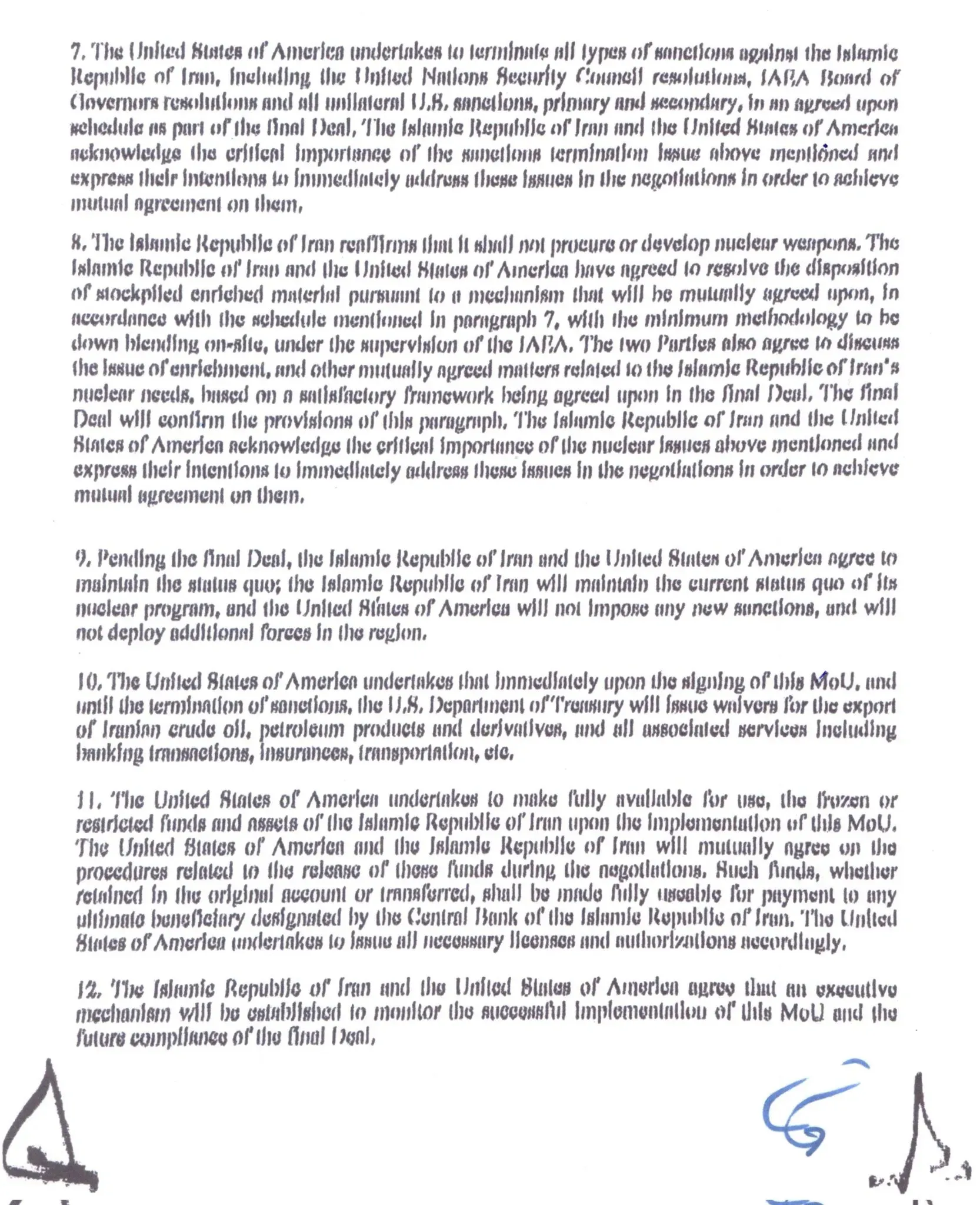
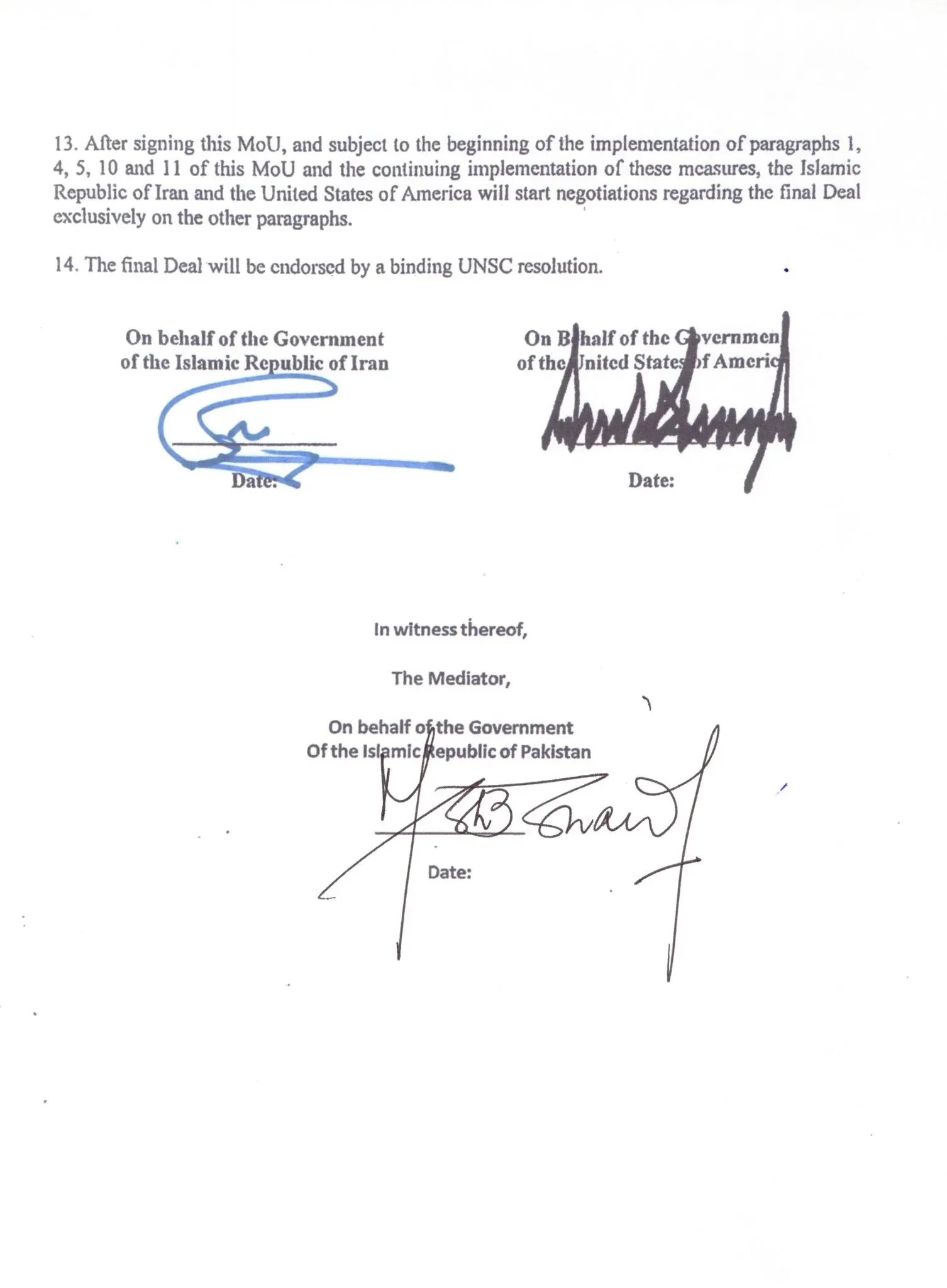
The document is not a final agreement. It is an MOU that sets a 60-day framework for negotiations toward a final deal.
But the text is politically explosive.
Clause 1 states that Iran, the United States, and their allies in the current war declare the immediate and permanent termination of military operations on all fronts, including Lebanon, and undertake not to initiate military action against each other.
That clause is already being tested.
Iranian media now says Tehran may call off upcoming talks because Israel continues military operations in southern Lebanon. JD Vance, meanwhile, publicly criticized members of Netanyahu’s cabinet for attacking the deal and said "Donald Trump is the only head of state in the world currently sympathetic to Israel".
Trump also said Netanyahu could use a “softer touch” in Lebanon.
The MOU also includes the removal of the U.S. naval blockade, restoration of commercial vessel traffic, sanctions relief, access to frozen Iranian funds, nuclear commitments by Iran, and a proposed $300 billion reconstruction and development plan with regional partners.
That last point raises one of the biggest unanswered questions: who is actually expected to fund this?
Gulf states are not operating in unlimited financial comfort. Saudi Aramco is reportedly exploring asset sales across parts of its infrastructure portfolio to raise capital, including sulphur assets, export terminals, real estate, and water infrastructure. If Gulf governments and state-linked firms are already seeking liquidity, it is not obvious why Trump assumes they would collectively invest $300 billion into Iran.
So the question is not only whether Iran complies.
It is who pays, who profits, and what commercial access is being negotiated behind the diplomatic language.
The regional picture is even more tangled.
Syria has reportedly awarded a gas development deal to U.S. energy company ConocoPhillips and a company linked to Syrian-British billionaire Ayman Al Asfari. Trump also said he spoke with Syria’s leader about combating Iran-backed Hezbollah in Lebanon.
At the same time, Syria has agreed to keep Russian air and naval bases on its territory, and Ahmad al-Sharaa met Putin in the Kremlin earlier this year and signed a cooperation agreement.
That creates a major strategic contradiction.
If the United States expects Syria to help pressure Hezbollah, while Syria maintains Russian military access and Iran says future cash flows could strengthen Hezbollah’s position, then the enforcement problem is not theoretical. It is immediate.
How would Washington ensure that any military, financial, or energy-related support routed through Syria does not strengthen Russia, Hezbollah, or other actors the U.S. says it wants to contain?
Canada, meanwhile, continued its post-G7 push to build both domestically and internationally.
Prime Minister Mark Carney announced a major federal-British Columbia partnership worth more than $5 billion over 10 years for local infrastructure, housing, health facilities, transit, and community projects.
The package includes funding to lower development charges for multi-unit housing, expand health infrastructure, support coastal communities, convert more than 2,200 vacant condo units into affordable homes, and invest in transit, including the Surrey-Langley SkyTrain extension.
Canada also deepened its critical minerals cooperation with Germany. Carney and Chancellor Friedrich Merz agreed to advance critical mineral supply chain resiliency, including stockpiling and capital investments by the end of 2026.
The Canadian line is consistent: build at home, diversify abroad, and reduce dependence on unstable partners.
At the NATO level, the U.S. message is now repetitive and unmistakable.
U.S. Secretary of Defense Pete Hegseth met with UK Defence Secretary Dan Jarvis in Brussels and emphasized "NATO 3.0": European allies taking primary responsibility for Europe’s conventional defense, including Ukraine.
A similar message was delivered days earlier in Hegseth’s meeting with Italian Defense Minister Guido Crosetto.
The language is not dramatic. There is no formal rupture. But the direction is clear: Washington is pushing European and Canadian allies to assume more of the conventional defense burden, move toward 5% of GDP defense spending, increase production, and field combat-credible forces.
This is how NATO changes without an announcement.
Not through collapse overnight, but through gradual transfer of responsibility, repeated in readout after readout.
While much of the media conversation is consumed by chaotic coverage of the U.S.-Iran MOU — often without clearly explaining what it is and what it is not — the larger pattern is coming into view.
The MOU is not a legally enforceable final deal. It is a political framework that still leaves major questions unanswered: who verifies Iran’s nuclear commitments, who funds the proposed $300 billion investment package, who profits from it, and what happens if Israel, Iran, Hezbollah, or Syria do not follow the same script.
At the same time, the United States is shifting more responsibility for European defense onto NATO allies, monetizing instability in the Middle East, and remaining passive at best — and potentially useful to Russia — through its Syria track.
The real story is not just the MOU.
It is the redistribution of risk: to Europe, to the Gulf, to Ukraine, and to everyone left dealing with the consequences after Washington turns diplomacy into leverage and conflict into business. Ironically, in an increasingly transactional international system, even China is beginning to look like the more predictable actor.