What We Know About the Reported U.S.-Iran Deal, And the Questions It Raises

– 2 min read
The text of the reported U.S.-Iran agreement has not yet been released, but officials from both sides have begun outlining what they say the framework contains ahead of a formal signing expected Friday in Switzerland. Vice President JD Vance is expected to represent the United States at the ceremony, while Iranian Parliament Speaker Mohammad Baqer Qalibaf is expected to attend for Iran.
According to U.S. officials, the framework would reopen the Strait of Hormuz, allow Iran to resume oil exports under specific conditions, and establish a pathway toward sanctions relief tied to Iranian compliance. Those conditions reportedly include verified limits on Iran's nuclear program, international inspections, and commitments not to pursue a nuclear weapon. No sanctions relief or funds are expected to be released simply because the agreement is signed; U.S. officials say benefits would be phased in only after Iran meets agreed benchmarks.
One of the most striking reported elements is a proposed $300 billion investment fund for Iran.
According to Reuters, the fund would not be financed directly by the U.S. government. Instead, it would reportedly rely on private investors and companies from the United States, Gulf states, Asia and elsewhere, with investments tied to implementation of the agreement.
That figure stands out because it is substantially larger than the value of Iran's frozen assets abroad.
Iran's restricted overseas assets are generally estimated at around $100–120 billion, spread across countries including China, Iraq, India, Japan, Luxembourg and the United States. While those assets have long been a central issue in sanctions negotiations, the reported $300 billion investment proposal would go far beyond simply releasing existing frozen funds.
The agreement therefore appears to combine several distinct economic components:
Many details remain unresolved.
The full text has not been released. The exact compliance mechanism remains unknown, including how Iran’s nuclear commitments would be verified and enforced.
The regional side is also fragile. Iran has tied the broader understanding to Lebanon, while U.S. officials say Israeli withdrawal from Lebanon is not a condition of the pact. Israel, for its part, has already signaled it will not be bound by terms it did not sign.
That leaves a central question: even if Washington and Tehran sign the framework, can it survive actions by actors outside the agreement?
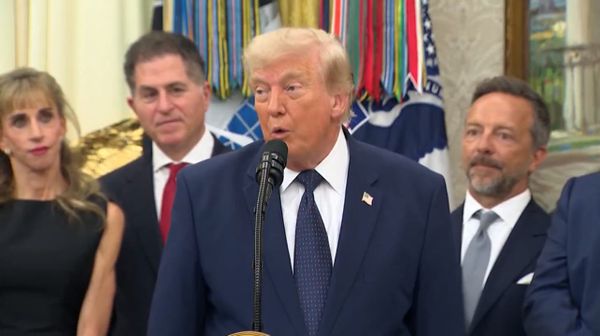
President Donald Trump has said the agreement may be released before Friday's formal signing ceremony. Once the text is public, ONEST will analyze it provision by provision.
For now, it is also important to note that the reported document is described as a memorandum of understanding, or MOU — a framework that is generally political rather than legally binding. In other words, the signing itself would not automatically make every provision enforceable unless the text creates specific legal obligations or is followed by binding agreements.
Until the agreement is released, the central question is no longer simply whether sanctions are lifted.
It is what Iran is expected to give up, how compliance will be verified, and who profits from the economic architecture around the deal.
If the reported $300 billion package is structured as commercial investment, then this is not just a sanctions question. It is also a business question: which companies get access, what they receive in return, and whether political diplomacy is being used to open a market for private interests.
That question matters even more under Donald Trump, whose presidency has repeatedly blurred the line between U.S. foreign policy, commercial advantage, and personal political interests.