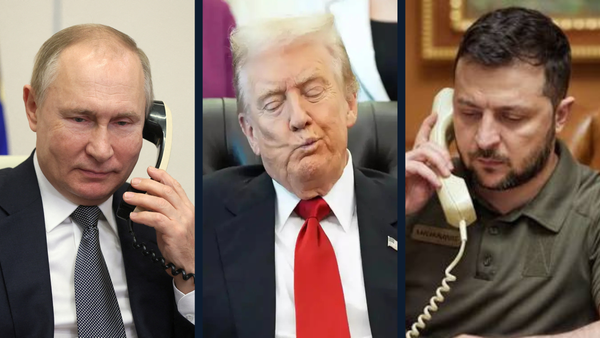
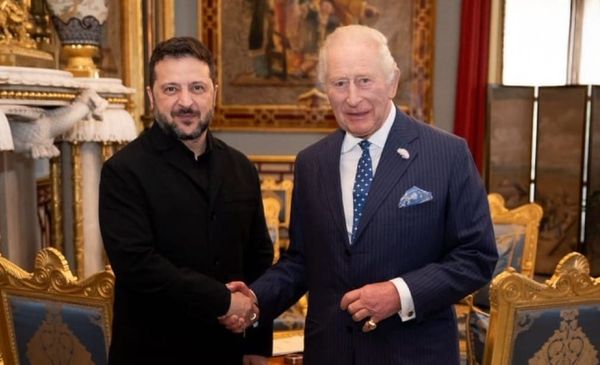
Ukrainian President Volodymyr Zelenskyy said Sunday that he had a “very good conversation” with U.S. President Donald Trump on the war, its roots, diplomatic opportunities, and the positions of Ukraine’s partners — as Trump prepares to attend a G7 session involving Zelenskyy at the summit.
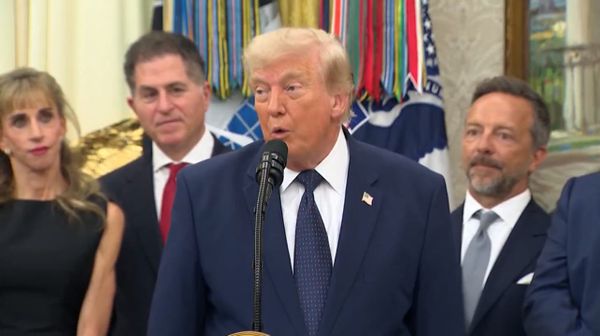
ONEST previously reported that Trump is scheduled to participate in a G7 meeting with Zelenskyy. A separate Zelenskyy-Trump bilateral is not listed on Trump’s official schedule.
Zelenskyy praised Trump’s remarks on Crimea as “absolutely spot-on,” saying Russia’s seizure of the peninsula in 2014 was the starting point of the war.
“It was Russia’s seizure of Crimea that started it all, and if there had been strong leadership back then, this entire war simply wouldn’t have happened,” Zelenskyy said.
He added that Ukrainians have one wish for Trump: to achieve peace together with the United States and Ukraine’s partners.
“This is the most important thing we want,” Zelenskyy said, “and it is crucial that American society is fully supporting this Ukrainian aspiration for a dignified peace.”
The timing is significant.
On the same day Zelenskyy described his call with Trump, Kremlin foreign policy adviser Yuri Ushakov gave a readout of Trump’s phone conversation with Russian President Vladimir Putin.
In remarks monitored and translated by ONEST, Ushakov said Trump expressed readiness to “exercise pressure” on Kyiv and G7 leaders at the upcoming summit in order to end the war. The context of the readout made clear that Moscow was describing an end to the war on Russia’s terms.
Ushakov also said Trump noted that the delay in ending the war was delaying the building of new, strong U.S.-Russia relations “of a new quality.”
That framing is striking. It is uncommon in diplomatic readouts for one side to speak so extensively on behalf of the other interlocutor, especially on sensitive commitments allegedly made by a U.S. president.
According to Ushakov, Putin told Trump that recent Ukrainian attacks on Russian territory were “obstructing negotiations,” and Trump allegedly acknowledged that point.
Putin, for his part, reportedly argued that Ukrainian strikes on what he called “friendly infrastructure” would not change what he described as Ukraine’s critical battlefield situation. Ushakov claimed Putin accused Zelenskyy of preparing to lie at the G7 in order to continue and prolong the war.
Ushakov also said that if Zelenskyy raises the issue of direct negotiations with Putin again, he can “just come to Moscow.” Zelenskyy has repeatedly rejected Moscow as a venue for such talks, instead suggesting that any direct meeting with Putin should take place in a third country.
That detail matters because venue is not just logistics. For Moscow, insisting on the Russian capital frames any potential meeting on Putin’s terms. For Kyiv, a neutral third country would signal that negotiations are not taking place under Russia’s political stagecraft.
The Kremlin readout then moved into familiar Russian propaganda. Ushakov said Putin invoked the Holocaust and repeated Moscow’s false claim that Russia is fighting a “Nazi regime” in Ukraine. He added that Trump, after hearing this, spoke about strengthening the U.S.-Russia bond based on the countries’ World War II history.
Putin also wished the U.S. soccer team luck at the FIFA World Cup. Ushakov said Jared Kushner and Steve Witkoff are expected to travel to Moscow soon.
The Kremlin’s version of the call presents Trump not as a neutral mediator, but as a leader Moscow believes can pressure Ukraine and Europe into concessions. Whether that accurately reflects Trump’s position — or whether Moscow is trying to shape the atmosphere before the G7 — is now part of the story.
Zelenskyy, meanwhile, is arriving with a very different message: Ukraine is not waiting passively for diplomacy while Russia refuses to end the war.
Before the G7, he said Ukrainian forces had achieved good results in what Kyiv calls "long-range sanctions" against important Russian military and energy targets.
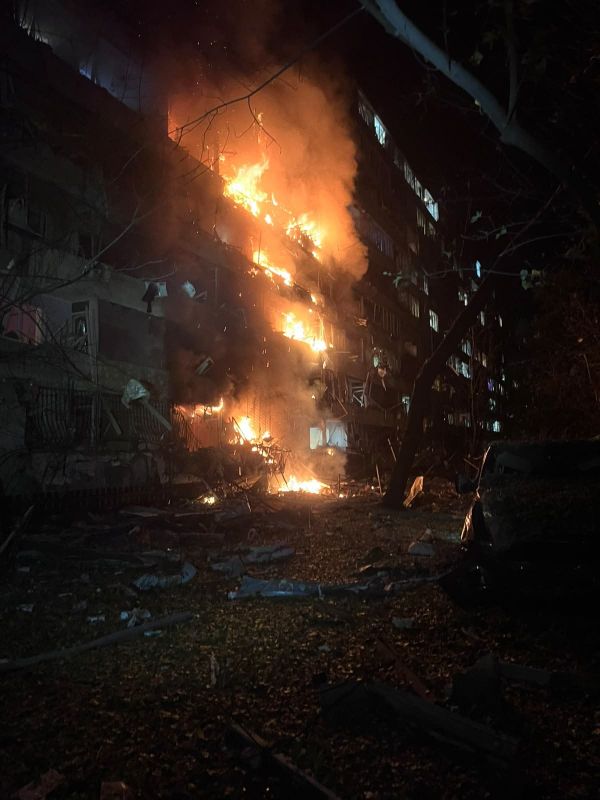
Zelenskyy said Ukraine’s Security Service struck an oil facility in Russia’s Yaroslavl region, more than 700 kilometers from Ukraine’s border, and that Ukrainian forces hit targets in Russia’s Tula region, including the Azot plant, whose operations are critical to explosives production. He added that air traffic restrictions were imposed at six Russian airports and that 28 Russian regions had been under air raid alerts since the previous evening.
“There were also hits on the occupier’s military logistics in the temporarily occupied territory of Ukraine,” Zelenskyy said.
His message was direct: Ukraine has offered Moscow every possible format for negotiations, but Russia’s response has been continued aggression and attempts to expand the war.
“It stands to reason that the war is coming back to where it came from,” Zelenskyy said. “Ukraine needs peace.”
The G7 summit now opens against that contradiction.
Kyiv is telling allies that pressure on Russia is working and must continue. Moscow is telling the world that Trump is preparing to pressure Ukraine and Europe toward Russia’s terms. Trump is officially scheduled for a G7 session involving Zelenskyy, while Zelenskyy is publicly emphasizing his call with Trump and Ukraine’s hope for a dignified peace supported by the United States.
At the same time, Ukraine’s European path is moving forward. European Commission President Ursula von der Leyen said Ukraine and Moldova will take a major step on their EU journey with the first Intergovernmental Conference in Luxembourg, beginning work on the “Fundamentals” cluster — the area covering values, democracy and the rule of law.
That gives the G7 moment a wider meaning.
This is not only about whether Trump and Zelenskyy are in the same room. It is about what framework defines the next stage of the war: Ukraine’s sovereignty and European future, or Russia’s demand that peace be built around concessions imposed on Kyiv.
The coming days in Europe may show which version of diplomacy is actually taking shape.