Nordic and Baltic Leaders Back Ukraine’s Security Push Ahead of NATO and G7 Summits

– 2 min read

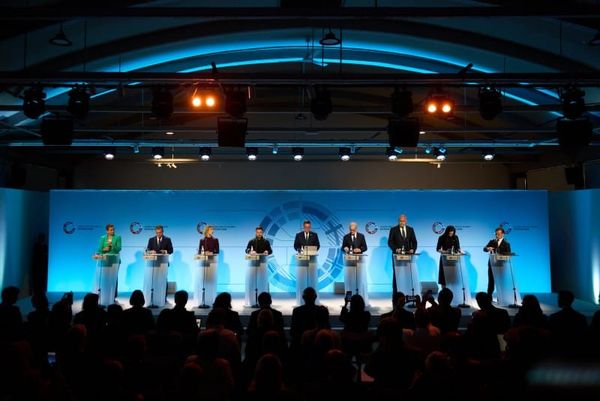
Ukrainian President Volodymyr Zelenskyy joined leaders from the Nordic and Baltic countries in Tallinn on Tuesday, using the Ukraine–NB8 Summit to press for stronger military cooperation, enhanced air defense capabilities, and continued support for Ukraine’s path toward European Union and NATO membership.
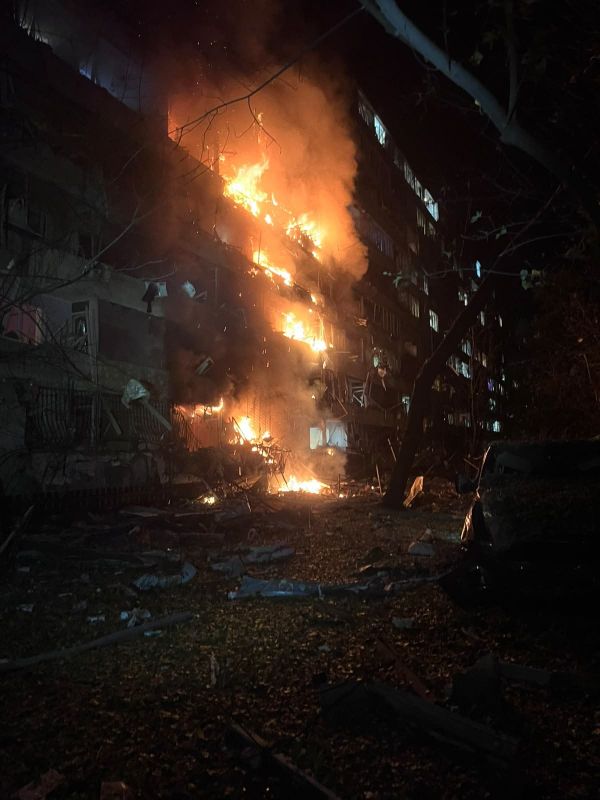
The summit brought together leaders from Estonia, Denmark, Finland, Iceland, Latvia, Lithuania, Norway, and Sweden at a time when Ukraine faces continued Russian missile and drone attacks while preparing for a series of critical diplomatic meetings ahead of upcoming EU, NATO, and G7 summits.
Speaking after the meeting, Zelenskyy emphasized that European security depends on coordinated action among allies.
“Europe is strongest when Europeans act together, not separately,” he said, noting that discussions with the Nordic and Baltic nations complement recent talks with France, Germany, and the United Kingdom, as well as ongoing coordination with the United States.
According to Zelenskyy, leaders focused on three priorities: accelerating diplomatic efforts to end the war, strengthening Ukraine’s air defense and missile defense capabilities, and advancing Ukraine’s EU accession process.
Estonian Prime Minister Kristen Michal, whose country currently holds the rotating NB8 presidency, condemned Russia’s attacks on civilian and critical infrastructure and reiterated support for Ukraine’s future membership in both the European Union and NATO.
Norwegian Prime Minister Jonas Gahr Støre announced continued assistance focused on air defense, protection against ballistic missile threats, energy security, and humanitarian support ahead of winter.
Several leaders highlighted the growing importance of Ukraine’s battlefield experience for European defense planning. Danish Prime Minister Mette Frederiksen argued that Europe must accelerate rearmament and innovation, saying that Ukraine has become central to Europe’s future defense capabilities.
Finnish Prime Minister Petteri Orpo noted that Ukraine has improved its position on the battlefield and called for all EU accession negotiation clusters to be opened before the summer recess. He also stressed that sanctions continue to place pressure on Russia.
Leaders from Latvia and Lithuania focused on lessons learned from Ukraine’s use of drone technology and air defense systems. Latvian Prime Minister Andris Kulbergs called for stronger anti-drone capabilities across the region, while Lithuanian Prime Minister Inga Ruginienė said Ukraine’s combat experience offers valuable insights for NATO allies facing new security challenges.
Swedish Prime Minister Ulf Kristersson argued that sustained support for Ukraine remains an investment in Europe’s long-term security and stability.
The meeting comes as European governments increasingly discuss collective defense initiatives, including missile defense cooperation and expanded defense-industrial production, amid concerns that Russia’s war against Ukraine has permanently altered Europe’s security environment.
The significance of the Tallinn summit goes beyond another statement of support for Ukraine.
The Nordic and Baltic countries have emerged as some of Kyiv’s most consistent backers since Russia’s full-scale invasion. Unlike larger European powers that often balance support with broader geopolitical considerations, the countries closest to Russia tend to view Ukraine’s security as directly linked to their own.
What stood out in Tallinn was the repeated emphasis on practical cooperation rather than new declarations. Leaders focused on air defense, missile defense, drone warfare, defense production, and sharing battlefield lessons learned in Ukraine.
The message was clear: Europe increasingly sees Ukraine not only as a country receiving security assistance, but also as a source of military expertise. As European governments accelerate defense spending and prepare for future threats, Ukraine’s experience on the battlefield is becoming part of Europe’s security planning.
With NATO, EU, and G7 meetings approaching, Tallinn also served as a coordination meeting for a group of countries seeking to keep Ukraine high on the international agenda and maintain pressure on Russia while strengthening Europe’s own defenses.