Daily Brief: US–Iran War Widens as Trump Opens New Trade War With Canada

– 7 min read

President Donald Trump announced a 50 percent tariff on most Canadian goods, overriding protections previously available under the North American trade agreement and reopening a potentially devastating dispute with the United States’ second-largest trading partner.
The announcement came as the United States carried out a ninth consecutive day of strikes against Iran, deployed additional fighters to the Middle East and began testing a new Israeli-withdrawal framework in southern Lebanon.
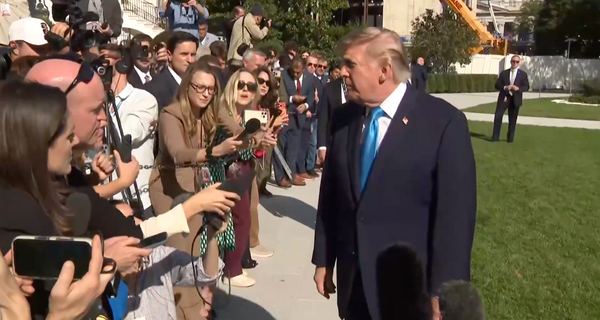
President Trump announced a 50 percent tariff on most imports from Canada, accusing Ottawa of "discriminating against American automobiles, alcohol and dairy products".
The tariff is scheduled to take effect in 30 days. Energy products, potash, fish and critical minerals are exempt, as are products already covered by separate national-security tariffs, including steel and aluminum.
Crucially, the new tariff will apply even to goods meeting the requirements of the United States-Mexico-Canada Agreement. The USMCA remains in force despite Washington’s recent decision not to grant it a longer-term extension; without a new agreement, it is now subject to annual reviews.
Trump invoked Section 338 of the Tariff Act of 1930, a largely untested authority allowing tariffs of up to 50 percent against countries found to discriminate against US commerce. The legal mechanism is different from the emergency authority the Supreme Court previously rejected as a basis for Trump’s broader tariffs.
Canada and the United States exchanged approximately $716 billion in goods last year. Their production systems — particularly in automobiles, machinery, agriculture and consumer products — are so closely integrated that the tariff will not fall only on Canadian exporters. US importers pay the duty, and businesses relying on Canadian components will face higher costs or be forced to reorganize their supply chains.
The exemptions protect some strategically essential US imports, but they also reveal the limits of the administration’s claim that tariffs can painlessly compel concessions. Washington is targeting products where it believes Canada can be pressured while shielding materials the United States cannot readily replace.
The move transforms disagreements over provincial alcohol restrictions, dairy-market access and automotive policy into a broader economic confrontation. It also undercuts the stability the USMCA was designed to provide while the three countries are already reviewing the agreement.
Canada has not yet announced its response. Retaliation would risk another cycle of tariff escalation; declining to respond could invite further demands.
Get briefs like this delivered daily — free.
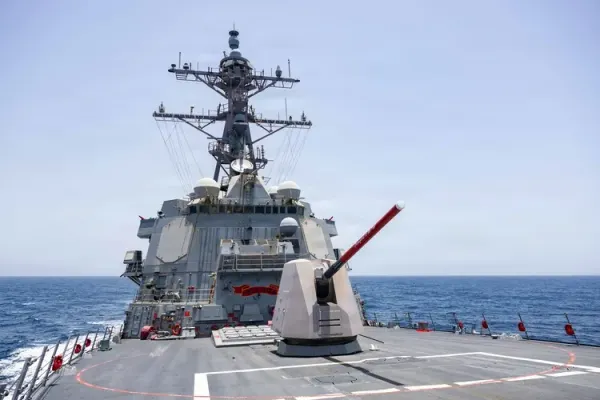
The United States bombarded Iran again Monday, striking military infrastructure including missile and coastal-defense capabilities. Iran responded with attacks directed at Kuwait, Jordan and Bahrain, which hosts the US Navy’s Fifth Fleet.
A vessel was also left adrift after being struck by an unidentified projectile approximately 15 kilometers northwest of Oman’s Kumzar, overlooking the Strait of Hormuz. Commercial traffic through the waterway remained severely reduced, while increasing quantities of oil and liquefied natural gas accumulated in floating storage.
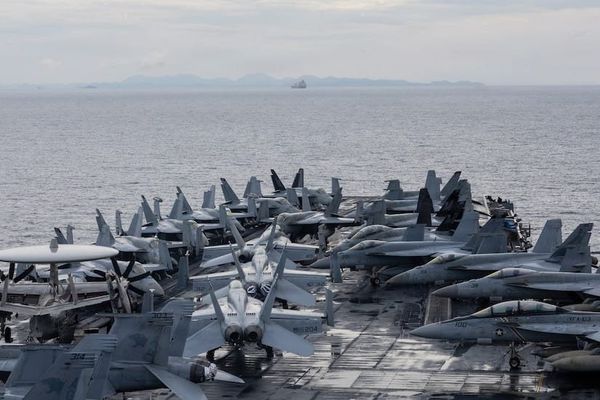
The Pentagon is moving additional F-16 and F-35 fighters, together with aerial-refueling aircraft, from Europe to the Middle East. The deployment signals preparation for a sustained campaign rather than a limited round of retaliation.
Seventeen American service members have now died during the war. Two soldiers were killed by direct Iranian fire in Jordan over the weekend, while another was killed in northern Iraq during the disposal of unexploded ordnance from an Iranian drone. President Donald Trump has promised that Iran will “pay” for each American death.
Iran’s Revolutionary Guard claimed that its missiles damaged US aircraft at Aqaba airport in Jordan, but that claim has not been independently confirmed. Jordan said it had not ordered the evacuation of Aqaba’s civilian airport or seaport, although the US Embassy evacuated personnel because of what it described as a credible threat.
The risk is no longer confined to Iran and the Gulf. Iran-aligned Houthis announced a naval blockade against Saudi Arabia, potentially opening another front and threatening shipping beyond the Strait of Hormuz.
Secretary of State Marco Rubio said Iran has continued sending messages — both directly and through intermediaries — that it wants negotiations. But he acknowledged that the existing memorandum cannot meaningfully remain in force while Tehran attacks shipping and attempts to control passage through the strait.
Washington says its strikes are limited to assets used against commercial vessels. Yet the campaign is widening in geography, duration and force composition while Iran increasingly attacks countries hosting American forces.
The original maritime dispute has therefore become a regional war over military access, economic pressure and control of critical infrastructure. Both governments continue to describe diplomacy as available, but each is using escalation to determine the terms under which talks might resume.
Saudi Arabia is speaking with Egypt, Jordan and Qatar in an effort to coordinate de-escalation. Iraqi Prime Minister Ali al-Zaidi is expected to visit Tehran after completing a five-day trip to the United States.
Operations began Monday in the southern Lebanese villages of Froun, Srifa and Zawtar al-Gharbiya under the Trilateral Framework negotiated by Lebanon and Israel in Rome.
The program is intended to test the transfer of security responsibility to the Lebanese Armed Forces as Israel gradually withdraws from designated areas. Zawtar al-Gharbiya lies within Israel’s buffer zone and is the only one of the three villages currently occupied by Israeli forces.
That makes the announcement a first operational step, but not yet proof that the wider framework will succeed. Its credibility will depend on an actual Israeli withdrawal, the Lebanese army’s ability to exercise durable control and whether the arrangement can reduce Hezbollah’s independent armed presence without producing another confrontation.
The United States is also exploring expanded investment in Lebanon and the restoration of direct US-Lebanon flights. The broader strategy is to strengthen the state economically and militarily so that the Lebanese government — not Hezbollah — becomes the country’s sole effective authority.
President Trump signed an executive order directing the Pentagon to reduce reliance on critical defense materials originating in adversarial states.
Beginning January 1, 2027, routine waivers allowing the acquisition of otherwise prohibited materials will generally end. Contractors seeking exceptions will need to identify the source, document unsuccessful efforts to find compliant alternatives and submit a timetable for removing the material from their supply chains.
The order also requires contractors and subcontractors at every tier to provide an itemized bill of materials tracing components, software and raw materials to their origin. Suppliers must be screened for financial instability, foreign ownership or influence, production bottlenecks and dependence on unreliable foreign sources.
The objective is greater visibility into vulnerabilities that may be hidden several layers below a major defense contractor. But mapping a supply chain does not create an alternative supplier. Replacing established sources will require investment, testing and additional production capacity — and the order acknowledges that small businesses could struggle with the compliance burden.
The policy is also not strictly domestic. Materials from allied countries and foreign projects supported by US financing remain eligible. The practical objective is a trusted US-and-allied supply system, not complete American self-sufficiency.
Andy Burnham became Britain’s seventh prime minister in a decade after Keir Starmer formally resigned and King Charles III invited Burnham to form a government.
The former Greater Manchester mayor promised a 10-year program focused on the cost of living, public services, infrastructure and greater decentralization. He appointed John Healey as chancellor, Ed Miliband as foreign secretary and retained Shabana Mahmood as home secretary.
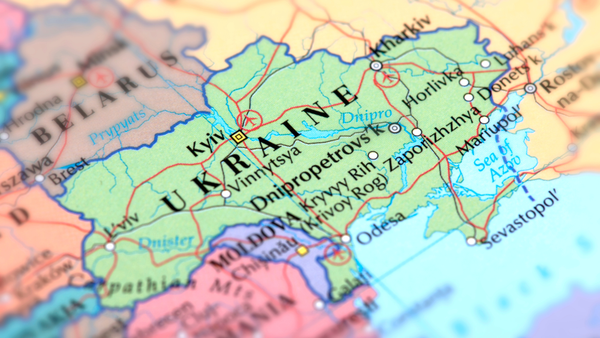
Burnham also spoke with President Volodymyr Zelenskyy and reaffirmed that British support for Ukraine would remain unchanged. The two leaders are expected to meet and discuss continued cooperation through the new Anti-Ballistic Missile Coalition.
Canada’s Mark Carney welcomed Burnham and emphasized expanding cooperation on defense production, critical minerals, energy and artificial intelligence. Trade between Canada and the United Kingdom has reached approximately C$85 billion annually, according to Ottawa.
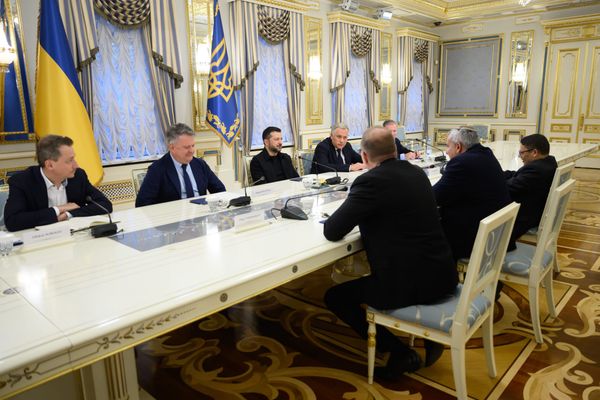
Zelenskyy convened army corps commanders, defense manufacturers, the defense and finance ministries and Ukrainian security agencies to address procurement delays, product defects and battlefield requirements.
The participants discussed drones, ground robotic systems, long-range artillery ammunition, air defense and additional financing. Ukraine will establish a regular mechanism through which commanders can provide manufacturers with direct operational feedback.
The meeting appears designed to address one of the central criticisms raised during the dismissal of Defense Minister Mykhailo Fedorov: that procurement and military decision-making were not adapting quickly enough to technology-driven warfare.
The leadership question, however, remains unresolved. Major General Yevhenii Khmara is serving as acting defense minister and has been appointed deputy minister, but parliament has not yet confirmed him as the permanent minister. Reports that Commander-in-Chief Oleksandr Syrskyi may also be removed remain unconfirmed; Ukraine’s General Staff has denied that a decision has been made.
The new feedback process is potentially significant. Its effect will depend on whether commanders’ recommendations can change contracts and production priorities — or whether it becomes another consultative layer without authority.
China says more than 40 countries have already accessed its MAZU meteorological and disaster-warning technology. Customized versions are operating in Nigeria, Djibouti and Pakistan, and Beijing has promised to extend the system to 30 countries while providing 5,000 AI training opportunities over five years.
Twenty-nine countries also established the Shanghai-based World Artificial Intelligence Cooperation Organization, giving China a new institutional platform through which to shape AI standards and partnerships.
The technology can deliver genuine benefits, particularly in countries lacking forecasting infrastructure. It also expands the ecosystem of Chinese models, training and governance rules. Our latest ONEST Explained examines the central question: when China offers AI as a global public good, who controls the data, technical standards and long-term relationship?
Spain’s men’s national team was received by King Felipe VI, Queen Letizia, the Princess of Asturias and Infanta Sofía after defeating Argentina 1–0 in the World Cup final in New Jersey.
Ferran Torres scored the winner in the 106th minute, securing Spain’s second men’s world championship.
Argentine President Javier Milei, meanwhile, appeared to publish a pre-scheduled message announcing a national holiday celebrating an Argentine victory. Argentina had already lost.
Get briefs like this delivered daily — free.