The Daily: What Shenzhen Promised, Berlin Confronted
Three powers discuss global security and energy cooperation. Ukraine’s allies pledge more sanctions, military support and security guarantees.

– 4 min read

Three powers discuss global security and energy cooperation. Ukraine’s allies pledge more sanctions, military support and security guarantees.
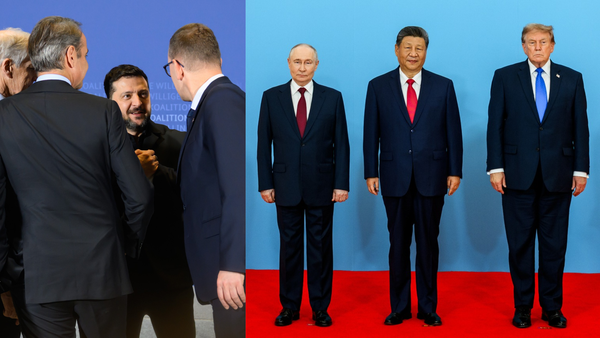
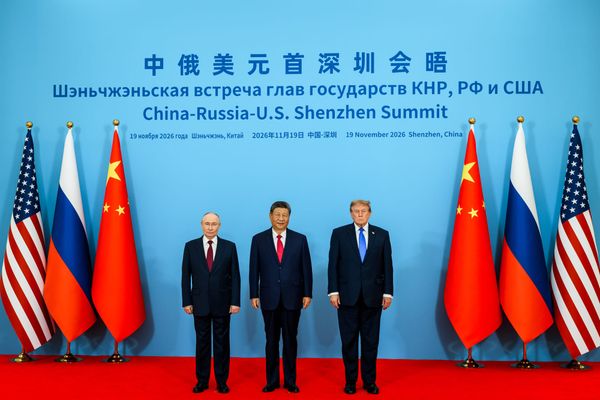
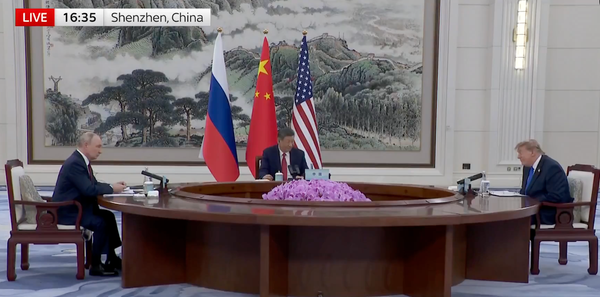
Today, Donald Trump, Vladimir Putin and Xi Jinping held their first trilateral summit in Shenzhen, China.
The Kremlin published a four-point agreement, subsequently confirmed by the White House and Beijing, addressing UN reform, energy cooperation, the International Criminal Court and nuclear security.
The agreement is real. Its commitments are non-binding.
For Putin, it offers language challenging the ICC's authority, energy cooperation and a role in shaping UN reform despite Russia's ongoing invasion of Ukraine. Xi secures a central place in discussions about global governance. Trump gets the nuclear dialogue he sought, but no binding arms-control commitments.
What, if anything, did Trump offer to secure that fourth provision?
That question is central to today's ONEST analysis, available to everyone.
 Olga Nesterova
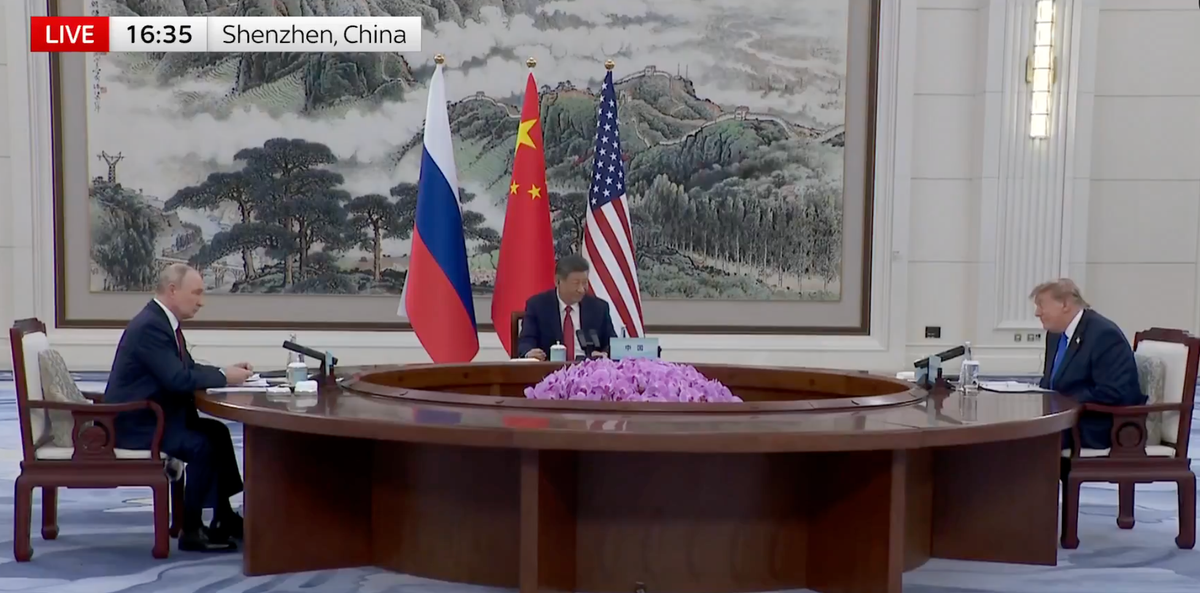
The agreement also raises a question that became particularly relevant as another meeting unfolded in Europe.
While Washington, Moscow and Beijing discussed energy stability in Shenzhen, Ukraine's European allies met in Berlin and pledged to intensify pressure on Russia's energy revenues.
I thank all the partners taking part in our Coalition of the Willing meeting today.
— Volodymyr Zelenskyy / Володимир Зеленський (@ZelenskyyUa) November 19, 2026
We are discussing further support: implementing the EU’s decision to provide Ukraine with €45 billion to cover budgetary needs as quickly as possible; strengthening air defense, particularly… pic.twitter.com/3axZu69De7
According to Politico, Trump joined the Coalition of the Willing meeting by telephone and urged European leaders to stop wasting money on the war, arguing that Putin was "ready to make peace".
Meanwhile, Russia struck Kyiv, damaging the Dutch and Austrian embassies. Drone debris also fell on the grounds of Ukraine's Foreign Ministry, according to Ukraine's Defense Ministry.
Russians struck the courtyard of the Dutch Embassy in Kyiv this afternoon
— Olga Nesterova (@onestpress.onestnetwork.com) 2026-11-19T19:43:26.913Z
The joint statement issued by Germany, France, the United Kingdom and Ukraine outlined a different course:
President Zelenskyy also announced that European representatives would participate in future negotiations involving Russia, Ukraine and the United States.
The contrast is difficult to miss: In Shenzhen, the three powers endorsed stable energy flows and increased refined petroleum supplies. In Berlin, Ukraine's allies pledged to restrict the revenues financing Russia's war.
$350 billion Pentagon spending push stalls. Republican senators have suspended efforts to pass an additional $350 billion in military spending, on top of the Pentagon's proposed $1.1 trillion annual budget. The effort faced procedural obstacles and political resistance following Democrats' midterm gains.
Financial sector data breach. Hackers accessed customer information associated with Visa, Mastercard and JPMorgan through third-party entities, according to The Wall Street Journal. The companies reported no disruption to services.
Anthropic makes stock market history. The AI company completed a record-breaking IPO, raising approximately $81 billion. Its shares closed at $97.17, up 17% from their offering price, after briefly pushing its valuation above $2 trillion.
The broader market was less enthusiastic: the Nasdaq fell 2.3%.
Saudi Arabia: A Houthi strike damaged the Riyadh headquarters of the kingdom's sovereign wealth fund, as the renewed Yemen conflict increasingly threatens Saudi infrastructure.
Iran: The International Energy Agency warned that the disruption to global oil and gas supplies could accelerate electrification and reduce projected oil demand by more than 4% by 2035.
Gaza: Trump's Board of Peace accused both Israel and Hamas of failing to meet their commitments to end the war, raising concerns about the ceasefire's survival.
Somalia-UAE: Somalia expelled the Emirati ambassador, accusing Abu Dhabi of violating its sovereignty.
Kenya: A consortium of U.S. companies was selected as preferred bidder for a major rare-earth and niobium mining project.
India-Japan: The two countries agreed to expand defense cooperation, including potential missile-training arrangements.
Canada: Ottawa established national procurement arrangements for permanent carbon-removal credits from 19 Canadian projects.
At the OSCE today, Britain warned that Russia's continued attacks on Ukraine's electricity infrastructure threaten not only civilian access to heat, water and healthcare, but also nuclear safety.
The warning came on the same day that Trump, Putin and Xi reaffirmed that "nuclear war must never be fought".
In Shenzhen, the language was about peace and stability. In Ukraine, Russia's war continues.
Thank you for reading Onest.
Independent reporting. Context without the noise.