The Daily: Trump heads to ASEAN. Canada is already making moves.
What mattered. Why it matters. What's next.

– 6 min read

What mattered. Why it matters. What's next.
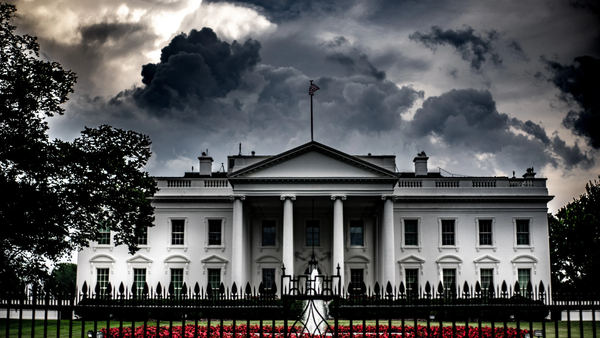
The Trump-Xi-Putin summit in Shenzhen hasn't even begun, and the diplomatic theater is already underway.
Washington wants to discuss nuclear arms control. Beijing considers nuclear reductions involving China unrealistic. Moscow is presenting the gathering as a meeting of three world powers. Ukraine is questioning whether another Yalta-style arrangement is taking shape.
Meanwhile, the leaders are offering conflicting signals about Russia's war in Ukraine, Iran, North Korea, and semiconductor restrictions.
And even the timing of the summit raises questions about diplomatic choreography and whose news cycle gets priority.
In today's analysis, I examine what each government is saying, what it wants, and what the contradictions reveal before the leaders even sit down.
WATCH: Three World Powers. Three Agendas. One Diplomatic Mess.
President Donald Trump is heading to Manila for the ASEAN meetings before continuing to Shenzhen.
Canadian Prime Minister Mark Carney has already been active across the region.
In Manila, Carney and Philippine President Ferdinand Marcos Jr. welcomed the conclusion of negotiations for a bilateral free trade agreement, with signature targeted for 2027. They also announced expanded cybersecurity and defense cooperation, including military talks and measures to improve information sharing.
Canada is extending its Dark Vessel Detection program through 2033 and providing $26 million in assistance supporting infrastructure, agriculture, community resilience, and nuclear regulatory capacity.
Carney also met Brazilian President Luiz Inácio Lula da Silva, announcing Canada's initial contribution of up to $560 million to the Tropical Forests Forever Facility.
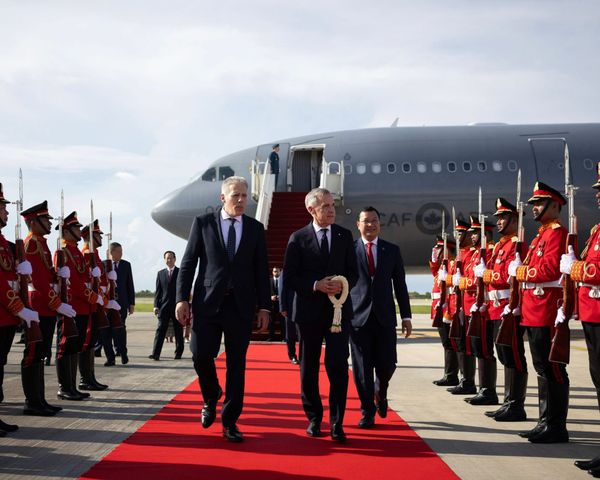
In Cambodia, Carney and Prime Minister Hun Manet welcomed progress toward an ASEAN-Canada free trade agreement, announced a trade cooperation memorandum, and discussed investment protections, cybersecurity, and combating financial crime.
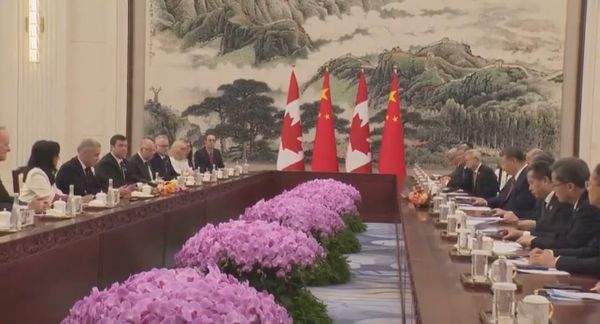
What's next: On November 17, Carney is scheduled to meet Chinese President Xi Jinping at 10:30 a.m. local time, followed by Mexican President Claudia Sheinbaum at 6 p.m.
These meetings provide another perspective on the diplomatic activity surrounding the summit: countries are pursuing their own trade, security, and investment priorities while the world's attention turns to the three-power meeting.
I'll be following the Shenzhen summit live, including the leaders' statements, diplomatic meetings, and developments as they unfold.
A gentle reminder: ONEST Reporting is an option for all subscribers, and it's free for everyone.
This is where you'll receive my original reporting, interviews, video analyses, and updates from events I'm covering.
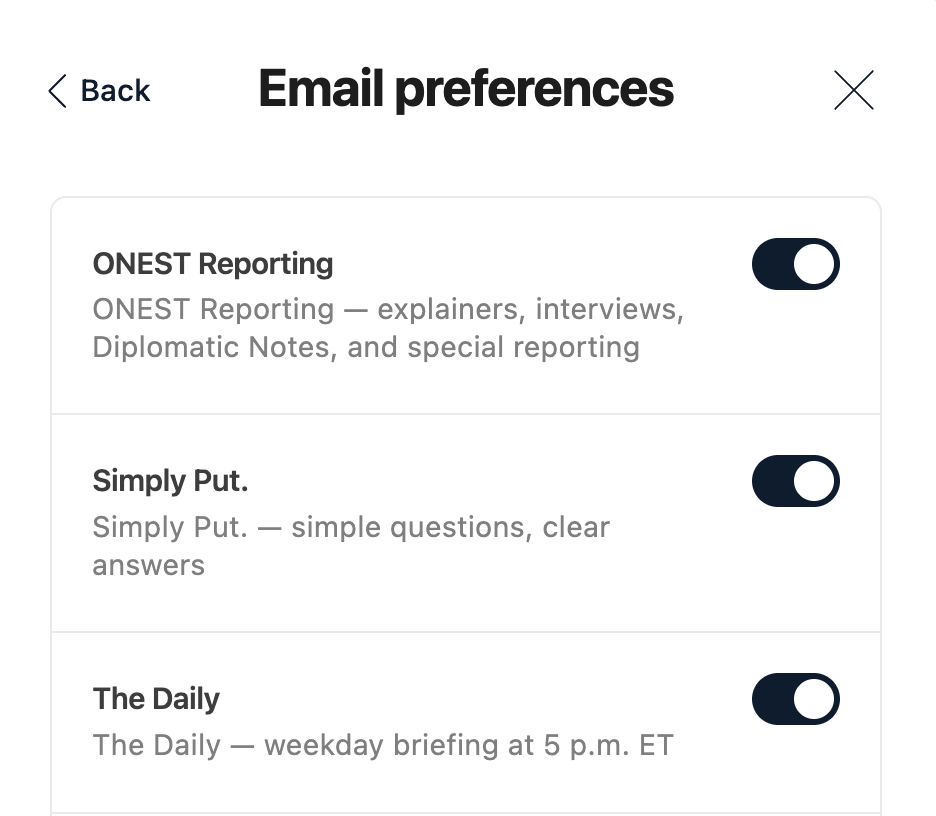
If you're already subscribed to ONEST, please make sure ONEST Reporting is enabled in your newsletter preferences. Go to My Account (top right corner) - Manage (Emails) and ensure that the ONEST Reporting option is turned on.
Russia's war in Ukraine is part of a much broader geopolitical picture.
In yesterday's analysis, I connected developments involving Russia and Japan, China and Taiwan, the South Pacific, and the approaching Shenzhen summit.
These stories are often reported separately. Examined together, they raise larger questions about territorial ambitions, regional security, and the balance of power.
Customers of JPMorgan Chase, Bank of America, Wells Fargo, Truist, and other financial institutions reported difficulties accessing online banking services and completing transactions Monday.
JPMorgan Chase attributed its problems to a software issue, saying some transactions were taking longer than usual while customers retained access to their accounts and funds.
Some customers at other institutions also experienced delays involving Zelle payments, although several banks said their own systems were operating normally.
Reports of problems declined during the afternoon, but a complete restoration across all affected services had not been confirmed.
United Airlines reported a technology failure affecting departing flights Monday, just days after an unrelated FAA network malfunction prompted a nationwide ground stop.
United subsequently said the problem had been resolved after approximately 90 minutes. Flights already airborne and United Express services were unaffected.
More than 400 United flights were listed as delayed by late afternoon.
The airline reported no indication of a cybersecurity incident.
The disruption follows last week's major Microsoft service outage and Friday's FAA failure. No common cause has been established, but the incidents highlight the dependence of essential services on reliable digital infrastructure.
The USS Theodore Roosevelt arrived in the Middle East on Sunday, bringing the number of U.S. aircraft carrier strike groups in Central Command's area of responsibility to three.
Separately, The Wall Street Journal reported that U.S. intelligence agencies estimate Iran retains between 1,500 and 2,500 missiles despite American and Israeli strikes on its production facilities.
The estimate is described as low confidence, reflecting difficulties determining the precise size and readiness of Iran's arsenal.
Iran says it has enough essential food reserves for at least six months despite the U.S. naval blockade.
Why it matters: The additional American naval presence and Iran's remaining missile capabilities underscore the risks of further escalation.
Yemeni forces aligned with the internationally recognized government announced their withdrawal from territory overlooking the Bab al-Mandeb Strait.
The move could strengthen the Houthis' position near one of the world's most important maritime passages, connecting the Red Sea to the Gulf of Aden.
Lebanese Prime Minister Nawaf Salam reported significant progress toward a potential 20-year natural gas supply agreement with Qatar following discussions in Doha.
Jordanian authorities announced restrictions on Telegram, citing national security concerns.
Separately, the State Security Court sentenced three men to death over last month's attack on a church in Karak that killed nine people.
Sudan and Ethiopia have accused each other of supporting armed groups operating across their borders, raising concerns about further regional destabilization.
The European Union announced additional sanctions targeting individuals and entities over Russia's war against Ukraine, including Russian retail entrepreneur Tatyana Kim.
Russia's Defense Ministry separately claimed to have intercepted 1,336 Ukrainian drones in an aerial attack. The figure has not been independently verified.
Austria, Denmark, Germany, Greece, and the Netherlands announced an initiative involving the transfer of rejected asylum seekers to Rwanda.
The proposal concerns migrants who have no legal right to remain in the participating countries but cannot readily be returned to their countries of origin.
Two separate mass shootings killed 17 people, renewing attention to South Africa's persistent problems with violent crime.
The Trump administration proposed changes to employer-sponsored green card procedures that would require businesses to expand efforts to recruit American workers before sponsoring foreign nationals.
The Labor Department presented the proposal as a measure to strengthen protections for U.S. workers.
B-21 Raider completes first weapons release test. The U.S. Air Force and Northrop Grumman confirmed that the next-generation stealth bomber conducted its first weapons release test in early November, marking another milestone in the aircraft's development.
Suspected drones prompt response at RAF Lakenheath. The U.S. Air Force confirmed responding to suspected unauthorized drone activity over the American fighter base in England.
Japan expands Philippine defense assistance. Tokyo agreed to provide drones and coastal defense radar equipment worth up to $27 million, strengthening Manila's maritime surveillance capabilities.
Pentagon renames its principal AI office. The Chief Digital and Artificial Intelligence Office has been re-designated the Super Intelligence Office. The Defense Department says the change does not alter its mission.
SpaceX achieves a major Starship milestone. On November 14, Starship successfully returned from orbit to its Texas launch site, where it was caught by the launch tower's mechanical arms.
Ukraine-founded drone company reaches $6 billion valuation. UFORCE secured a $700 million Series A financing round as demand for unmanned military systems continues to grow.
Canada-Cyprus: Prime Minister Carney and President Nikos Christodoulides discussed closer Canada-EU relations, including work toward a proposed associate-member relationship with the European Union.
Canada-Greece: Carney and Prime Minister Kyriakos Mitsotakis discussed trade, investment, European cooperation, and security. Carney reaffirmed Canada's support for Ukraine.
Canada-Senegal: Carney met President Bassirou Diomaye Faye in Cambodia, discussing trade, infrastructure investment, and closer economic cooperation.
China and cultural AI governance: An international advisory committee meeting in Beijing called for stronger protections for creators' rights, culturally diverse datasets, and more equitable access to AI technologies.
The diplomatic focus shifts to Manila and Shenzhen.
The immediate questions are whether Washington, Beijing, and Moscow can establish a common negotiating agenda, what role Ukraine and Iran will play, and whether the meetings produce substantive agreements rather than competing political narratives.
Carney's meetings with Xi Jinping and Claudia Sheinbaum will provide additional signals about Canada's approach to trade and diplomacy in the region.
I'll be following the developments through ONEST Reporting.
Olga Nesterova
Founder & Editor, ONEST
Independent reporting. Clear analysis. No unnecessary noise.