China Deployed More Than 100 Vessels in Unannounced Pacific Drills, Taiwan Says
The exercises extended beyond Taiwan and may indicate preparations for broader regional military operations.

– 1 min read

The exercises extended beyond Taiwan and may indicate preparations for broader regional military operations.
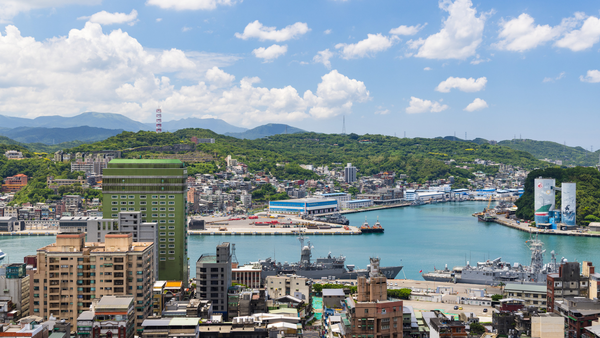
China deployed more than 100 naval and coast guard vessels across the western Pacific and around Taiwan during unannounced military exercises earlier this month, according to Taiwanese security officials cited by Reuters.
The operations reportedly included simulated attacks against military targets and cities, including Taiwan's.
Unlike previous large-scale exercises, Beijing did not publicly announce a named military operation.
Taiwanese officials described the deployments as a form of intimidation conducted without the publicity that could trigger a stronger international response.
The exercises involved naval forces from China's eastern, northern and southern theater commands.
According to Taiwanese assessments, the coordinated operations could indicate preparations not only for a potential blockade of Taiwan but also for military activity across a wider portion of the western Pacific.
That matters for the United States and regional allies, whose military forces and supply routes would be affected by any major confrontation.
The activity also precedes next week's APEC summit in Shenzhen, where Presidents Donald Trump and Xi Jinping are expected to meet.
By Friday, the deployment had reportedly declined to approximately 70 vessels, although Chinese naval formations, including the Liaoning carrier group, remained active in the region.
Beijing has described the carrier's activities as "routine".
The immediate issue is not whether China intends to invade Taiwan tomorrow, but whether Beijing is developing the capacity to coordinate increasingly large military operations while making that pressure a regular feature of the regional security environment.