Lutnick Under Scrutiny, Trump's Nvidia Shares, Russia's NATO Demands, and Taiwan
What mattered today. Why it matters. What comes next.

– 6 min read

What mattered today. Why it matters. What comes next.

Good evening,
Washington's Nvidia controversy is moving beyond the company's former CEO and into the Trump administration itself. Commerce Secretary Howard Lutnick faces congressional scrutiny, while the president's own Nvidia investments raise separate questions.
Meanwhile, Russia's demands in negotiations over Ukraine now extend explicitly to NATO's presence across Europe. China is conducting military exercises around Taiwan, even as its trade surplus passes $1 trillion.
And a major disruption has halted flight departures across the United States.
Here's what mattered.
Commerce Secretary Howard Lutnick has agreed to testify before the Senate Banking Committee on December 10 as scrutiny intensifies over his department's handling of advanced semiconductor exports.
Treasury Secretary Scott Bessent publicly blamed Commerce for failing to restrict Megaspeed, a Singapore-based Nvidia customer suspected of illegally diverting advanced American chips to China.
Officials at Treasury, Defense and State had reportedly pushed for restrictions for months. Commerce, which controls the relevant export restrictions, did not implement them.
Why it matters: The controversy has moved from Nvidia's corporate leadership to the government agency responsible for enforcing U.S. technology restrictions.
The question is no longer simply whether sensitive chips reached China. It is why officials responsible for preventing that possibility reportedly resisted or delayed action despite repeated warnings.
Lutnick's scheduled testimony could provide the first substantial public accounting of those decisions.
President Donald Trump's financial disclosures show that he purchased up to $1.6 million and sold up to $1 million in Nvidia shares in August, while his administration was making decisions affecting the company's access to Chinese markets.
The White House says independent financial managers control his investments and denies any conflict of interest.
Lutnick's former firm, Cantor Fitzgerald, has also held substantial Nvidia investments. The firm is managed by his sons, and Lutnick says he has divested his interests.
Why it matters: Financial exposure does not establish misconduct or improper influence, but when government officials oversee decisions that can substantially affect a company's value, transparency about financial interests becomes particularly important. The intersection of national security, commercial lobbying and private investment warrants scrutiny, not assumptions.
 Olga Nesterova

Russia is using negotiations over Ukraine to revive demands concerning the security architecture of Europe itself.
According to reporting on Moscow's proposals, Russian negotiators are seeking Ukrainian territorial concessions alongside restrictions on NATO's presence in Eastern Europe.
The reported demands include Finland leaving NATO and prohibiting NATO military bases in Estonia, Latvia and Lithuania.
The Kremlin has also reiterated its opposition to European troops providing security guarantees to Ukraine after any ceasefire.
Why it matters: Russia invaded Ukraine in 2022 after making sweeping demands concerning NATO expansion and military deployments. It is now putting similar demands back on the negotiating table, including restrictions affecting countries that are already NATO members. Those countries' security arrangements are not concessions Ukraine can make on their behalf.
The central distinction remains: negotiating an end to Russia's war against Ukraine is not the same as negotiating a Russian veto over Europe's security.
Read our public report on Russia's renewed demands and the implications for NATO.
 Olga Nesterova

Taiwan reported 30 Chinese military aircraft and 11 military and official vessels operating around the island during the latest 24-hour reporting period.
The activity follows broader Chinese naval exercises extending into the Western Pacific. Taiwanese officials have described these as area-denial operations, intended in part to demonstrate China's ability to obstruct outside military intervention during a potential conflict.
Beijing describes its military exercises as routine.
Meanwhile, a diplomatic dispute is developing ahead of next week's APEC summit in Shenzhen. Taiwan insists it will participate on an equal basis, while Beijing maintains that participation must conform to its one-China principle.
Why it matters: Military pressure and diplomatic pressure are operating simultaneously. China is demonstrating capabilities relevant to isolating Taiwan while contesting the terms on which Taiwan participates internationally. Neither development independently establishes an imminent invasion. Together, they illustrate Beijing's effort to shape Taiwan's strategic choices and external relationships.
 Olga Nesterova
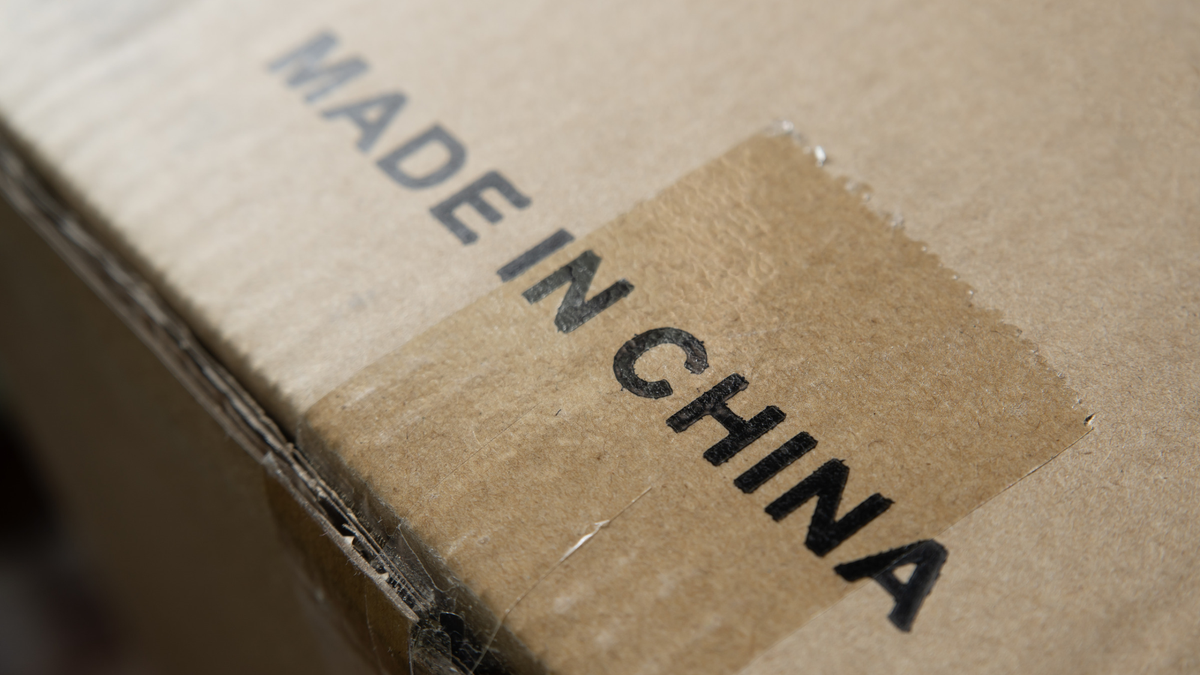
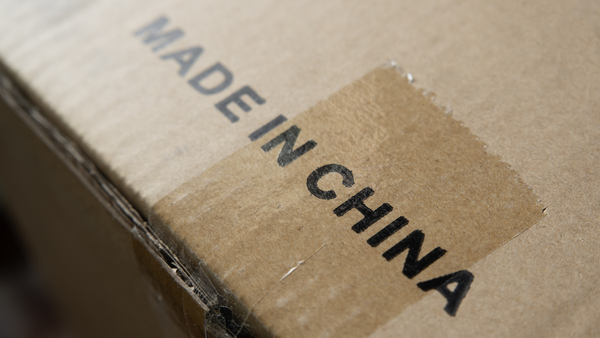
China recorded a $105.28 billion trade surplus in October, bringing its cumulative surplus for the first ten months of 2026 to approximately $1.043 trillion.
Exports continued expanding, supported partly by demand for technology and equipment associated with the global AI infrastructure boom.
Imports also rose sharply, but China's exports still substantially exceeded its purchases from the rest of the world.
Why it matters: China's export-heavy economy is becoming a growing source of friction with its major trading partners. The United States and European Union have pressed Beijing to address trade imbalances, particularly in sectors where Chinese production capacity exceeds domestic demand. With China's annual surplus on course to approach or exceed last year's record, those tensions are unlikely to disappear.
The figures also illustrate a broader contradiction: Western governments are seeking to reduce strategic dependence on China while continuing to purchase enormous quantities of Chinese goods.
The @FAAnews issued a nationwide ground stop for all U.S. airports following a communication issue impacting all Air Route Traffic Control Centers. FAA technicians are investigating the issue. We will provide immediate updates as we have them.
— Secretary Sean Duffy (@SecDuffy) November 13, 2026
The FAA has halted departures across the United States following a telecommunications outage affecting air traffic control centers.
Speaking at the White House, Homeland Security Secretary Markwayne Mullin said officials can still communicate at certain levels, but the system is overwhelmed.
Asked whether the disruption could last days or weeks, Mullin said it was too early to tell. He praised Transportation Secretary Sean Duffy's response.
Mullin said there was no initial indication of malicious activity, although investigators were not ruling anything out.
Aircraft already airborne have generally been allowed to land, while departures remain disrupted.
Why it matters: The government has not established when normal operations will resume. Even after communications are restored, airlines could face significant delays as they work through the resulting backlog.
FAA's AI rollout: The timeline
June 22, 2026: The Department of Transportation announces an $875 million contract with Air Space Intelligence for modernized air traffic management technology, including the AI-supported SMART system.
September 21: The FAA launches SMART (Strategic Management of Airspace, Routes and Trajectories) in the Washington, D.C., region. The system analyzes approximately 200 data streams to help anticipate congestion and recommend flight-routing adjustments.
October 9: More than two dozen lawmakers call for a pause in the rollout, raising questions about safety testing, oversight and controller training.
November 10: The FAA announces SMART's nationwide expansion across all 22 U.S. regional air traffic control centers.
November 13: Three days later, the FAA orders a nationwide ground stop after communications failures affect air traffic control centers across the country.
What remains unknown: Investigators have not established whether SMART played any role in the outage. The FAA describes SMART as a planning and advisory system, not a replacement for air traffic controllers.
The timing warrants scrutiny. It does not establish causation.
Lutnick's upcoming congressional testimony will put the administration's semiconductor export decisions under closer scrutiny.
Russia's proposals raise fundamental questions about whether negotiations concerning Ukraine are being expanded into a broader confrontation over European security.
And next week's APEC summit will bring Taiwan's diplomatic position and the wider U.S.-China relationship into sharper focus.
That's The Daily.
Have a good weekend.
— Olga
What mattered. Why it mattered. What comes next.