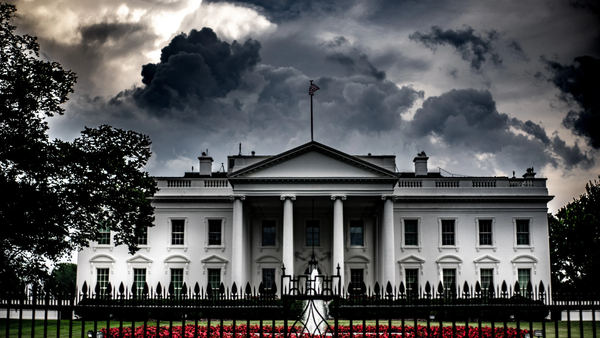
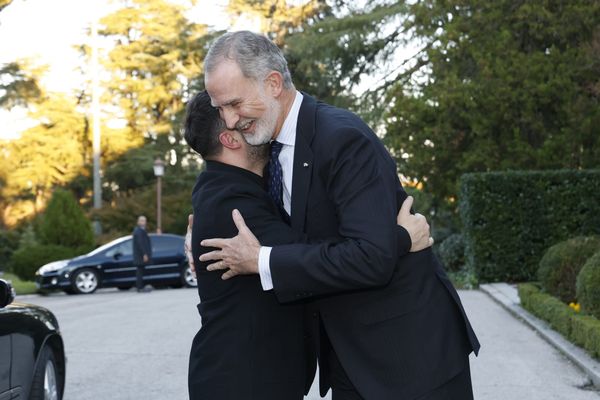
The Daily: Ukraine Talks, Nvidia's Crisis and a Pentagon Shake-Up

– 4 min read


Good evening,
Another round of diplomacy over Ukraine, another reminder that negotiations and progress are not necessarily the same thing.
Meanwhile, Nvidia has lost its founder and CEO amid a national security controversy, the Pentagon is reorganizing its special operations leadership, and Washington and Tokyo are looking beneath the Pacific Ocean for critical minerals.
Here's what mattered today, and why.
U.S. envoys Steve Witkoff and Jared Kushner met Russian President Vladimir Putin in Moscow before traveling to Dublin for discussions with Ukrainian President Volodymyr Zelenskyy.
Two days of talks in Abu Dhabi produced an agreement on a major prisoner exchange but no breakthrough toward ending Russia's war.
Moscow continues demanding Ukrainian territory and opposing European troop deployments. European representatives may participate in the next negotiating round, although Russia has resisted their inclusion.
Why it matters: The prisoner exchange is a meaningful humanitarian development. But the central question remains unresolved: whether negotiations will produce a ceasefire that protects Ukraine's sovereignty or arrangements shaped by Russia's territorial demands.
Jensen Huang has resigned as Nvidia's CEO amid reports of relationships that triggered corporate governance concerns and scrutiny of a possible Chinese intelligence operation. CFO Colette Kress has been appointed interim CEO.
The crisis reaches beyond one executive. Nvidia's advanced chips underpin much of the global AI industry, while U.S. export controls aim to limit China's access to sensitive technology.
Why it matters: The investigation raises questions about corporate oversight, technology security and the concentration of strategic influence in a single company. Replacing the CEO does not settle them.
Defense Secretary Pete Hegseth announced changes elevating the Pentagon's senior civilian special operations office to a status equivalent to military department secretaries.
The office is adopting the historic name Office of Strategic Services and receiving 100 personnel positions and at least $45 million in annual reallocated funding. Establishing a permanent undersecretary-level position would require congressional approval.
Why it matters: The restructuring could give U.S. special operations greater influence over defense planning, procurement and budget decisions. Despite the historical name, this is not a restoration of the World War II intelligence agency that preceded the CIA.
Washington and Tokyo announced expanded cooperation on seabed mineral development, including Japan's rare-earth mud project near Minamitorishima Island and polymetallic nodules.
The governments plan closer cooperation on exploration, processing, technology, environmental assessment and commercial investment.
Why it matters: Critical minerals are increasingly central to economic security, defense manufacturing and advanced technology. The agreement is another effort to diversify supply chains in which China remains a dominant player.
Amnesty International has called for an investigation into an attack on Abiemnom earlier this year that killed more than 200 people.
The organization alleges that South Sudanese authorities and UN peacekeepers had advance warnings but failed to protect civilians.
Why it matters: The findings raise serious questions about early-warning mechanisms, peacekeeping responsibilities and accountability when threats against civilian populations are known in advance.
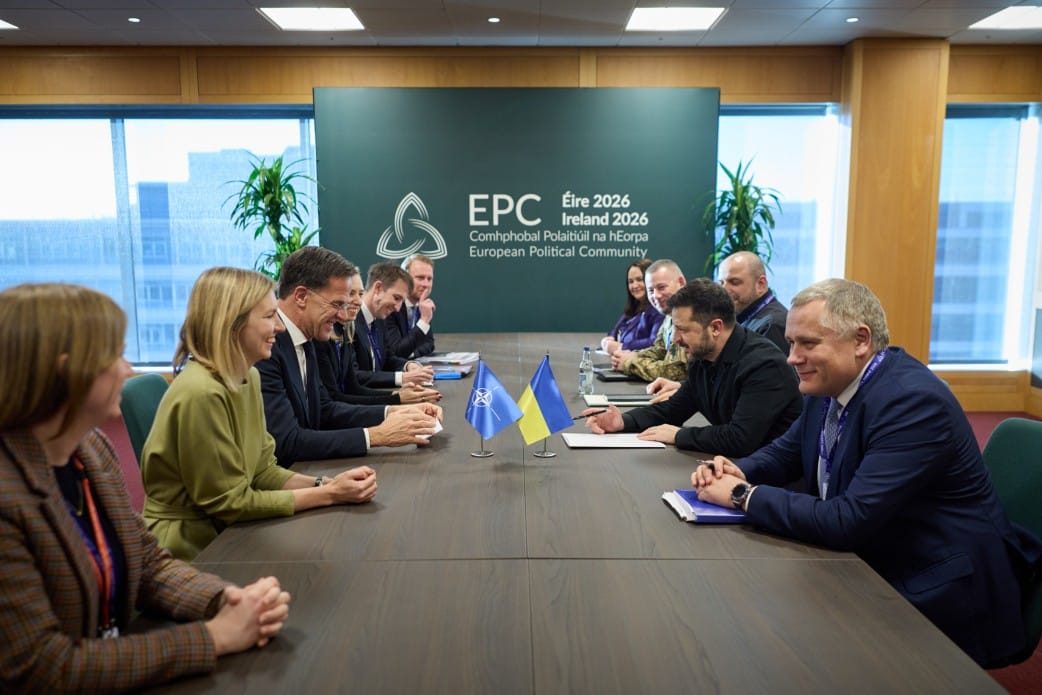
FREE TO READ | UKRAINE & EUROPEAN SECURITY
Washington's diplomatic activity has intensified. Russia's territorial demands have not disappeared.
Our explainer examines the negotiations, the continuing disagreements over Ukrainian territory, the role of European governments and what the emerging proposals could mean for Europe's security.
A prisoner exchange is progress for the families involved. It is not a peace agreement.

MEMBER ANALYSIS | CHINA & TECHNOLOGY
Jensen Huang's departure is an extraordinary development for one of the world's most valuable technology companies.
But the questions extend to foreign intelligence risks, America's semiconductor policy, corporate accountability and the security of the global AI industry.
One executive has resigned. The structural vulnerabilities deserve a much longer examination.
Canada and Greece: Prime Ministers Mark Carney and Kyriakos Mitsotakis met in Dublin, discussing stronger Canada-EU economic ties, European security and continued support for Ukraine.
Spain: Lawmakers approved measures to limit evictions and property speculation amid widespread protests over housing costs, ahead of snap elections.
Saudi Arabia: Authorities reported intercepting ballistic missiles, with debris falling in the Makkah region. Separately, GCC defense ministers approved a joint military command center in Kuwait.
Iran: Tehran says its enriched nuclear material will remain in the country, while officials warn that wartime damage to gas infrastructure could cause shortages this winter.
Gaza: An Israeli strike on a building at Nasser Hospital killed at least six people, according to Palestinian emergency authorities. Israel said it targeted Hamas fighters.
Syria and Lebanon: A major border crossing reopened after two years, restoring an important route for passengers and commercial traffic.
Bangladesh: Demonstrations demanding the return of exiled former Prime Minister Sheikh Hasina turned violent, with police using tear gas and rubber bullets.
Japan and the Philippines: Tokyo agreed to provide $27 million in coastal radar and drone assistance to Manila amid increasing security concerns over China.
United Arab Emirates: The UAE became the first country outside Europe to begin implementing the digital ATA Carnet system, simplifying customs procedures for temporarily imported goods, including professional equipment and exhibition materials.
USS Nimitz: The People Behind the Ship
For Veterans Day, ONEST released a special documentary exploring the history, service and people behind the USS Nimitz, one of America's most iconic aircraft carriers.
Through conversations with sailors, veterans and the ship's commanding officer, we look beyond the flight deck to the leadership, sacrifices and families that sustain a warship across generations.
If you missed its premiere, the 28 min documentary is available to watch.
GO BEYOND THE HEADLINES
The Daily tells you what happened. ONEST examines why it matters, how decisions connect across borders, and what comes next.
Our members receive full access to ONEST Explained, Diplomatic Notes, Deep Dives, original reporting, exclusive interviews and our archive.
$19.99/month or $199/year.
Join readers across 122+ countries who turn to ONEST for independent geopolitical journalism.
Until tomorrow,
Olga Nesterova
Founder & Editor, ONEST
Independent Geopolitical Journalism