The Brief: The Price of a Deal
Trump's China trip, Putin's friendship, Russian missiles in Poland, and the developments shaping the world beyond the summit.

– 4 min read

Trump's China trip, Putin's friendship, Russian missiles in Poland, and the developments shaping the world beyond the summit.
Donald Trump promised nearly ten years ago to run America like his business. During his second term, he described the United States as a giant store — one he claimed to own "on behalf of the American people".
That distinction matters.
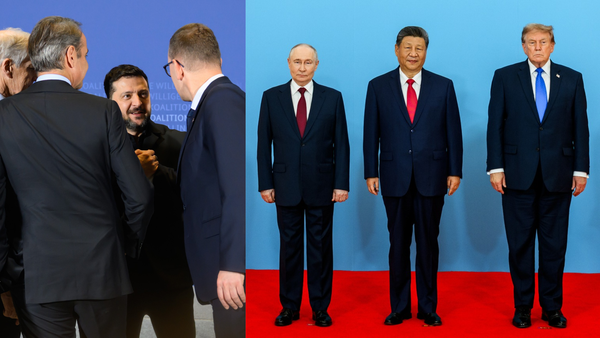
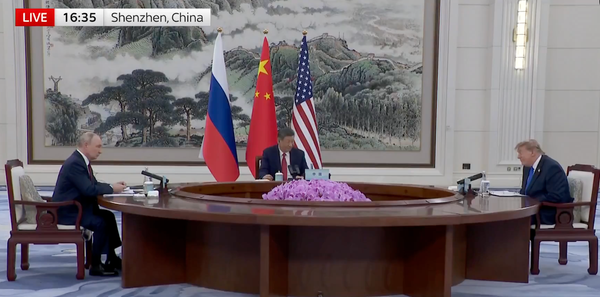
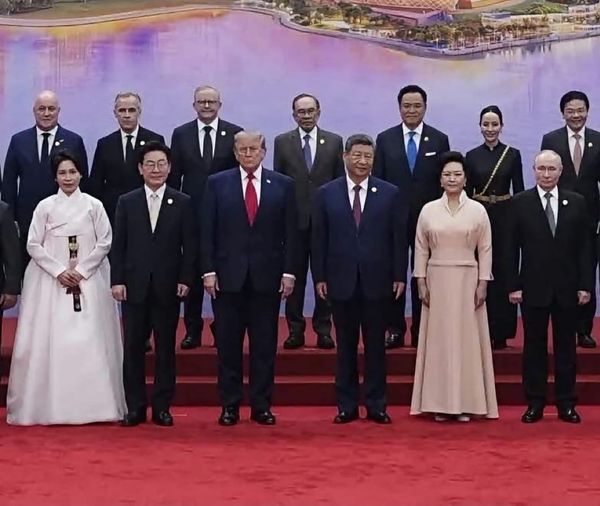
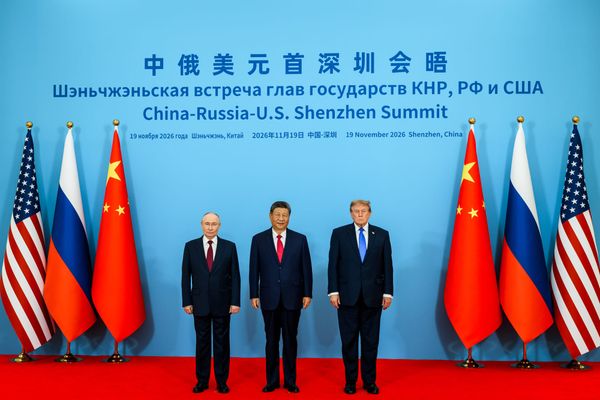
In my latest video, I trace the evolution of Trump's business approach to governing, his relationship with Vladimir Putin, and the four points emerging from the Trump-Xi-Putin meeting in Shenzhen.
The nuclear language received much of the attention. But the declaration also addressed the International Criminal Court, UN reform, and petroleum supplies. What was actually agreed? Who stands to benefit? And what was left unanswered?
I also examine Trump's response to Russian military objects entering Polish airspace, his contrasting treatment of Russia, China, and Canada, and the larger question of accountability as a new Congress prepares to take office.
The question is not simply what Trump accomplished in China. It is what his approach to foreign policy may cost the United States and what precedents it leaves behind.
President Trump held a lengthy White House press conference Friday, praising his Asia trip and defending his relationships with Xi Jinping and Vladimir Putin.
Russia and China. Trump described his relationship with Putin as "very good", arguing that maintaining personal ties with leaders of nuclear powers strengthens America's position. He also spoke of a comprehensive arrangement with China involving advanced chips and expressed confidence in American technological leadership.
Iran. Trump defended the war, saying he would make the same decision again. He also insisted that Washington wants an acceptable agreement with Tehran. Separately, the State Department announced sanctions against four Iranian regime-linked individuals accused of facilitating illicit oil sales.
The incoming Congress. Trump suggested he could work with Democratic leaders on healthcare, immigration, and other legislation, while warning that he would use his veto if negotiations failed. He also recalled making an early political contribution to Chuck Schumer.
Technology and infrastructure. The president defended Nvidia co-founder Jensen Huang, praised Transportation Secretary Sean Duffy, and promised improvements to the nation's air traffic control system. He also defended his decision to dismiss the government's cybersecurity chief.
Domestic security. Trump claimed a substantial reduction in Washington, D.C., crime and offered federal assistance to Chicago, New York, and Los Angeles. Asked about reports of a possible Iranian dirty-bomb plot, he said the administration would not allow such an attack. No independent confirmation of the alleged plot was presented.
Vice President JD Vance defended his role in supporting the president, while White House Chief of Staff Stephen Miller praised the administration's record and predicted further accomplishments.
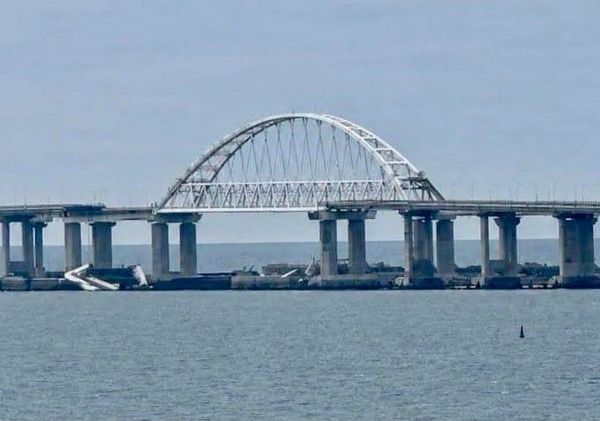
Two Russian missiles and a suspected drone landed in Poland during Russia's latest large-scale attack on Ukraine. Prime Minister Donald Tusk described the incident as a likely deliberate provocation, while NATO condemned the airspace violations. No immediate casualties or damage were reported in Poland.
The incident raises fresh questions about escalation risks along NATO's eastern flank, just a day after the Shenzhen declaration.
Myanmar rejected the International Court of Justice's ruling that it committed genocide against the Rohingya minority. Its spokesperson objected that the decision was not unanimous. The ruling marks a major development in international accountability for atrocities against the Rohingya.
London and Brussels announced an agreement intended to ease barriers to food trade and expand youth mobility. Implementation remains conditional, including an unresolved dispute over university tuition fees for European students.
New crime statistics recorded nearly 600 women killed between July and September, renewing public anger over gender-based violence. The discovery of thirteen bodies in public areas around Johannesburg has intensified pressure on police.
At least four bodies have been recovered after a migrant boat capsized off Senegal's coast. Authorities continue searching for survivors. At least fifty people were believed to have been aboard.
President Nayib Bukele formally launched his campaign for a third term following constitutional changes that have enabled his continued tenure. The February election will test the country's increasingly concentrated political system.
The Trump administration auctioned rights covering approximately 31.5 million acres of seabed near American Samoa, seeking access to critical minerals. The initiative places deep-sea mining at the intersection of industrial policy, resource security, and environmental concerns.
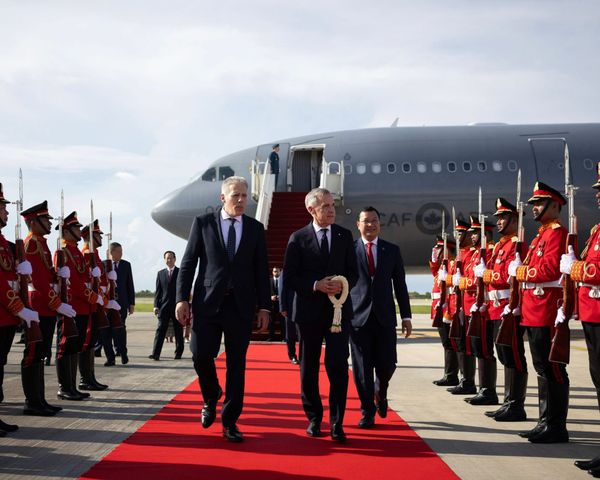
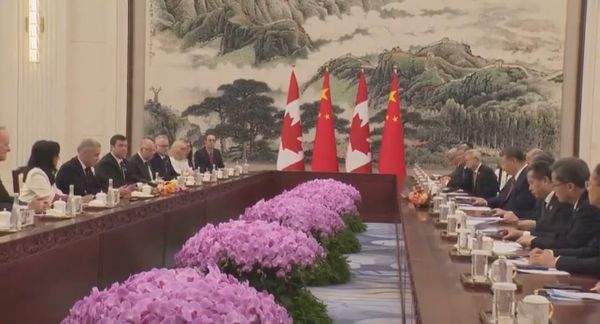
Following Mark Carney's meeting with Xi Jinping in Shenzhen, Canada and China advanced tariff relief and cooperation in education. Ottawa says access has been restored for more than 90% of Canadian trade previously affected by tariff measures, worth nearly $7.5 billion.
The development underscores Canada's efforts to diversify commercial relationships amid uncertainty in its relationship with Washington.
A new Council on Foreign Relations analysis warns that the growth of dollar-backed stablecoins in emerging markets could create vulnerabilities in global financial markets.
The concern is not simply cryptocurrency volatility. Major stablecoin issuers hold substantial reserves in U.S. Treasury securities. A sufficiently large theft or loss of confidence could trigger redemptions and forced asset sales, potentially transmitting stress into traditional funding markets.
The analysis argues for stronger international reserve standards, particularly in emerging markets where adoption has accelerated.
Independent journalism requires independent support.
ONEST follows the developments, examines the documents, and connects the decisions to their consequences.