MIDDLE EAST
Trump announces a new retaliation rule as US strikes continue
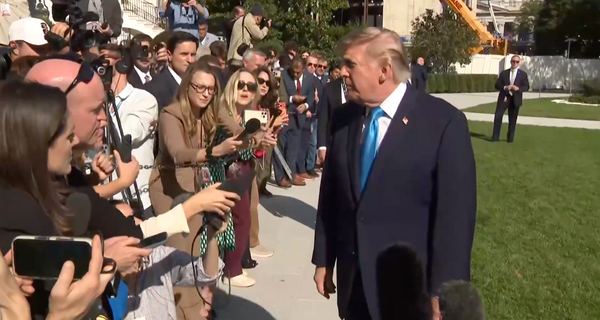
President Donald Trump said Wednesday that the United States would destroy one Iranian bridge or power plant every time Iran attacks a ship in the Strait of Hormuz.
“From this point forward,” Trump wrote, any Iranian missile, rocket, drone or other attack on a vessel would be answered by the destruction of “ONE BRIDGE OR POWER PLANT,” including infrastructure in or near Tehran.
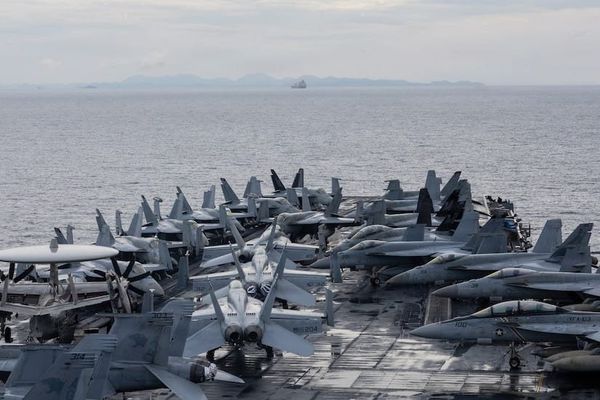
The statement followed an 11th consecutive night of US strikes. CENTCOM said its latest operations targeted Iranian military command centers, maritime capabilities, missile and drone launch sites and air defense systems.
The Pentagon now estimates that the Iran war has cost $37.5 billion, including anticipated expenses through September 30. Defense Secretary Pete Hegseth warned Congress that without emergency supplemental funding, the military may have to curtail training and other activities to absorb the cost.
The US military also identified Sgt. Angel S. Rampersad, 28, of Ozone Park, New York, as the third service member killed in Iran’s July 17 attack on a US base in Jordan. His death reportedly brings the number of American troops killed since the war began to 18.
Secretary of State Marco Rubio said in Manila that Washington remained open to another agreement with Tehran but argued that Iran had violated the previous memorandum by continuing to attack commercial shipping.
The positions are increasingly difficult to reconcile: Washington says diplomacy remains available while conducting nightly strikes and publicly establishing an automatic infrastructure-retaliation formula.
Houthi threat places a second maritime chokepoint under pressure
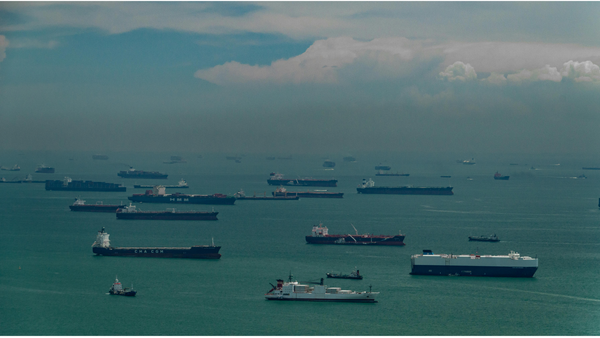
Yemen’s Houthi movement announced what it described as a naval blockade against Saudi Arabia, potentially extending the regional shipping crisis from the Strait of Hormuz to Bab al-Mandeb.
Saudi Arabia condemned the threat. Crude loadings through the Red Sea route fell 36% over two weeks, from 9.5 million barrels per day in late June to 6.1 million in the week beginning July 13, according to Kpler data cited by The National.
The route has become particularly important because Saudi Arabia has redirected substantial exports toward its Red Sea terminals as shipping through Hormuz has become more dangerous. Disruption at Bab al-Mandeb would complicate that alternative and force some shipments onto longer routes around Africa.
A vessel was also struck by an unidentified projectile approximately 17 nautical miles east of Dibba, off the United Arab Emirates. The crew was reported safe.
The pressure is therefore no longer concentrated at one entrance to the Gulf. Iran’s continued attacks around Hormuz and the Houthi threat near Bab al-Mandeb risk creating a two-chokepoint crisis affecting Gulf exports, Red Sea shipping and Asian energy importers simultaneously.
Brent crude rose above $95 per barrel on Wednesday, its highest level in six weeks.
Get briefs like this delivered daily — free.
Subscribe
US and Saudi Arabia sign nuclear agreement amid proliferation concerns
The United States and Saudi Arabia signed a 30-year peaceful nuclear cooperation agreement on Wednesday, establishing the legal framework for American companies to participate in the kingdom’s civilian nuclear program.
The agreement must now be submitted to Congress for review under Section 123 of the US Atomic Energy Act. Signing therefore does not mean that nuclear transfers or Saudi enrichment activities can begin immediately.
The text had not been made public at the time of publication. Reuters and the Associated Press reported, citing people familiar with the agreement, that it does not include the “gold standard” prohibition on domestic uranium enrichment and spent-fuel reprocessing accepted by the United Arab Emirates. It also reportedly does not require Saudi Arabia to adopt the International Atomic Energy Agency’s Additional Protocol, which permits more intrusive inspections.
The agreement does not itself transfer enrichment technology. It could, however, allow the two countries to study the construction of a uranium-enrichment facility in Saudi Arabia.
Secretary of State Marco Rubio said the United States would not enter an agreement that created a proliferation risk. The reported terms will nevertheless face scrutiny in Congress, particularly because Crown Prince Mohammed bin Salman has previously said that Saudi Arabia would pursue a nuclear weapon if Iran obtained one.
The timing creates a stark policy contrast: Washington is waging war to prevent Iran from acquiring a nuclear weapon while signing a civilian nuclear agreement with Saudi Arabia that reportedly leaves open sensitive fuel-cycle activities.
Congress will now review the agreement under the procedures established by the Atomic Energy Act.
Limited movement begins in southern Lebanon
The Lebanese army deployed in Zawtar al-Gharbiyeh following what a Lebanese security official described as an Israeli withdrawal. Washington said pilot-zone operations had begun in Zawtar al-Gharbiyeh, Froun and Srifa under the US-backed framework negotiated in Rome.
Lebanese Prime Minister Nawaf Salam visited Zawtar and raised the national flag, presenting the deployment as the beginning of a broader process.
The development is meaningful but limited. Reports differ over the extent of Israel’s previous presence in all three villages, and implementation in several locations does not yet amount to a comprehensive withdrawal from southern Lebanon.
President Joseph Aoun met Trump in Washington this week seeking further Israeli withdrawals and greater support for the Lebanese army.
Gaza’s physical division deepens
The Israeli military is constructing a miles-long earthen barrier inside Gaza, according to satellite imagery reviewed by the Associated Press. The structure separates the territory controlled by Israeli forces — more than half of the enclave — from the remaining Palestinian-administered area.
Its construction risks turning the present military division into a more durable territorial reality, even without a formal Israeli declaration of annexation or permanent occupation.
Separately, Hamas named Khalil al-Hayya as its overall leader. An Israeli strike in Gaza City killed a couple and their four children, according to local health officials.
Trump said Israeli Prime Minister Benjamin Netanyahu would not be arrested during a US visit despite the outstanding ICC warrant. New York Mayor Zohran Mamdani subsequently acknowledged that the city lacks independent authority to carry out such an arrest and called on the federal government to act.
INDO-PACIFIC
Quad backs ASEAN as Washington and Beijing prepare a Xi visit
The Quad foreign ministers — representing the United States, Australia, India and Japan — met in Manila and reaffirmed support for ASEAN “unity and centrality.”
Their statement identified maritime security, emerging technologies, economic security, humanitarian response and transnational threats as areas for practical cooperation.
Rubio also held a 90-minute meeting with Chinese Foreign Minister Wang Yi to prepare for President Xi Jinping’s expected visit to Washington in September.
Rubio said the United States and China would continue to defend their respective interests but had an obligation to manage their differences so they did not lead to catastrophic conflict. The two sides discussed potential cooperation and implementation of previously proposed trade and investment mechanisms.
The diplomatic language came immediately after another confrontation between Chinese and Philippine forces near Second Thomas Shoal. The Philippine and Chinese foreign ministers exchanged formal protests in Manila, with each government accusing the other of initiating the incident.
Rubio reiterated that the United States intends to meet its treaty obligations to the Philippines. He also said Chinese activities near Taiwan were inconsistent with the strategic stability Washington is attempting to build.
A second US arms sale to Taiwan remains under internal review. Rubio attributed the delay partly to production capacity, US stockpile requirements and competing weapons commitments.
Iran war dominates Asian security discussions
Rubio said Asian allies had not been directly asked during Wednesday’s meetings to contribute naval forces to the Hormuz operation, although Washington had raised the possibility previously.
He noted that some countries would require legislative authorization or an international mandate. Asian states possess capabilities — including minesweeping — that could support maritime operations, but they also face strong domestic and legal constraints on participation in another US-led conflict.
The ASEAN discussions reveal Washington’s competing priorities. The United States is attempting to demonstrate sustained Indo-Pacific engagement while asking Asian governments to help manage the consequences of a war thousands of miles away.
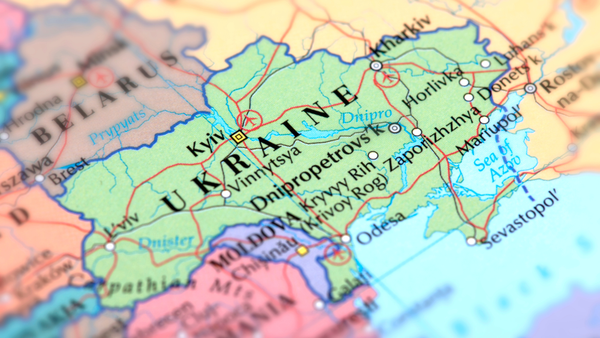
UKRAINE
Drapatyi takes command as military restructuring accelerates
Major General Mykhailo Drapatyi formally assumed his duties as commander-in-chief of Ukraine’s Armed Forces, replacing Oleksandr Syrskyi.
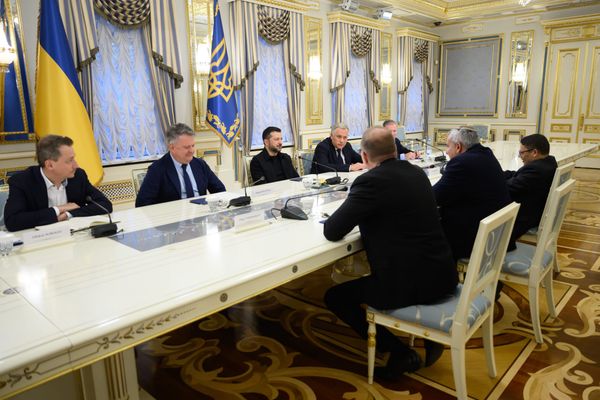
President Volodymyr Zelenskyy also selected Major General Ihor Skybiuk as chief of the General Staff. Zelenskyy described Drapatyi, acting Defense Minister Yevhenii Khmara and Skybiuk as battle-tested leaders trusted by Ukrainian troops.
The restructuring places officers associated with battlefield experience and military modernization at the center of Ukraine’s command. It does not, however, resolve the political controversy surrounding the dismissal of former Defense Minister Mykhailo Fedorov, whose supporters continue to demand his reinstatement.
Zelenskyy said the new leadership had been tasked with strengthening air defense, countering Russian strikes, expanding battlefield technology and responding more directly to the needs identified by corps and brigade commanders.
Ukraine presses Washington on Patriot production
Zelenskyy met US Ambassador to NATO Matthew Whitaker to discuss licenses allowing Ukraine and its partners to manufacture missiles for Patriot air defense systems.
Ukraine has faced an acute shortage of ballistic missile interceptors during recent Russian attacks. Zelenskyy said the licensing and production discussions needed to move faster.
Whitaker said the US-created PURL initiative had generated nearly $8 billion for American military equipment purchased with European funding.
Ukraine and the United States are also advancing a proposed Drone Deal. Ukrainian systems can now be sent to the United States for testing, a step toward potential procurement and industrial cooperation.
The arrangement reflects the changing structure of support: Europe increasingly finances US equipment while Ukraine offers battlefield-tested technology in return.
Rubio is expected to meet Russian Foreign Minister Sergey Lavrov in Manila on Thursday. He said the United States would explore whether “new conditions” had emerged for renewed diplomacy but acknowledged that US-led efforts had diminished in recent months.
CANADA
Canada and Britain reaffirm expanding partnership
Prime Minister Mark Carney spoke with newly installed British Prime Minister Andy Burnham, with the leaders emphasizing cooperation in defense, energy, artificial intelligence and critical minerals.
Bilateral trade has reached approximately $85 billion annually. Both leaders also reaffirmed support for Ukraine.
The conversation came as Canada formally joined the British-Italian-Japanese Global Combat Air Programme as its first observer country. The project is developing a sixth-generation combat aircraft intended to enter service around 2035.
Canada has made no financial commitment at this stage, but observer status gives it access to capability planning, industrial discussions and long-term program development. The move expands Ottawa’s defense options beyond US-led platforms and follows Canada’s participation in the European Union’s SAFE procurement framework.
Edmonton receives funding for affordable housing
The federal government announced $30 million for 70 affordable townhomes on a former school site in southeast Edmonton.
Construction is expected to be completed by December 2027. The project will place the homes near transit, grocery stores, libraries, recreation centers and parks.
The development is modest relative to the scale of Canada’s housing shortage, but it demonstrates the government’s strategy of converting surplus public land into affordable housing through federal-local partnerships.
FRANCE
Historic heatwave coincided with 5,764 excess deaths
France recorded 5,764 more deaths than statistically expected between June 17 and July 2, according to Public Health France.
The figure represents deaths from all causes during the historic heatwave, not a final count of deaths individually attributed to heat. Approximately two-thirds of those who died were 75 or older, and the Paris region recorded nearly 2,000 excess deaths.
The national mortality increase reached roughly 36%, making this France’s deadliest heat episode since 2003.
Both chambers of the French Parliament approved legislation barring children under 15 from opening social-media accounts.
Platforms would be required to use approved age verification systems. The legislation also expands restrictions on mobile phones in schools.
President Emmanuel Macron wants the measure in force for the new academic year, but it must first survive review by the Constitutional Council and comply with European Union law.
ONEST TAKE
Trump’s announcement establishes a simple public formula: one Iranian attack on a vessel will produce one destroyed Iranian bridge or power plant.
War does not legally operate through such arithmetic.
Iranian attacks on civilian commercial vessels are not lawful merely because Tehran opposes US military operations or economic restrictions. But an Iranian violation does not automatically turn an unrelated bridge or power station into a lawful American target.
Under international humanitarian law, civilian infrastructure may be attacked only if it qualifies as a military objective: it must make an effective contribution to military action, and its destruction must offer a definite military advantage under the circumstances at the time. The attacking force must also assess proportionality and take precautions to limit civilian harm.
A bridge or power plant does not satisfy those requirements simply because Iran previously attacked a ship elsewhere.
Trump’s statement may be intended as deterrence rather than a complete operational directive. But publicly promising predetermined retaliatory destruction creates a dangerous separation between target selection and military necessity. Power facilities also carry extensive secondary risks for hospitals, water systems, communications and civilians who played no role in maritime attacks.
At the same time, the Houthi threat demonstrates why the US air campaign has not contained the conflict. Pressure is moving outward — from Hormuz into the Gulf states, Jordan, commercial aviation and now Bab al-Mandeb.
Washington continues to describe diplomacy as its preferred outcome. Its current strategy, however, increasingly relies on convincing Iran to negotiate by expanding the number, frequency and geographic reach of potential attacks.
That is not yet a path out of the war. It is a larger system for managing escalation inside it.
Get briefs like this delivered daily — free.
Subscribe