June 3: Trade, Diplomacy, and the Fight for Influence

– 3 min read

Today’s stories share a common theme: power is being redefined.
In Washington, the Trump administration is tightening control over who can access the U.S. market. In the Middle East, the United States is attempting to reshape Lebanon’s security landscape through direct negotiations with Israel. At the United Nations, Bangladesh’s victory signals shifting influence away from traditional Western powers. Meanwhile, Ukraine is pressing for faster air defense deliveries as Russia expands missile production.
Here’s what matters today.
The White House unveiled a sweeping customs enforcement order that goes far beyond technical trade reforms. The administration is creating new barriers for foreign importers, requiring greater disclosure, stronger financial guarantees, and a more substantial U.S. presence.
The goal is straightforward: if a company wants access to American consumers, Washington wants someone it can identify, audit, fine, and hold accountable.
Why it matters: This is another step away from the globalization model that dominated the past three decades and toward a more security-focused approach to trade.
Read more: Trump’s New Customs Order Is About More Than Customs
A U.S.-brokered statement between Israel and Lebanon was presented as a ceasefire framework, but the larger objective appears to be far more ambitious.
The agreement outlines plans for Lebanese Armed Forces control over designated areas, the removal of Hezbollah operatives from southern Lebanon, and direct negotiations between Israel and Lebanon under U.S. leadership.
Why it matters: This is not simply about stopping attacks. It is an attempt to reshape Lebanon’s balance of power and reduce Hezbollah’s role as an independent military force.
Read more: Israel and Lebanon Move Toward Direct Negotiations. Hezbollah Is the Real Target.
Bangladesh’s Foreign Minister Khalilur Rahman defeated Cyprus in a surprisingly close race to become President of the 81st UN General Assembly.
His term will coincide with debates over UN reform, implementation of the Pact for the Future, and the selection of António Guterres’s successor.
Meanwhile, Germany failed to secure a Security Council seat for the first time in its history despite being one of the UN’s largest financial contributors.
Why it matters: The result highlights a broader shift in influence toward emerging and middle powers inside the UN system.
Read more: Bangladesh Wins UN General Assembly Presidency as UN Enters a Defining Year
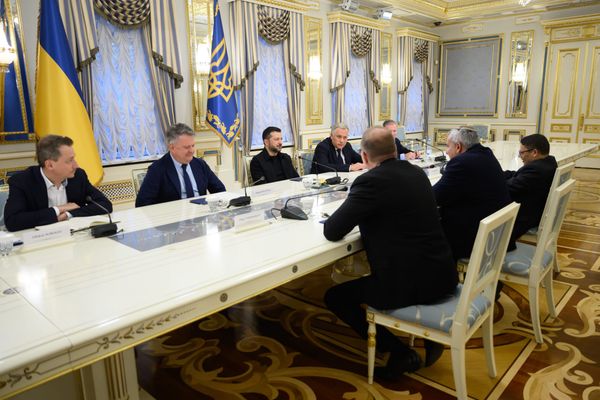
President Volodymyr Zelenskyy says an agreement to acquire additional Patriot air defense systems has already been reached, but implementation remains delayed.
The push comes as Russia continues large-scale missile and drone attacks. According to Zelenskyy, Moscow is producing roughly 120 ballistic missiles per month.
Why it matters: Ukraine argues that the limiting factor is no longer technology or supply, but political decisions and implementation speed.
Read more: Ukraine Pushes to Accelerate Patriot Air Defense Deal as Russian Missile Threat Grows
Secretary of State Marco Rubio defended the administration’s foreign policy record before Congress, pointing to ceasefires, agreements, aid reforms, and diplomatic initiatives as evidence of success.
But many of those initiatives remain untested, incomplete, or facing serious implementation challenges.
Why it matters: The debate is no longer whether activity is happening. The question is whether those activities produce durable outcomes.
Read more: Rubio’s Foreign Policy Has a Results Problem
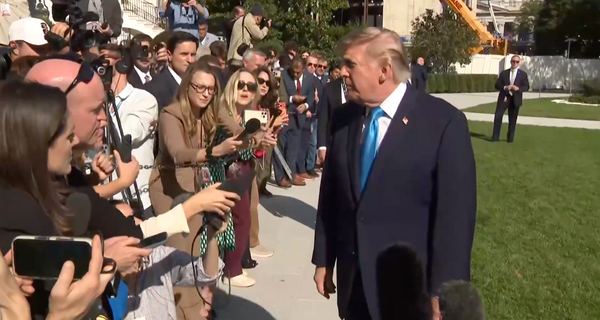
President Trump compared the temporary UFC venue being built on White House grounds to the Eiffel Tower, suggesting it might never be removed.
The remark may have been casual. It may not have been.
Why it matters: The story is less about architecture than symbolism — and what it says about the intersection of politics, entertainment, and presidential branding.
Read more: Trump Suggests White House UFC Arena Could Become Permanent
Today’s stories may appear unrelated, but they are all asking the same question:
Who gets to shape institutions?
The Trump administration is redefining access to the U.S. market. Washington is attempting to reshape Lebanon’s security architecture. Emerging powers are demanding a larger role inside the United Nations. Ukraine is discovering that military support depends as much on political will as industrial capacity.
Whether the institution is a border, a government, an alliance, or the UN itself, the debate is increasingly the same: who holds authority, who sets the rules, and who gets a seat at the table.
That may be one of the defining political questions of 2026.
Thank you for reading ONEST.
ONEST is funded directly by readers.
If you find value in this reporting, analysis, and coverage from the UN, Washington, and beyond, please consider contributing to the ONEST Fund. Every contribution helps keep this work independent and accessible.