Israel and Lebanon Move Toward Direct Negotiations. Hezbollah Is the Real Target.

– 2 min read

“The ceasefire is contingent on a complete cessation of Hizbollah fire and the evacuation of all Hizbollah operatives from the South Litani Sector.”
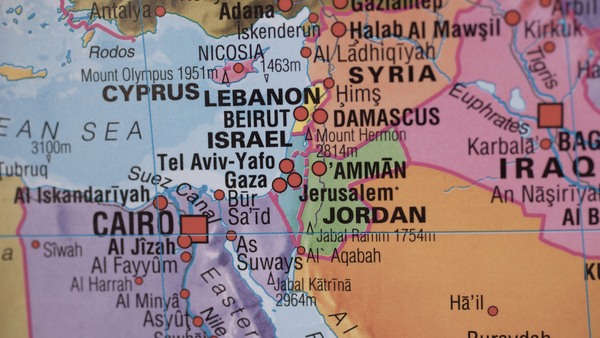
Buried inside a lengthy U.S.-brokered statement between Israel and Lebanon is a sentence that reveals the real significance of the agreement.
While presented as a ceasefire announcement, the document goes much further. It outlines a framework designed to expand Lebanese state control, reduce Hezbollah’s military presence in southern Lebanon, and lay the groundwork for direct negotiations between Israel and Lebanon under U.S. leadership.
If implemented, it would represent one of the most significant shifts in Lebanon’s security landscape in decades.
The most important line in the latest U.S.-brokered Israel-Lebanon statement is not the ceasefire.
It is the repeated commitment to remove Hezbollah from southern Lebanon and ultimately dismantle non-state armed groups altogether.
For decades, Israel and Lebanon technically remained at war while communicating largely through intermediaries, the United Nations, or crisis-management mechanisms. This statement goes further. It confirms direct negotiations, U.S.-led political and security tracks, and a shared framework aimed at expanding Lebanese state control at Hezbollah’s expense.
The proposed “pilot zones” are particularly significant. Under the plan, the Lebanese Armed Forces would assume exclusive control of selected areas, excluding all non-state actors. In diplomatic language, that means territory where Hezbollah would no longer be permitted to operate.
The statement also represents a notable shift in Lebanon’s public position. While Beirut stops short of explicitly endorsing Hezbollah’s disarmament, it commits to strengthening the Lebanese Armed Forces and exercising effective control throughout the country — language that aligns with longstanding Israeli and American demands.
Equally notable is what the statement says about Iran.
All three parties jointly condemned Iranian activities and support for regional proxies. For Lebanon, whose politics have long been shaped by Hezbollah’s ties to Tehran, appearing in a document with Israel and the United States that directly criticizes Iranian influence is a remarkable development.
The bigger picture is that Washington is attempting something more ambitious than another temporary ceasefire. The framework outlined here seeks to replace Hezbollah’s role as Lebanon’s dominant military force with state institutions backed by U.S. support.
Whether that succeeds is another matter.
Hezbollah remains deeply embedded in Lebanon’s political and security landscape. Creating pilot zones is one thing. Extending state authority across all of southern Lebanon — and eventually disarming Hezbollah — would be among the most consequential and difficult political transformations in the region in decades.
For now, the statement signals that the conversation has moved beyond stopping rockets. The United States, Israel, and Lebanon are openly discussing a future security architecture in which Hezbollah no longer functions as an independent armed force.
That would represent not just a ceasefire, but a fundamental restructuring of Lebanon’s balance of power.
ONEST Take
This reads less like a ceasefire agreement and more like the opening chapter of a U.S.-backed effort to gradually remove Hezbollah from Lebanon’s security equation. The real test will be whether the Lebanese state can enforce these commitments without triggering internal political or military confrontation. The week of June 22, when negotiations resume, may tell us whether this is a genuine diplomatic breakthrough or another ambitious framework that proves difficult to implement.