Five Stories, Two Rubrics — and One Bigger Point

– 7 min read

Today’s Friday livestream is about the same pattern showing up again and again: the world is not short on warnings. It is short on leaders willing to act before those warnings become emergencies.
We are talking about five major stories today: a new political rupture between Poland and Ukraine, a Russian drone hitting a residential building inside NATO territory, the Baltics physically fortifying their borders with Russia, a reported U.S.-Iran deal that may include a massive reconstruction fund, and the U.S. economy showing more signs of strain.
Then we’ll end with two rubrics: Weird News and Thoughts of the Week.
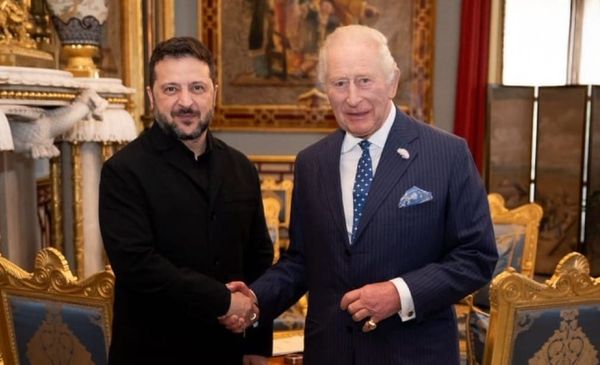
Polish President Karol Nawrocki said he wants to move toward stripping Ukrainian President Volodymyr Zelenskyy of Poland’s highest state honor, the Order of the White Eagle.
The trigger was Zelenskyy’s decision to name a Ukrainian special operations unit after the Ukrainian Insurgent Army, or UPA.
This is not a small historical reference in Poland.
For many Ukrainians, the UPA is remembered as part of resistance against Soviet domination. But in Poland, the UPA is also associated with massacres of Polish civilians during World War II. That history is deeply painful, politically explosive, and still unresolved.
Ukraine’s ambassador was summoned to Poland’s foreign ministry. Former Polish President Lech Wałęsa reportedly removed a Ukrainian flag pin from his lapel in protest. Polish political figures across the spectrum criticized the decision.
Prime Minister Donald Tusk issued the warning that matters most: if Poland and Ukraine quarrel over the past, someone else wins the future.
And that someone is Russia.
ONEST Take:
This is exactly the kind of dispute Moscow benefits from. Ukraine needs Poland. Poland needs Ukraine’s defense to hold. Europe needs both countries aligned. History matters. Reconciliation matters. But this is also a live war. The danger is that a real historical wound becomes a political weapon at the exact moment Russia is trying to fracture European unity.
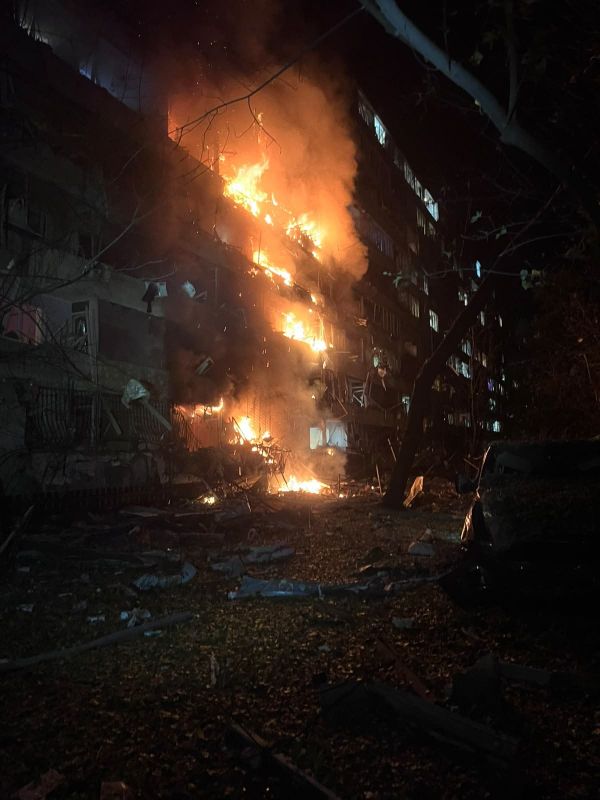
A Russian drone struck a residential building in Galați, Romania, injuring civilians and forcing evacuations. Romania is a NATO member.
Romanian authorities say the drone was Russian. Romania summoned Moscow’s ambassador, declared Russia’s consul in Constanța persona non grata, and announced the closure of Russia’s consulate there.
NATO condemned the incident and repeated that it will defend alliance territory. But this is the problem: we keep hearing statements after violations.
Russia has repeatedly tested NATO airspace. Drones and fragments have crossed into allied territory before. This time, civilians were injured inside a NATO country.
And Moscow’s response was not de-escalation. Dmitry Medvedev effectively warned Europe to expect more of this. The Kremlin was briefed. Russia threatened retaliation over Romania’s response.
ONEST Take:
You can talk yourself into inaction as much as you want, but Russia is testing NATO’s defense system and its political will. Article 5 is not only about legal clauses. It is also about deterrence. If Russia learns that drones can cross into NATO territory, hit residential buildings, injure civilians, and still produce only statements, then Moscow will keep testing the line.
The question is no longer whether this was “intentional” in the narrowest sense. The question is whether NATO is willing to defend its own airspace in practice, not only in press releases.
Latvia has begun installing “dragon’s teeth” along its border with Russia. These are large concrete anti-tank barriers, arranged in rows to block armored vehicles.
Lithuania and Estonia have similar projects underway. Together, this is part of the wider Baltic Defense Line — a regional effort to fortify NATO’s eastern flank.
This is what preparation looks like when countries do not have the luxury of confusion.
They are not debating whether Russia is a threat. They are not pretending geography is optional. They are building physical barriers, preparing defense lines, and trying to make any future Russian move more costly.
ONEST Take:
The Baltics understand something many larger countries still avoid saying plainly: deterrence is not a speech. It is infrastructure, ammunition, mobility, air defense, logistics, political clarity, and public seriousness.
Latvia installing dragon’s teeth is not symbolic. It is a message: if Russia tests this border, it will not meet confusion first. It will meet preparation.
A reported draft U.S.-Iran deal may include a $300 billion reconstruction or "investment fund" for Iran. According to the reporting, the program is being described as an international investment fund that the U.S. would facilitate as part of a final deal. The timing matters because Iran has also demanded ‘reparations’ to end the war.
The language matters. Iranian officials are reportedly describing it as reconstruction. Others are calling it an investment fund. The U.S. would reportedly help facilitate it if a final deal is reached.
This comes as Iran has demanded reparations connected to the war.
The key question is not whether diplomacy is needed. Of course diplomacy is needed. The question is what exactly is being traded, who pays, what gets verified, and what enforcement mechanism exists if Iran violates the agreement.
Because a deal without enforceable details is not diplomacy. It is branding.
ONEST Take:
Trump may want a legacy deal. Iran wants relief and money. The region wants security guarantees. Israel wants constraints. Gulf states want stability. But a credible deal depends on what is written, verified, funded, and enforceable — not what is leaked, posted, or branded.
If this becomes a $300 billion pathway without real constraints, then the question becomes: is this peace, or is this a payout dressed up as diplomacy?
The U.S. economy is sending mixed but uncomfortable signals.
First-quarter GDP was revised down from 2.0% to 1.6%. The Bureau of Economic Analysis said the downward revision primarily reflected weaker investment and consumer spending than initially estimated.
That matters because consumer spending and investment are not abstract numbers. They are the core of economic confidence.
At the same time, inflation pressure remains a problem. BEA’s Q1 PCE price index rose at a 4.5% annualized rate, and core PCE was revised slightly higher to 4.4%.
That complicates the Federal Reserve’s path. If growth is slowing but inflation remains sticky, the Fed has less room to cut rates without risking another inflation wave.
ONEST Take:
This is the economic version of the same theme: denial is expensive.
You cannot say the economy is perfect when growth is being revised down, consumers are under pressure, inflation is still elevated, and interest-rate expectations are shifting. That does not mean collapse. But it does mean the happy talk is not matching the data.
The economy is not in freefall. But it is also not giving policymakers permission to improvise.
A planned $1.5 billion Trump-branded golf and luxury development in Vietnam has created controversy because graves in Hung Yen province are being exhumed and relocated to clear land for the project.
This is not just a strange real estate story. It is about land, power, compensation, political access, and the way the Trump brand continues to intersect with foreign governments while Trump is back in office.
The reported image is almost too on-the-nose: graves being moved for a golf course bearing the name of a sitting U.S. president’s family business.
The Pentagon is reportedly recruiting service members to attend a UFC fight at the White House, with internal messages saying troops must meet physical requirements and pay for their own travel.
So we are now apparently at the point where military personnel can be used as audience optics for a spectacle on the White House lawn — but still may need to cover their own travel.
That is not patriotism. That is staging.
A federal judge ruled that Trump’s name must be removed from the Kennedy Center and that the center cannot be renamed without congressional approval.
The court ordered signage and references to the “Trump Kennedy Center” removed.
There is something almost poetic about this: the law had to step in and remind everyone that a national memorial is not a personal branding opportunity.
A Google engineer was charged after allegedly using internal search data to make more than $1 million on Polymarket bets tied to Google’s Year in Search results.
The username reportedly used was “AlphaRaccoon,” which makes the story sound absurd — until you remember that this is about confidential data, prediction markets, and the monetization of information before the public ever sees it.
Prediction markets are being sold as “wisdom of the crowd.” But if insiders are trading on privileged information, that is not wisdom. That is a casino with a leak.
It is fascinating how we are talked into confusion.
Take climate change.
The climate has already changed. We are now trying to survive with infrastructure built for a climate that no longer exists. Roads, grids, drainage, insurance models, food systems, military planning — all of it was designed for older assumptions.
And yet we are still having debates over whether climate change is real.
That is not a debate. That is delay.
The same thing is happening with defense.
The United States talks about defense while the Arctic is melting and changing the military map. NATO calls itself a defense alliance while Russian drones cross into allied territory and hit residential buildings. Europe debates escalation while Russia escalates by action.
And confused publics keep electing leaders who are either unable to meet the moment — or worse, leaders who monetize the downfall.
This is why news cannot just be entertainment.
Democracy comes from “demos” and “kratos” — people power, rule by the people.
But people power requires people who are not constantly manipulated into confusion.
Step out of confusion.
Stop treating news as a spectacle.
Start demanding that leaders lead.
Watch today’s Friday Livestream here (7pm ET):
This week alone, ONEST produced 25 videos and 25 articles — all built around factual information, context, and analysis at a time when confusion is being used as a political tool.
So read it. Watch it. Share it. Send it to someone who wants to understand what is happening without the noise.
And if you value this work, support ONEST.
Independent journalism does not grow because algorithms suddenly become generous. It grows because people decide it matters.
Let’s grow ONEST together.