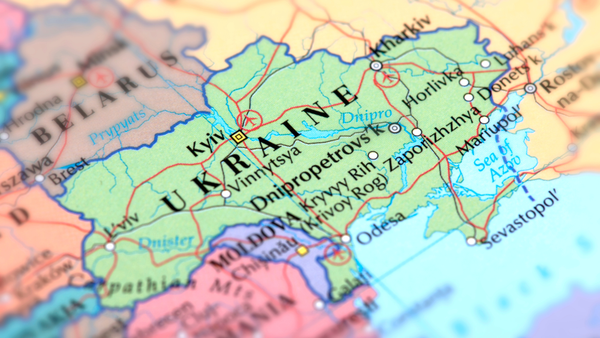
NATO Day Two: Billions for Ukraine, an Alliance Rearming — and a New War Escalating Beside It

– 5 min read

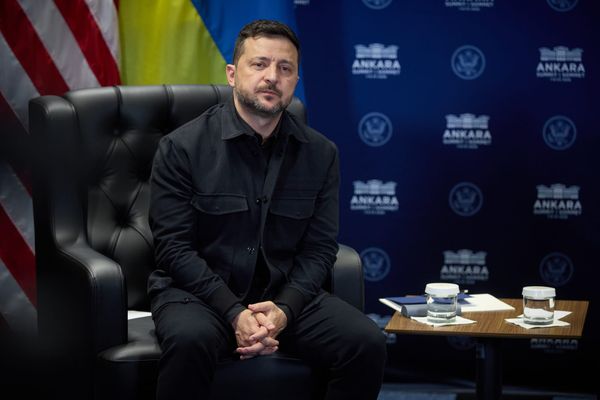
NATO’s Ankara summit ended with a firm declaration of collective defense, major new weapons commitments and a two-year military support pledge for Ukraine.
But the summit’s final hours were dominated by a different conflict: renewed American and Iranian strikes, the apparent collapse of their ceasefire framework and President Donald Trump’s declaration that further diplomacy with Tehran was “a waste of time.”
The 32 allies reaffirmed Article 5 and formally described Russia as a long-term threat to Euro-Atlantic security.
They announced more than $50 billion in new military procurements and committed to expanding weapons manufacturing, removing defense trade barriers and accelerating investment in air and missile defense, deep-strike capabilities, drones, cyber systems, artificial intelligence and an interoperable NATO “warfighting cloud.”
The declaration also recognized Ukraine as a contributor to transatlantic security — not simply a recipient of assistance.
Allies pledged €70 billion in military equipment, training and assistance for Ukraine in 2026 and committed to maintaining at least an equivalent level in 2027.
European allies and Canada now finance the vast majority of security assistance to Ukraine. NATO said that funding must become predictable, equitable and sustainable.
President Volodymyr Zelenskyy used the summit to press allies for interceptor missiles, Patriot support and faster political decisions.
Following his meeting with Trump, Zelenskyy said the discussion placed a “strong emphasis” on strengthening Ukraine’s air defense and included ideas intended to improve Ukraine’s negotiating position and bring peace closer.
Trump asked Zelenskyy whether he would travel to Moscow.
“It is difficult,” Zelenskyy replied. “There are lots of Ukrainian drones there. It’s dangerous.”
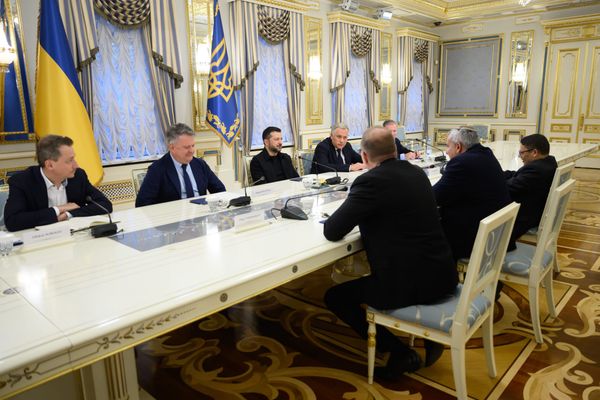
Zelenskyy also met a bipartisan U.S. congressional delegation and argued that allies have a genuine opportunity to push Vladimir Putin toward negotiations this year — but only through unified pressure, continued weapons deliveries and stronger sanctions.
“We have a real chance to push Putin toward negotiations this year, and that is why we need the unanimity and unity of all our partners,” Zelenskyy said.
His other meetings produced several practical tracks:
Türkiye’s President Recep Tayyip Erdoğan said Ankara would continue supporting Ukraine and use its communications with Moscow to help steer Russia toward peace.
Canada extended its leadership of Operation REASSURANCE in Latvia until 2031 and plans to increase its persistently deployed force to as many as 2,600 personnel.
Canada will also join Latvia and Denmark as a framework nation for NATO’s Multinational Division North, expanding its responsibility for the alliance’s Eastern Flank.
Prime Minister Mark Carney announced that part of Canada’s previously pledged military assistance for Ukraine would include:
Canada also announced an approximately $800 million purchase of Norwegian Joint Strike Missiles, negotiations on expanded military satellite communications in the Arctic and new defense-industrial initiatives intended to mobilize private capital.
Canada and the United Kingdom said their separate proposals for multilateral defense financing — the Defence, Security and Resilience Bank and the Multilateral Defence Mechanism — should be developed as complementary institutions.
Carney departed Ankara for Jeddah, where he said Canada would pursue a new economic and strategic partnership with Saudi Arabia.
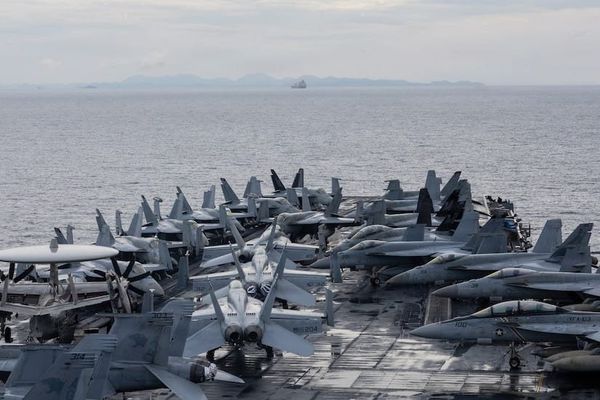
As NATO leaders discussed long-term deterrence, the United States and Iran returned to direct military confrontation.
U.S. Central Command said it had struck more than 80 targets in Iran during its latest operation. Further strikes were expected Wednesday night.
Washington said the attacks were retaliation for Iranian strikes on commercial vessels in the Strait of Hormuz. The United States also revoked a license that had permitted certain Iranian oil and petrochemical sales.
Iran responded by claiming attacks against 85 U.S. military sites in Bahrain and Kuwait. Kuwait and Qatar condemned the Iranian operations as violations of Gulf states’ sovereignty.
Tehran accused Washington of violating the memorandum of understanding that ended the previous round of fighting and said American strikes had hit surveillance facilities and military sites in southern Iran.
Trump declared that the interim agreement was “over.”
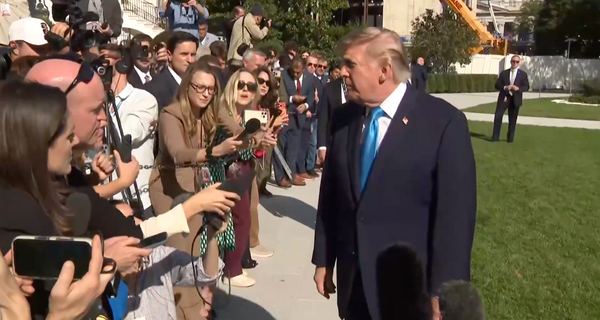
“We attacked very powerfully last night,” he said. “We say, ‘Go and do your funeral stuff,’ and instead of that, they start shooting rockets at ships.”
NATO Secretary General Mark Rutte called the American strikes “absolutely necessary,” arguing that Iran had violated the ceasefire and required a forceful response.
The summit declaration separately stated that Iran must never obtain a nuclear weapon and called on Tehran to respect freedom of navigation through the Strait of Hormuz.
The result is a NATO declaration promising long-term support for Ukraine while openly endorsing a new American military escalation in the Middle East.
Trump again argued that the United States should control Greenland, claiming "Denmark does not adequately protect it and should never have received the territory back after the Second World War".
Rutte said NATO was working to implement an earlier understanding allowing the United States to deploy elements of its proposed Golden Dome missile-defense system in Greenland, with Secretary of State Marco Rubio leading discussions involving Denmark and Greenland.
Danish Prime Minister Mette Frederiksen responded directly:
“Greenland is not for sale. Denmark is a sovereign state, and we are prepared to defend every part of NATO and the Kingdom of Denmark.”
The dispute was not resolved in Ankara. It was managed sufficiently to preserve the summit declaration.
Türkiye announced another $24 billion for its Steel Dome air- and missile-defense program. Erdoğan emphasized that Türkiye possesses Europe’s largest land army and intends to place more of its capabilities at NATO’s disposal.
NATO allies also selected Saab’s GlobalEye as the alliance’s next generation airborne radar platform, choosing a planned fleet of ten aircraft over Boeing’s E-7 Wedgetail proposal.
The final declaration reflects the alliance NATO is becoming: more European financing, larger weapons orders, expanded missile defense, deeper industrial coordination and increasingly explicit preparations for sustained confrontation.
It is also an alliance managing profound internal contradictions.
Members reaffirmed sovereignty while Trump demanded Greenland. They backed diplomacy for Ukraine while endorsing renewed strikes on Iran. They pledged predictable long-term support for Kyiv while Europe and Canada assumed most of the cost.
Ankara produced unity on paper — and a major acceleration of NATO’s rearmament.
Erdoğan presented NATO leaders with personalized engraved revolvers and live ammunition. British Prime Minister Keir Starmer left his weapon in Türkiye because importing it into the United Kingdom would be illegal; it was reportedly transferred to the British Embassy for decommissioning.
Trump returned from Türkiye aboard the older Air Force One rather than the recently converted Qatari aircraft. He said "the newer plane had been sent to European military bases so American troops could tour it".
Reporters aboard the older aircraft were instructed to close their window shades during part of the journey. Asked why, Trump suggested it could be related to Iran, although he said the shades in his own compartment remained open.
Trump also repeatedly misspoke during the summit, at one point referring to Zelenskyy as Putin and later mentioning missiles launched by the “Islamic Republic of Japan.”
Separately, rescue operations continued in the Arabian Sea after a Pakistani-registered K2 Airways Boeing 737-400 cargo aircraft crashed while flying from Sharjah to Karachi. The crew had reported a navigation system problem before radar contact was lost approximately 287 kilometers west of Karachi.
Support independent reporting like this by joining ONEST+ or donating any amount.