Middle East Brief: Hormuz Erupts Again as Washington Reopens the Iran War

– 5 min read

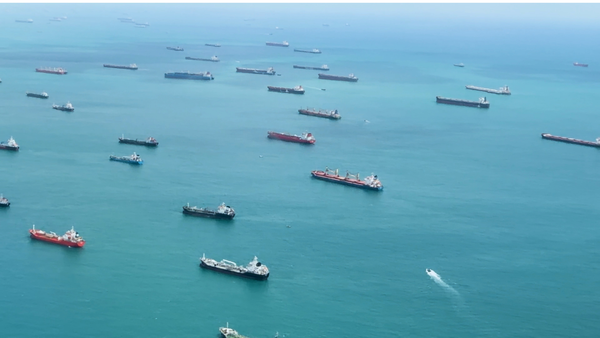
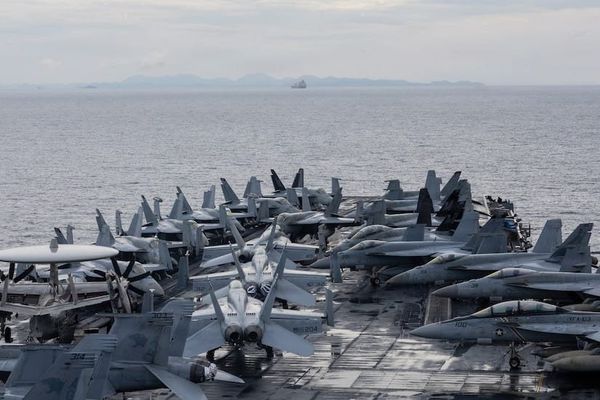
The United States has launched a new wave of strikes against Iranian targets after three merchant ships were attacked near the Strait of Hormuz, reopening a conflict Washington had presented only weeks ago as moving toward a negotiated settlement.
The strikes targeted Iranian air defense systems, maritime targeting infrastructure, and port facilities, according to U.S. officials. They were broader than earlier retaliatory operations and followed Iranian attacks on a Qatari tanker and two other commercial vessels near Oman.
Washington also revoked the temporary license that had allowed Iran to resume limited oil exports under the interim U.S.-Iran framework.
The license was issued on June 22 and was supposed to remain in effect through August 21. Iran now has until July 17 to wind down authorized transactions. Tehran called the move a violation of the agreement and warned that the United States would bear responsibility for the consequences.
The immediate cause is the renewed danger to commercial shipping.
But the larger story is that the agreement never resolved the central dispute over who controls passage through Hormuz.
Iran says vessels must follow its coordination procedures. The United States and Gulf governments reject any arrangement that gives Tehran authority to determine which commercial ships may pass, under what conditions, and potentially at what price.
That disagreement has now moved back from diplomacy to military force.
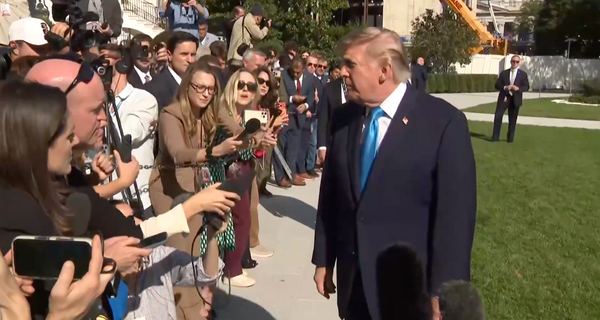
President Donald Trump warned this week that the United States would either reach a deal with Iran or “finish the job.”
The new strikes suggest Washington is once again attempting to negotiate while escalating militarily at the same time.
They also came after Iran held mass funeral ceremonies for Ayatollah Ali Khamenei. Crowds in Tehran called for vengeance against Trump, while the government used the processions to project unity after the killing of the country’s supreme leader.
But the crowds do not erase Iran’s internal instability.
Iran’s new leadership still faces economic pressure, anger over repression, and questions about how effectively Mojtaba Khamenei can consolidate power after reportedly being injured in the attack that killed his father.
The government can mobilize supporters in the streets; that does not mean the fractures inside the state or Iranian society have disappeared.
Once again, an international summit ostensibly focused on European security is being redirected toward Iran.
It happened at the 2025 G7, the 2025 NATO Summit, the 2025 United Nations General Assembly, the 2026 Munich Security Conference, and the 2026 G7.
Now it is happening at NATO in Ankara.
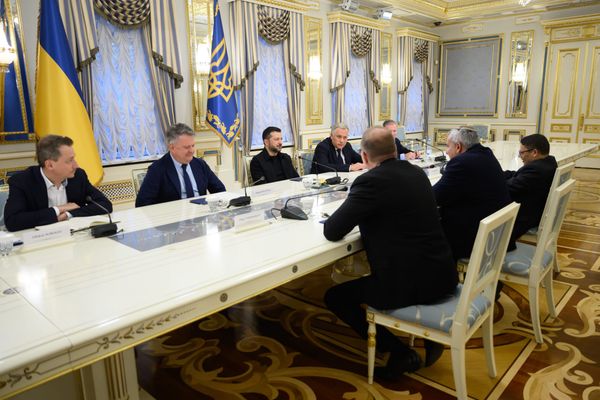
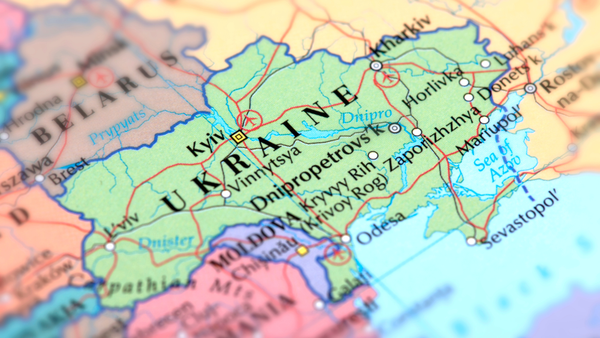
Russia is dedicating an enormous share of its state resources to the war against Ukraine. NATO leaders are warning that Moscow is rebuilding its military capacity, working with North Korea, China, and Iran, and preparing for a prolonged confrontation with the West.
Yet President Trump used his most prominent appearance on the summit’s first day to describe Russia’s war as distant from the United States — while presenting events surrounding Iran as an immediate American security concern.
The distinction is not geographical. Iran is farther from the United States than Ukraine.
It is political.
Russia’s war forces a conversation about sustained alliances, deterrence, and long-term commitments. Iran allows Trump to return to the language he prefers: strikes, threats, personal deals, and claims that a conflict can be finished through direct presidential intervention.
It also creates an announcement-driven cycle that repeatedly moves oil, stocks, bonds, and currencies. Trump himself has pointed to the market rising and falling with each new statement on Iran. Every threat, pause, strike, and promised agreement creates volatility — and volatility creates opportunities for people positioned to trade on it.
The growing U.S.-Türkiye relationship is creating a second regional fault line.
Trump said in Ankara that he was prepared to lift CAATSA sanctions and consider restoring Türkiye’s access to the F-35 program, despite its possession of Russia’s S-400 air defense system.
Israeli Prime Minister Benjamin Netanyahu has warned Washington against the sale, arguing that Turkish access to the aircraft could alter the region’s military balance.
The opposition is not limited to Israel.
A bipartisan group of U.S. lawmakers has raised concerns about Türkiye’s relationship with Iran, its rhetoric toward Israel, and the legal restrictions surrounding any sale while Ankara retains the S-400. One proposal reportedly under discussion would move the Russian system to a third country, although no agreement has been reached and Russia’s consent may be required under end-user restrictions.
The contradiction is striking.
Trump praised Erdoğan for keeping Türkiye out of the Iran-Israel fighting and used that restraint to justify closer military ties. Netanyahu, meanwhile, sees the same Turkish government as a potential strategic threat.
The United States is therefore trying to strengthen two regional partners whose security visions are increasingly incompatible.
Saudi Arabia is drawing a longer-term conclusion from the crisis.
Riyadh is considering expanding its East-West oil pipeline toward the Red Sea, potentially adding between one million and two million barrels per day of capacity.
The expansion would allow Saudi Arabia — and possibly neighboring producers — to move more oil without using the Strait of Hormuz. It would take years and cost billions of dollars, but the strategic purpose is clear: reduce Iran’s ability to threaten Gulf exports and the global economy by disrupting a single maritime chokepoint.
The existing pipeline has already become critical during the war. At times, it has operated near its seven-million-barrel-per-day capacity, with substantially larger volumes exported through Yanbu on the Red Sea.
Israel is promoting similar bypass infrastructure.
The region is no longer treating disruption in Hormuz as a temporary emergency. Governments are beginning to redesign their energy systems around the assumption that the strait may remain vulnerable for years.
Japan is directly exposed to that vulnerability.
A fleet of Japan-linked ships only recently managed to exit Hormuz after months of delay, while Japanese companies were considering resuming Iranian oil purchases under the temporary U.S. waiver.
Potential buyers wanted a longer exemption and guarantees that their vessels could travel safely. Those assurances now look even less credible after the renewed ship attacks and Washington’s decision to revoke the license.
That puts the U.S.-Japan-South Korea small modular reactor agreement signed in Ankara into perspective.
Secretary of State Marco Rubio explicitly connected the nuclear partnership to instability around Hormuz.
The agreement is not simply a clean energy initiative. It is an attempt to reduce long-term exposure to volatile fossil fuel routes while creating an American, Japanese, and South Korean alternative to Chinese and Russian nuclear infrastructure.
In that sense, the NATO Summit is producing two responses to the Middle East crisis at once:
Military strikes intended to restore deterrence today, and energy partnerships intended to reduce dependence tomorrow.
The renewed Iran confrontation risks obscuring several other consequential developments.
Hamas says it has dissolved its governing body in Gaza and is prepared to transfer authority to Palestinian technocrats under a U.S.-backed framework. Israel has dismissed the announcement as a stunt.
In southern Lebanon, an Israeli strike killed four people, including a school principal, in one of the deadliest attacks there in weeks.
And in Damascus, explosions wounded at least 18 people during French President Emmanuel Macron’s visit — the first by a Western leader since Bashar al-Assad’s removal.
Each development points toward an attempted regional reordering.
But none of those political transitions can stabilize while the United States and Iran remain one attack away from restarting a wider war.
The U.S.-Iran arrangement was sold as a pathway away from escalation.
Instead, it lifted sanctions before the rules governing Hormuz were settled, reopened discussions about Iranian oil exports before shipping safety was guaranteed, and relied on presidential understandings that could collapse after a single attack.
Now the oil license has been revoked, American strikes have resumed, and Iran says Washington has violated the deal.
Meanwhile, Saudi Arabia is planning pipelines around Hormuz, Japan is looking toward nuclear energy, Israel is warning against arming Türkiye, and NATO’s summit is once again being pulled away from Russia.
The region is not stabilizing.
It is adapting to permanent instability.
Support independent reporting like this by joining ONEST+ or donating any amount.