ONEST Brief: NATO Tensions, Iran’s Regional Outreach, and Europe’s New East-West Corridor

– 9 min read

Trump’s dispute with Italy expands ahead of a tense NATO meeting, Iran promotes a new regional security architecture, the EU invests in routes bypassing Russia, and Ukraine presses allies for firm air defense delivery dates.
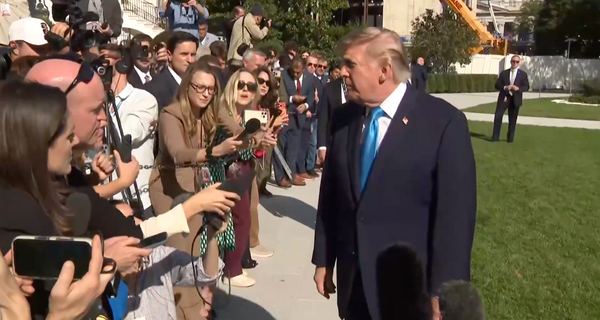
Italian Prime Minister Giorgia Meloni said she was “genuinely surprised” by her escalating public dispute with President Donald Trump but insisted she would not continue fueling it.
The confrontation began after Trump claimed Meloni had been “begging” him for a photograph at the G7 Summit. The two leaders subsequently traded public remarks, with Trump eventually blaming Italy for "failing to help defend the United States against Iran".
Meloni acknowledged competing theories about what prompted the attack, including speculation that viral footage of their interaction had angered Trump or that the dispute was intended to divert attention from difficulties in the Iran negotiations and tensions inside NATO.
She said she did not know whether any of those interpretations were accurate.
“I believe our bilateral relationship with the United States should return to normal,” Meloni said.
The dispute is no longer confined to Italy.
NATO Secretary General Mark Rutte is expected to meet Trump tomorrow amid broad transatlantic tension and renewed arguments over European burden-sharing.
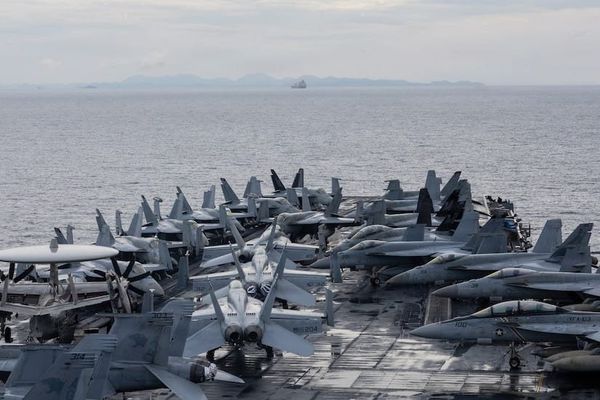
Ahead of the meeting, Rutte publicly emphasized the role European allies played in supporting the U.S.-led operation against Iran.
He said approximately 500 American aircraft had operated from U.S. bases in Italy during Operation Epic Fury. Romania, he added, reduced commercial flights at Bucharest airport to accommodate U.S. tanker operations.
The intervention appeared designed to counter the portrayal of European allies as passive beneficiaries of American protection.
The tension now extends beyond whether NATO countries spend enough on defense. It concerns whether military support provided by allies will be publicly acknowledged or erased when politically convenient.
Iranian President Masoud Pezeshkian received a formal welcome in Islamabad as Iran continued its diplomatic outreach following the Switzerland talks with the United States.
Pakistan’s leadership praised Iran, expressed support for negotiations based on respect for Iranian sovereignty and emphasized the close relationship between the two countries.
Pezeshkian was also awarded an honorary fellowship in cardiac surgery by the College of Physicians and Surgeons Pakistan, recognizing his medical and public health work before entering the presidency.
But the most significant message was political.
Pezeshkian said Iran was extending “its hand of friendship” to Pakistan, Qatar, Saudi Arabia, Egypt and Türkiye with the aim of establishing a new regional security architecture.
The proposal places Islamic and regional solidarity at the center of Tehran’s response to the evolving negotiations with Washington.
Iran is therefore not waiting for the U.S. framework to determine its position. It is simultaneously building relationships with regional states that could serve as mediators, investors, security partners — or a counterweight if the negotiations collapse.
Secretary of State Marco Rubio, speaking to press during a visit to Abu Dhabi, acknowledged that major elements of the U.S.-Iran framework remain unresolved.
Asked about Iran’s denial that it had agreed to International Atomic Energy Agency inspections, Rubio said the United States knew what Iran had accepted.
“They’ll either do it or they won’t,” he said, adding that Trump would then have decisions to make.
Rubio described the Switzerland talks as the beginning of a process rather than a completed agreement. He said “good groundwork” had been laid but stressed that significant work remained.
That wording is notably more cautious than Vice President JD Vance’s earlier claim that the administration had already achieved its four principal objectives.
Rubio also said the Gulf states had not yet been asked to finance the proposed reconstruction and investment package for Iran. Any such investment, he argued, would depend on Iran choosing to operate as a country rather than “a revolutionary movement that exports terror.”
The U.S. government, he repeated, would not provide the money.
On Lebanon, Rubio insisted that negotiations with the Lebanese government would remain separate from the Iran process because Lebanon is a sovereign country.
But Lebanon is not peripheral to the framework. It is literally the first point of the agreement, which links the wider arrangement to de-escalation involving Lebanon and Israel.
Rubio acknowledged that Iran’s sponsorship of Hezbollah would be addressed directly with Tehran, while Washington would separately negotiate Lebanon’s political and security future with the Lebanese government. The distinction therefore appears procedural rather than substantive: Lebanon may have its own negotiating track, but it is already embedded at the center of the U.S.-Iran framework.
Rubio also argued that Iranian missiles and regional proxies were implicitly covered by language calling for an end to hostilities across the region, even though the terms governing those forces were not explicitly settled in the initial text.
But hours later, Iranian President Masoud Pezeshkian publicly rejected the idea that Iran’s missile capabilities could form part of the negotiations.
“If we did not have our missiles, which are for our self-defense, Israel and America would have plowed through Iran the way Gaza was plowed through,” he said.
Pezeshkian accused the United States and Israel of using human rights language selectively and argued that Iran’s ability to defend itself had prevented the country from being destroyed.
“We will never, under any circumstances, negotiate with anyone over our defensive capabilities,” he said.
The statement exposes another central contradiction in the emerging framework. Rubio argues that missiles and proxies are implicitly covered and will be addressed at a later stage. Iran’s president is now saying publicly that the country’s missile program is not available for negotiation at all.
The European Commission launched a new Connectivity Agenda Platform and signed agreements expected to mobilize up to €2 billion for infrastructure across the Black Sea region and South Caucasus.
The platform will coordinate investments in transport, energy, digital infrastructure and trade, with a particular focus on strengthening the Trans-Caspian Transport Corridor.
The corridor connects Europe with Central Asia through the Black Sea, South Caucasus and Caspian Sea, offering an East-West trade route that does not pass through Russia.
Participating states include Armenia, Kazakhstan, Moldova, Türkiye, Ukraine and several Central Asian countries, alongside EU members, G7 representatives and international financial institutions.
The Commission will assess bottlenecks along the corridor and identify measures to improve its speed and competitiveness.
Commissioner for Enlargement Marta Kos said trade along the route could increase fivefold over the next 15 years.
The project is being presented primarily as an economic and connectivity initiative. Strategically, however, it is also an attempt to reshape the geography of Eurasian trade by creating reliable routes that reduce dependence on Russia and other politically vulnerable transit states.
The EU’s corridor strategy was reinforced during Kazakh President Kassym-Jomart Tokayev’s visit to Brussels.
The European Union and Kazakhstan signed agreements covering aviation, transport infrastructure and critical raw materials.
A long-negotiated aviation agreement will allow EU-owned airlines to operate between Kazakhstan and any of the 17 EU countries that already have bilateral air-service agreements with Astana.
The European Investment Bank also signed a framework loan of up to €150 million to improve Kazakh roads along the Trans-Caspian corridor.
Separately, the European Bank for Reconstruction and Development and Kazakhstan agreed to study the construction of an internationally accredited laboratory for testing critical raw materials.
Kazakhstan also agreed to purchase up to 50 Airbus aircraft.
Negotiations were completed on visa-facilitation and readmission agreements. Once adopted, the first would simplify short-term European visa applications for Kazakh citizens, while the second would make it easier to return people who do not have the right to remain in the EU.
The package combines trade, migration enforcement, aviation, raw materials and strategic transport into a single expanding partnership.
The European Research Council awarded €838 million to 319 senior researchers through its 2025 Advanced Grants program.
The selected projects cover fields including fertility, addiction, neuroscience, quantum materials, mathematics and large-scale network systems.
Applications increased by 31 percent, with only 9.6 percent of proposals receiving funding. The projects are expected to create more than 3,000 research positions.
The number of successful researchers relocating from outside Europe also increased. Thirteen winners are currently based outside the continent, including nine in the United States, compared with four successful overseas applicants in the previous round.
Under the “Choose Europe for Science” initiative, scientists moving to Europe can receive up to €2 million in additional funding to establish laboratories and research teams.
Applications from researchers based outside Europe more than tripled, rising from 44 to 164.
At a time when governments are competing for technological leadership and skilled workers, Europe is treating scientific openness not only as a research policy, but as a strategic recruitment tool.
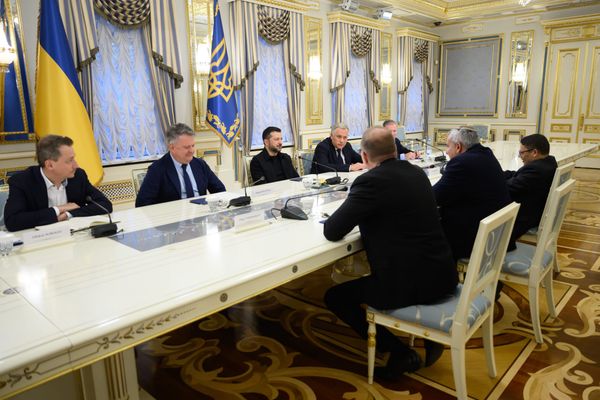
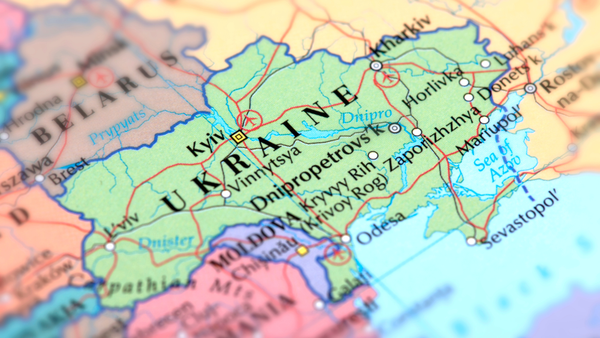
President Volodymyr Zelenskyy said Ukraine’s air defense delivery schedule had become one of the government’s most important diplomatic priorities.
“The air defense delivery schedule is a key schedule for Ukraine,” he said, placing personal responsibility on Ukrainian diplomatic, defense and government officials to ensure that partners fulfill their commitments.
Ukraine is also preparing for the Ukraine Recovery Conference in Gdańsk and working to implement agreements reached during the G7 Summit.
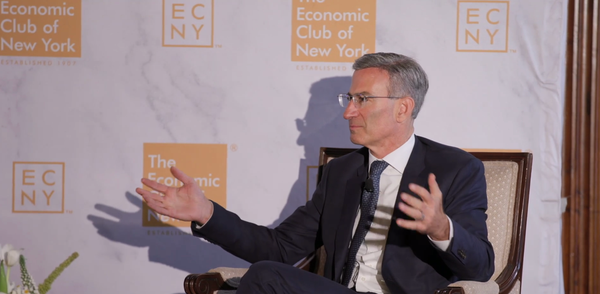
Earlier, Zelenskyy met OECD Secretary-General Mathias Cormann and said Ukraine hoped to open the five remaining EU negotiating clusters by July 15, Ukraine’s Day of Statehood.
The discussions also covered sanctions, financial assistance and Ukraine’s eventual OECD membership.
The distinction Zelenskyy is drawing is increasingly important: political support and announcements matter, but Ukraine now needs dates, delivery schedules and functioning equipment.
Canada’s federal, provincial and territorial immigration ministers began discussions on the country’s 2027–2029 Immigration Levels Plan.
The federal government remains committed to keeping annual permanent-resident admissions below one percent of the population after 2027 and reducing temporary residents to below five percent of the population by the end of that year.
Provincial and territorial ministers argued that they should receive greater control over economic migration through expanded Provincial Nominee Programs and the Atlantic Immigration Program.
They also called for immigration pathways to be more closely aligned with regional labor shortages, credential recognition and the transition of workers and international students already living in Canada to permanent status.
The talks reflect Canada’s attempt to reduce overall migration while continuing to compete for skilled workers.
The central challenge will be deciding where reductions occur, which sectors retain access to overseas labor, and how much control moves from the federal government to provinces and territories.
The Canadian and Ontario governments announced $1.5 billion for housing-related infrastructure in Toronto after the city committed to reducing residential development charges by between 40 and 60 percent.
Toronto estimates that the reductions could support approximately 44,000 new homes and provide $1.95 billion in relief to developers.
The infrastructure funding may be used for buses, watermains, road connections, bridge reconstruction and modernization of Line 2 subway signaling.
For a new single or semi-detached home, the reduction could cut development charges by approximately $83,000.
The policy is built on the theory that lowering upfront construction costs will increase housing supply. Its success will depend on whether those savings translate into more homes and lower prices or remain primarily with developers.
Canadian Minister Dominic LeBlanc traveled to Fort McMurray to promote the Canada-Alberta energy agreement, the proposed West Coast Oil pipeline and expanded access to Asian markets.
The federal government also launched a modernized $3.4-billion heating and cooling system serving buildings across Ottawa and Gatineau.
The system replaces older high-temperature steam infrastructure with low-temperature hot water and electric chillers, while retaining natural gas for peak demand.
Prime Minister Mark Carney separately spoke with Thai Prime Minister Anutin Charnvirakul about negotiations toward bilateral and Canada-ASEAN free trade agreements.
Canada estimates the ASEAN agreement could add more than $1.6 billion to its economy and provide preferential access to a regional market of nearly 700 million consumers.
The U.S. Senate approved a war-powers resolution seeking to restrict further unauthorized military action against Iran — the first time the chamber has passed such a measure in direct response to the conflict.
Flight testing resumed at Edwards Air Force Base one week after a B-52H crash killed eight crew members. The investigation continues, but no fleet-wide B-52 restrictions have been imposed.
The Department of Defense announced a strategy to install quantum-resistant cryptography on high-impact military systems by 2030 and across the force by 2031.
Sixteen governments issued a joint statement supporting Bolivia’s elected government and condemning violent road blockades that have restricted access to food, fuel and medical care for more than seven weeks.
The International Maritime Organization announced plans to evacuate more than 11,000 seafarers stranded near the Strait of Hormuz.
A new UN report documented widespread conflict-related sexual violence in Sudan and its longterm effects on survivors and communities.
A UN commission of inquiry accused Israeli authorities and security forces of deliberately targeting Palestinian children, concluding that the conduct amounted to genocide and atrocity crimes in Gaza and war crimes in the West Bank. Israel has consistently rejected allegations that its military campaign constitutes genocide.
UN Secretary-General António Guterres called for stronger action against fossil fuel-driven climate change as a deadly heatwave continued across Europe.
Today’s developments point to something more interesting than another round of political confrontation.
Countries, regions and institutions that were not expected to work closely together are beginning to coordinate because old systems are no longer sufficient.
Iran is reaching toward Pakistan, Qatar, Saudi Arabia, Egypt and Türkiye around the idea of a new regional security architecture. Europe is building transport and trade links through the Black Sea, the South Caucasus and Central Asia.
Canada is increasingly relying on itself while building new economic and political relationships beyond the North American continent.
NATO, meanwhile, is trying to preserve an alliance whose central currency is trust — knowing that once trust is openly questioned, it is often already broken.
Necessity is the mother of invention. Political turbulence may now become the glue bringing together countries and institutions that were never expected to find themselves on the same page.
Instability is not only breaking old alliances apart. It is also forcing new relationships into existence.