ONEST Brief: Hormuz Opens Carefully, Europe Prepares for NATO, and the Iran Deal Meets Reality

– 6 min read

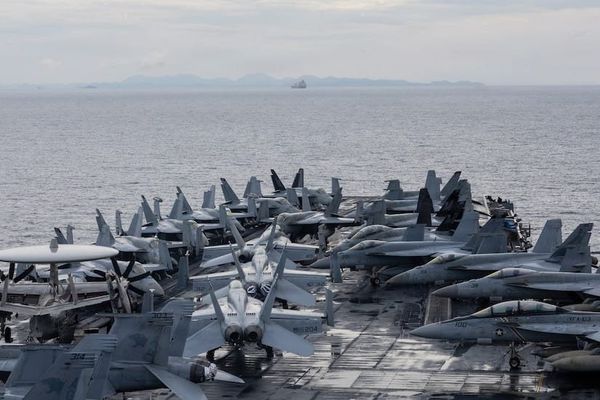
Oman has established a temporary shipping corridor through the Strait of Hormuz in coordination with the International Maritime Organization.
The move comes as maritime traffic begins cautiously returning. Three previously stranded supertankers passed through the Strait on Tuesday, while seven empty LNG tankers linked to Qatar have entered the area in recent weeks.
But reopening the waterway does not resolve the dispute over who controls it or whether Iran expects to be paid for maritime services.
Oman and Iran have agreed to continue discussions over the future administration of navigation through the Strait, including services and associated costs.
Washington has rejected any suggestion that vessels could be charged to use the international waterway.
Secretary of State Marco Rubio said the United States expects the Strait to remain open and free, arguing that Gulf states and the wider international community would oppose any Iranian toll or fee mechanism.
That leaves two parallel tracks developing at once: practical cooperation to restore shipping, and a political fight over whether Iran gains any formal role, authority or revenue from managing the passage.
The United States and Iran remain publicly divided over what was agreed in Switzerland.
President Donald Trump said Iran had accepted nuclear inspections “into infinity.” Tehran said it made no such concession.
The head of the International Atomic Energy Agency has indicated that inspectors will visit Iranian nuclear sites under the interim framework, while Rubio said access should begin “as soon as possible.”
Iran has separately claimed that Washington agreed to release $12 billion in frozen Iranian funds. The United States has not confirmed that figure.
The administration has, however, temporarily suspended some oil sanctions for 60 days. Rubio described that measure as reversible and said sanctions could return if Iran fails to meet its commitments.
Technical working groups covering nuclear issues, sanctions and other parts of the framework are expected to reconvene around June 30.
The agreement is therefore moving into the stage where competing political claims must be converted into inspections, financial arrangements and enforceable commitments.
That is also where the weaknesses of a non-binding memorandum become more consequential.
The leaders of France, Germany, Italy, Poland and the United Kingdom met in Berlin ahead of the July 7–8 NATO summit in Ankara.
Their E5 statement committed the countries to a stronger European role inside NATO, closer defense-industrial cooperation and increased support for Ukraine.
The five governments identified air defense, unmanned systems, artificial intelligence and long-range precision strike capabilities as priority areas for joint development and procurement.
They also pledged further military support for Ukraine, economic pressure on Russia and assistance for Ukraine’s energy sector.
On Iran, the leaders welcomed the U.S.–Iran memorandum and backed a UK–France-led multinational military mission intended eventually to help reassure shipping companies and verify demining in the Strait of Hormuz.
The statement repeatedly emphasized the continued importance of the United States.
But the broader message was equally clear: Europe is preparing to assume more responsibility for its own security, industrial capacity and military readiness.
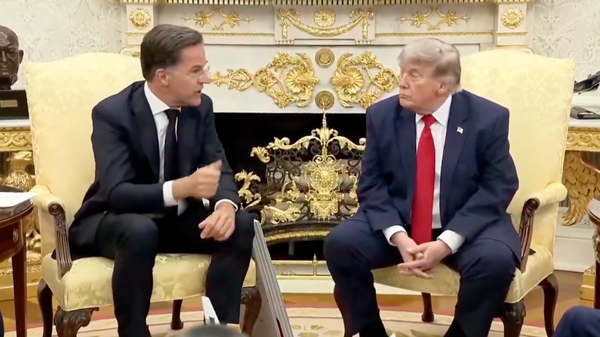
That effort is unfolding as Trump openly acknowledges that he did not consult NATO Secretary General Mark Rutte before attacking Iran, criticizes individual allies and treats defense spending as a measure of political loyalty.
Rutte’s visit to Washington illustrated the imbalance. He praised Trump’s Iran policy and highlighted increased European defense spending, while receiving little clarity about how decisions affecting the entire Alliance are actually being made.
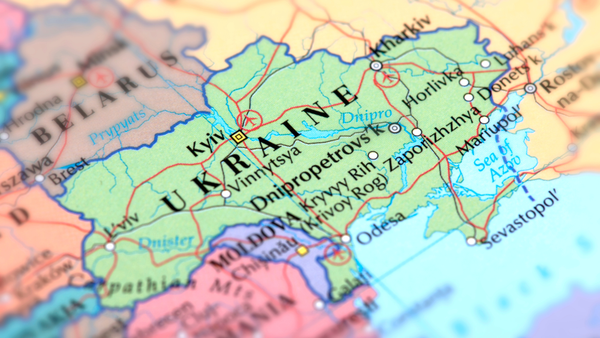
President Volodymyr Zelenskyy says Russian military infrastructure operating from Belarus is already helping Moscow conduct drone attacks against Ukraine.
Ukraine has identified at least four signal-relay stations in Belarus’s Homiel and Brest regions that it says help Russian drones navigate and strike targets in the Zhytomyr, Rivne and Volyn regions.
Zelenskyy has given Belarusian leader Alexander Lukashenko one week to dismantle the equipment, warning that Ukraine will act if Minsk does not.
He also accused Belarusian factories of supplying components used by Russia’s military and said Belarusian petrol exports to Russia increased thirteenfold between January and May compared with the same period last year, while diesel exports tripled.
Zelenskyy has repeatedly warned that Moscow is attempting to pull Belarus more directly into the war — not necessarily through an immediate ground invasion, but by turning Belarusian territory, infrastructure and industry into a more permanent extension of Russia’s military operations.
The distinction matters: Belarus may not have formally entered the war as a combatant, but according to Kyiv, its territory is already being used to make Russian attacks more effective.
The UN Security Council held an open debate on children and armed conflict as the Secretary-General released a report documenting 38,558 grave violations during 2025.
The violations affected more than 24,000 children, many of whom suffered more than one form of abuse.
For the first time in three decades of UN monitoring, government forces and national militaries were responsible for more verified violations than non-State armed groups.
The United Kingdom said 9,465 grave violations had been attributed to Israeli armed and security forces, while also condemning violations against Israeli children.
It described the impact of the Gaza war on children as a moral outrage and raised concern over Palestinian children held in Israeli detention, including some reportedly detained for months without charge.
The UK also cited displaced children in Sudan, Russia’s attacks on Ukrainian civilians and infrastructure, and the continued failure to return more than 20,000 Ukrainian children forcibly transferred or deported by Russia.
The figures show that harm to children is not simply an unintended consequence of modern conflict.
It is increasingly embedded in how wars are conducted.
Canada launched a National Food Security Strategy backed by more than $3 billion over ten years.
The government plans to invest in food terminals and distribution hubs for independent grocers, domestic food processing, greenhouses, vertical farms and regulatory reform across the agricultural supply chain.
The strategy includes a $1 billion Agri-food Project Finance Fund, $750 million for year-round fruit and vegetable production and additional funding for food innovation and processing.
The underlying argument is broader than grocery prices.
Ottawa is treating food production, processing and distribution as questions of sovereignty and national resilience — alongside energy, infrastructure and defense.
The government also began considering three projects for designation as projects of national interest: the Mackenzie Valley Highway, the Grays Bay Road and Port, and a deep geological repository for used nuclear fuel.
If listed, their federal approval processes would become more coordinated and predictable, although treaty-based assessments, Indigenous consultation and nuclear safety requirements would remain in place.
Canada is also moving toward stricter bail and sentencing rules. Bill C-14 has received Royal Assent, introducing more than 80 Criminal Code changes targeting repeat violent offenders, organized crime, vehicle theft, human trafficking and attacks on essential infrastructure, including copper theft.
The changes come into force on July 15.
International concern is growing as Sudan’s Rapid Support Forces close in on a strategic city of roughly half a million people in the centre of the country.
The advance has raised fears of another campaign of mass violence against civilians as the war enters its fourth year.
Rubio said Sudan was discussed during his Gulf visit and acknowledged that the humanitarian situation is catastrophic and worsening.
Washington says it is seeking a ceasefire and humanitarian access while continuing discussions with regional governments that hold influence over the parties.
But diplomatic engagement has repeatedly failed to stop military advances on the ground.
The immediate question is whether international pressure arrives before the city is encircled or after another civilian population is trapped.
It is becoming increasingly clear that the weakest are bearing the greatest cost of conflict.
Children in Ukraine, Gaza and Israel. Civilians trapped in Sudan. Families displaced, schools destroyed, hospitals overwhelmed and entire lives reduced to survival while political and military leaders continue calculating leverage.
As the saying goes: when two elephants fight, the grass suffers most.
The world devotes enormous attention, money and expertise to planning how wars are fought. Planning how societies will be rebuilt, how children will return to school, how survivors will receive care and how displaced families will return home rarely receives the same urgency.
Reconstruction should not be treated as an afterthought once the weapons fall silent. It should receive the same political attention as the planning for destruction.
Yet, repeatedly, it does not.
This is also the central argument of The Missing Half of Security, a public ONEST Deep Dive examining why investment in women is not “soft power,” but part of how societies survive war, crisis and recovery.
When security is measured only through weapons, territory and military spending, the people holding communities together — and rebuilding them afterward — remain largely invisible.