Pentagon’s $9.7 Billion Microsoft-Dell Deal: Follow the Infrastructure, Then Follow the Money

– 1 min read


The Department of Defense awarded Dell Federal Systems a five-year agreement valued at about $9.7 billion to provide Microsoft software licenses, cloud subscriptions, secure communications, collaboration tools, and productivity technologies across the military, intelligence community, and Coast Guard.
Officially, this is about modernization: Microsoft 365, cloud access, zero-trust infrastructure, AI, data analytics, and a more connected Joint Force.
But the sharper question is not whether the Pentagon needs modern software. It does.
The question is how much of America’s defense infrastructure is now being consolidated through a small circle of private technology companies whose executives, founders, or corporate entities are also part of the Trump-world.
Microsoft was listed among known White House ballroom donors, and reporting has noted that it already holds major federal technology contracts.
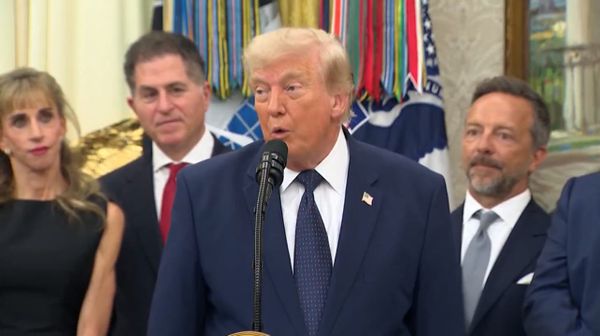
Michael and Susan Dell were celebrated at the White House in December 2025 for a $6.25 billion charitable commitment tied to “Trump Accounts” for children — separate from the ballroom, but still part of a wider ecosystem where private wealth, presidential branding, tax-advantaged philanthropy, and federal influence increasingly overlap.
That does not prove the Dell contract was awarded improperly. The Pentagon says the agreement followed procurement processes and is designed to consolidate Microsoft licensing.
But the optics matter because this administration has blurred lines everywhere: ballroom donors with federal business, tech companies seeking access, defense contractors funding presidential legacy projects, and now massive digital infrastructure contracts flowing through companies operating inside that same political environment.
The modern battlefield runs on cloud, software, data, AI, licensing, and secure communications.
That makes these contracts national security decisions — and political economy decisions.