China Is No Longer an Abstraction — While the U.S. Leaves Diplomatic Chairs Empty

– 2 min read

China is no longer experienced only through headlines about tariffs, Taiwan, or military competition.
It is increasingly experienced through logistics networks, payment systems, AI tools, scholarships, e-commerce platforms, industrial supply chains, cyber infrastructure, and digital ecosystems woven into daily life around the world.
That is the core takeaway from a new essay collection released by the Asia Society Policy Institute’s Center for China Analysis titled Global Perceptions of China: Insights from the Next Generation.
The project received 144 abstracts from 66 countries and selected four essays examining how China’s influence is being experienced in Russia, Slovenia, Pakistan, and South Korea.
Together, they reveal something larger than geopolitics.
China is no longer a distant superpower people debate in theory. It is becoming infrastructure.
In Russia, Chinese marketplaces, payment systems, and logistics networks are helping sustain adaptation under sanctions while simultaneously increasing dependence on Beijing.
In Slovenia, China’s industrial scale and technological speed are forcing uncomfortable questions about Europe’s competitiveness and economic future.
In Pakistan, Chinese educational pathways are opening opportunities for women seeking greater professional independence and mobility.
In South Korea, Chinese generative AI systems are beginning to shape debates about history, truth, cultural memory, and information sovereignty itself.
The essays are striking precisely because they are not centered on military power.
They are centered on ordinary life.
That is where China’s influence is increasingly embedded: not only through governments, but through systems people use every day.
This matters because China’s influence does not operate like traditional Western soft power.
China maintains one of the world’s most tightly controlled media and social media ecosystems. Major foreign platforms are blocked or restricted domestically, while Chinese state-linked narratives, platforms, and information systems are closely intertwined with national strategy and Communist Party oversight.
As Chinese apps, AI systems, payment infrastructure, logistics networks, and digital platforms expand globally, they do not arrive as purely commercial tools detached from the state. They carry elements of China’s governance model with them — including assumptions about information control, platform authority, cyber sovereignty, and the relationship between technology and political power.
That does not mean every Chinese company is simply an arm of the state.
But it does mean the separation between state influence, technology, commerce, and diplomacy is often far thinner than many Western societies are accustomed to.
And while China continues expanding its global footprint through diplomacy, infrastructure, trade, technology, education, and media influence, the United States is increasingly struggling to maintain its own diplomatic presence.
According to the Lowy Institute’s Global Diplomacy Index, China now operates 274 diplomatic posts worldwide, narrowly ahead of the United States at 271. But the raw numbers only tell part of the story.
As of May 2026, the United States also has 109 out of 195 ambassadorial positions vacant, including major diplomatic posts, according to reporting citing the American Foreign Service Association.
The contrast is becoming harder to ignore.
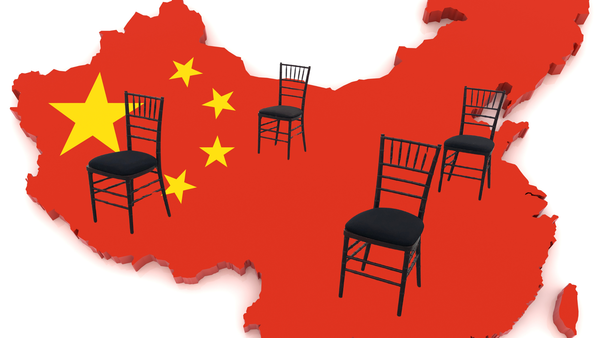
While Beijing projects a coordinated long-term state strategy across diplomacy, technology, infrastructure, media, and trade, Washington is still leaving chairs empty.
That does not automatically mean China is “winning.”
But it does reveal something important about the current geopolitical moment:
power is no longer measured only in military strength or GDP.
It is increasingly measured in who builds the systems others depend on — and who consistently shows up to occupy the room.