Security Cannot Be Built on the Threat of Catastrophe
ONEST Voices: Alyn Ware on nuclear risk, common security, and the long work of disarmament

– 8 min read

ONEST Voices: Alyn Ware on nuclear risk, common security, and the long work of disarmament
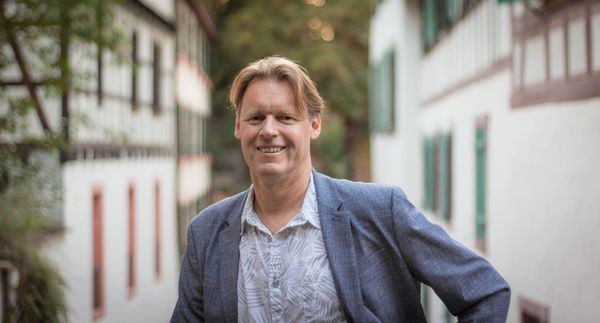
During the 2026 NPT Review Conference in New York, ONEST spoke with Alyn Ware — peace educator, disarmament advocate, longtime global leader in nuclear nonproliferation and disarmament efforts, and recipient of the Right Livelihood Award, often described as the “Alternative Nobel Peace Prize.”
At the Review Conference, Ware was helping lead an initiative encouraging nuclear-armed and nuclear-allied states to move away from reliance on nuclear deterrence and toward what he describes as common security — the idea that lasting security cannot be built against others, but must be built with them.
Calm, deeply reflective, and remarkably grounded despite decades spent navigating some of the world’s most difficult security debates, Ware has devoted much of his life to advancing the idea that true security cannot depend on the permanent threat of annihilation.
From helping shape New Zealand’s successful anti-nuclear movement to working through the International Court of Justice, the United Nations, parliamentarians, and global civil society networks, Ware’s approach has remained notably consistent: patient, incremental, and rooted in the belief that international law, cooperation, and public pressure still matter.
What follows is a conversation not only about nuclear weapons, but about fear, responsibility, institutions, future generations, and the difficult balance between realism and hope in an increasingly unstable world.
Ware traces the beginning of his political awakening back to his youth in New Zealand, when nuclear-armed ships and submarines from allied countries, particularly the United States, visited New Zealand ports as part of the ANZUS security alliance between Australia, New Zealand, and the United States.
At the time, New Zealand was part of the Western security architecture. But for Ware, the presence of nuclear weapons raised a fundamental moral question.
“These were weapons systems that could destroy entire cities and kill hundreds of thousands of innocent people,” he recalled. “I simply couldn’t accept that this was something we should allow in our country.”
The issue became even more personal amid continued nuclear testing in the Pacific. Ware spoke about the long-term and transgenerational health consequences of radiation exposure from nuclear tests conducted by France, the United Kingdom, and the United States. He also described the perception among many activists that Indigenous Pacific communities were treated as expendable and that Pacific islands were viewed as acceptable testing grounds because they were far from the mainland territories of major nuclear powers.
The successful 1974 legal challenge brought by Australia and New Zealand against French nuclear testing at the International Court of Justice became a turning point for him — not only because it helped increase legal and political pressure against atmospheric nuclear testing, but because it demonstrated that international institutions could influence the behavior of powerful states.
“For me, that was the moment I realized the UN system and international law could actually do something,” he said.
Around the same time, Ware became increasingly interested in broader ideas of shared global responsibility — the notion that humanity exists together on what he describes as a single “spaceship Earth,” where collective survival ultimately depends on cooperation and common security rather than confrontation.
That understanding eventually drew him deeper into international peace and disarmament work, and into the role of law, parliamentarians, and multilateral institutions in addressing problems that cannot be solved by any country alone.
Ware’s path into nuclear disarmament did not begin through parliaments alone. It involved a combination of civil society organizing, legal advocacy, diplomacy, public education, and political engagement.
In the early 1980s, Ware was involved in the campaign to abolish nuclear weapons in New Zealand. Through public education and engagement with legislators at both local and national levels, that movement helped lead to government policy and legislation prohibiting nuclear weapons in New Zealand and barring New Zealand officials from involvement in nuclear weapons development, threat, or use.
But New Zealand’s nuclear-free stance came with pressure. According to Ware, the country faced opposition from some Western allies, including trade pressure, misinformation campaigns, and other coercive efforts. For him, the debate was never simply about military doctrine — it was also about sovereignty and the right of countries to define their own security policies independently.
The International Court of Justice became central to his thinking.
After the United States withdrew from compulsory ICJ jurisdiction following the Nicaragua case, Ware and other advocates began focusing on advisory opinions — legal clarifications requested through international institutions rather than direct disputes between states.
“The issue wasn’t the United States itself,” Ware explained. “The issue was nuclear weapons, regardless of who possessed them.”
That thinking helped shape the World Court Project on Nuclear Weapons and International Law, which began with a small group of lawyers and civil society advocates and eventually contributed to the landmark 1996 ICJ advisory opinion on nuclear weapons. Ware, a kindergarten teacher by training, later became Executive Director of the Lawyers’ Committee on Nuclear Policy in New York and helped lead the global campaign around the case.
The ICJ opinion affirmed that states have an obligation to pursue, in good faith, negotiations leading toward nuclear disarmament.
Yet legal victories alone, Ware quickly realized, were insufficient.
“You can achieve something in court,” he said, “but implementation is political.”
That realization gradually moved his work from legal advocacy toward diplomacy at the United Nations and eventually toward parliamentarians themselves.
Today, Ware views legislators as essential actors in global security debates — not only because they shape laws and foreign policy, but because they control funding.
“Parliamentarians approve budgets,” he noted. “They can challenge or reduce funding for nuclear weapons programs. That’s difficult politically, especially in countries where these industries are tied to jobs and local economies, but it matters.”
In non-nuclear states, he added, parliamentary action has also helped advance nuclear-weapon-free zones, promote disarmament in UN forums, and challenge public investments in companies involved in nuclear weapons production.
His work eventually helped contribute to the creation and growth of global parliamentary networks focused on disarmament, including Parliamentarians for Nuclear Non-proliferation and Disarmament, known as PNND, and cooperation with institutions such as the Inter-Parliamentary Union.
Interestingly, Ware’s work with parliamentarians also elevated women’s leadership in nuclear disarmament. He noted that the first five co-presidents of PNND were women parliamentarians from countries including Canada, New Zealand, Germany, the Marshall Islands, and South Korea.
“This is not tokenism,” he said. “There are many women parliamentarians with passion, expertise, and valuable ideas for peace and disarmament. We provide a vehicle to help give them traction.”
Ware also reflected on the post-Cold War disarmament process involving Ukraine, Belarus, and Kazakhstan after the collapse of the Soviet Union.
All three countries had nuclear weapons on their territory when the Soviet Union dissolved in 1991. They faced a choice: take control of the weapons and become nuclear-armed states, or relinquish them and join the Non-Proliferation Treaty as non-nuclear states.
Kazakhstan, in particular, had suffered enormously from decades of Soviet nuclear testing and had strong domestic reasons to reject nuclear weapons. But all three countries had serious security concerns about becoming nuclear-free.
To address those concerns, Russia, the United States, and the United Kingdom agreed under the Budapest Memorandum to respect the borders and territorial integrity of Ukraine, Belarus, and Kazakhstan in return for their relinquishing nuclear weapons. Russia and the United States also agreed to a cooperative threat reduction program, funded by the U.S. Congress, to help dismantle the weapons and secure nuclear materials.
For Ware, the period demonstrated both the possibilities and fragility of international cooperation.
At first, the process appeared to be a successful example of cooperative nuclear disarmament. But Russia’s 2014 invasion and annexation of Crimea, followed by the full-scale invasion of Ukraine in 2022, severely damaged confidence in political security assurances. Belarus later rescinded its nuclear-weapon-free status and allowed Russia to deploy nuclear weapons on its territory.
Ware sees this as one of the central challenges for disarmament today: agreements based only on political commitments can erode when political conditions change.
For him, that does not mean international law is meaningless. It means international law must be backed by stronger mechanisms for conflict resolution and compliance, including greater use of the International Court of Justice. In 2023, Ware co-founded Legal Alternatives to War, or LAW not War, an initiative focused on increasing the use of legal mechanisms to resolve international disputes peacefully.
Momentum toward disarmament appeared strong in the late 1990s and during the 2000 NPT Review Conference, where disarmament commitments linked to Article VI of the NPT and the broader legal momentum surrounding the ICJ advisory opinion gained support.
But the geopolitical atmosphere shifted dramatically after the attacks of September 11, 2001.
“The political momentum began to disappear,” he said. “Security policy became far more aggressive.”
Asked about the current state of global nuclear risk, Ware did not hesitate.
“We are in a very dangerous moment,” he said.
He described what he sees as a contradiction at the center of nuclear deterrence theory: supporters of nuclear deterrence argue that nuclear weapons have helped prevent direct large-scale conflict between major powers, yet maintaining deterrence requires states to remain prepared to use them.
That readiness, Ware warned, creates ongoing risks of escalation, miscalculation, or accidental war.
Particularly concerning to him are “launch-on-warning” systems maintained by nuclear powers, especially the United States and Russia, where leaders may face only minutes to decide whether to launch nuclear weapons in response to perceived attacks.
Human oversight still exists in most systems, Ware noted, but the increasing integration of automation and artificial intelligence raises new uncertainties.
“AI can process enormous amounts of information quickly,” he said. “But it cannot truly judge context or intent.”
The risks become even more complicated when discussing emerging military concepts involving nuclear systems in space or electromagnetic pulse capabilities that could disable infrastructure across entire regions.
According to Ware, military doctrines in several nuclear-armed states continue to explore concepts sometimes referred to as “limited nuclear use” scenarios — concepts he believes are inherently unstable and unpredictable.
Ware also addressed the complex relationship between civilian nuclear energy and weapons proliferation.
While not every country pursuing nuclear power seeks nuclear weapons, he noted that enrichment technologies and plutonium production can create pathways that increase weapons capability if political circumstances change.
Iran, North Korea, and Pakistan were among the examples discussed during the interview.
Beyond proliferation concerns, Ware expressed strong worries about radiation risks, accidents, and the vulnerability of nuclear infrastructure during conflicts.
His personal preference, he explained, is for decentralized renewable energy systems — including solar, wind, and wave energy technologies — which he believes distribute power more democratically and reduce long-term security risks.
He also pointed to the fact that most countries have chosen not to develop nuclear energy, and to the work of the International Renewable Energy Agency, which helps countries transition from fossil fuel dependence toward renewable energy systems.
At the same time, he acknowledged that the transition is not only technological, but behavioral and political.
“Energy efficiency is probably one of the most important issues,” he said. “But changing systems — and changing habits — is difficult. Money often drives decisions.”
Despite decades spent confronting existential risks, Ware remains notably optimistic about people themselves.
“Most people are actually good,” he said quietly during our conversation. “Most want the world to continue peacefully.”
What concerns him, however, is the imbalance between attention given to conflict versus cooperation.
“Stories about crisis and destruction spread easily,” he said. “But there are also people resolving conflicts every day, diplomats doing meaningful work, communities helping each other — and we rarely talk about that.”
Ware continues to advocate for governance models that incorporate the interests of future generations into policymaking.
One example he highlighted was Wales’ Well-being of Future Generations Act, adopted in 2015, which requires public institutions to consider the long-term consequences of decisions on future citizens.
He also referenced ongoing UN discussions connected to the Pact for the Future and proposals for mechanisms representing future generations more directly within international governance structures.
Ware situates his work within a broader tradition of global governance and peace thinking, drawing on writers, scientists, legal advocates, and disarmament campaigners who argued that human survival depends on cooperation rather than permanent militarized rivalry. For him, those ideas are not abstract ideals, but practical questions of institutions, law, accountability, and long-term political imagination.
For Ware, these ideas are part of a broader attempt to shift political thinking away from immediate power calculations and toward long-term human survival and well-being.
Perhaps the most striking aspect of speaking with Alyn Ware is not simply his expertise, but his temperament.
After decades working on deeply polarizing issues, he remains remarkably patient, measured, and hopeful without appearing naïve. He speaks less like an activist driven by outrage and more like someone genuinely convinced that progress — however slow — remains possible through persistence, dialogue, institutions, and public pressure.
He does not appear interested in easy victories or dramatic rhetoric. Instead, his work reflects a quieter philosophy: that meaningful change often happens gradually, through legal frameworks, education, diplomacy, parliamentary engagement, and cultural shifts that may take years or even generations to fully materialize.
In a world increasingly shaped by escalation, distrust, and geopolitical fragmentation, that kind of patience may itself be a form of resistance.