Read/Watch: Why the Trump–Xi Meeting Matters
Trump and Xi prepare for a major Beijing summit on trade, Taiwan, Iran, technology, sanctions, and the future of U.S.–China relations.

– 5 min read

Trump and Xi prepare for a major Beijing summit on trade, Taiwan, Iran, technology, sanctions, and the future of U.S.–China relations.
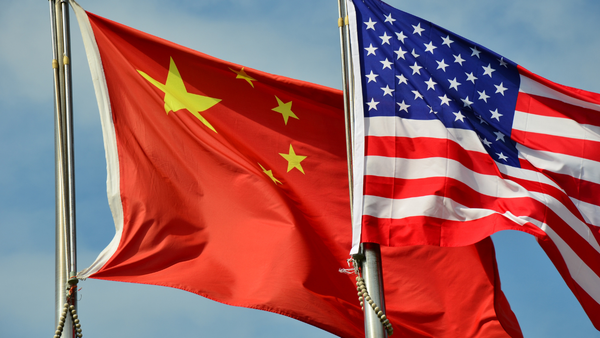
President Trump is heading to Beijing today for a high-stakes meeting with Chinese President Xi Jinping — one that is expected to focus on trade, Taiwan, technology, Iran, and the future of U.S.–China competition.
The meeting comes at a fragile moment. The two countries are not resolving their rivalry. They are trying to prevent it from spiraling.
According to the Asia Society Policy Institute, both leaders are seeking “stabilization, not resolution,” with likely outcomes focused on process: extending the trade truce, restoring military communication channels, discussing fentanyl cooperation, launching trade or investment working groups, and possibly announcing commercial deals.
Trump and Xi are scheduled to meet in Beijing on May 14–15, following earlier delays linked to the U.S.–Israel–Iran conflict. Reuters reports that Iran is expected to be discussed, even though Trump said on May 12 that he does not believe he needs Xi’s help to resolve the war.
That may be public posture. In practice, China matters.
China is one of Iran’s most important economic partners and a major buyer of Iranian oil. It also has a direct interest in keeping energy routes open, especially the Strait of Hormuz, a critical passage for global oil and gas flows. Reuters reported that the U.S. and China have agreed that no country should impose tolls on shipping through Hormuz — a rare point of alignment amid broader tensions.
Iran gives China leverage, but also risk.
Beijing has publicly opposed military strikes and violations of sovereignty, while maintaining economic ties with Tehran. At the same time, China does not want prolonged disruption to oil flows, higher energy prices, or instability that weakens global trade.
The key question is whether Xi offers Trump anything meaningful on Iran — such as quiet pressure on Tehran, limits on dual-use exports, or support for keeping Hormuz open — and what Trump might offer in return.
That could include softer enforcement on Iranian oil purchases, reduced pressure on Chinese shipping networks, or concessions elsewhere in the bilateral relationship.
One of the most important undercurrents is China’s effort to reduce exposure to the U.S.-led sanctions system.
In early May, China invoked its blocking framework after the U.S. sanctioned Chinese refineries accused of buying Iranian oil. Reuters reported that China’s financial regulator separately asked banks to pause new yuan-denominated loans to several sanctioned refiners — suggesting Beijing is trying to defy U.S. pressure politically while managing financial risk at home.
This is where the yuan matters.
China has been trying to expand yuan-based trade, alternative payment systems, and digital currency infrastructure to reduce reliance on the dollar-dominated financial system. But this is not yet a full replacement. The dollar remains central to global finance, energy pricing, and sanctions enforcement. China can build alternatives, but it cannot immediately escape the system it still depends on.
Trade will likely be the most visible part of the summit.
Possible announcements include Chinese purchases of U.S. agricultural goods, Boeing aircraft, energy products, and other commercial deals. Reuters reported that U.S. energy exports to China may be part of the discussion, including LNG, crude, ethane, and propane.
A major group of American business leaders is also expected to join President Trump in Beijing, underscoring the economic stakes of the summit across technology, finance, aerospace, agriculture, semiconductors, and advanced manufacturing.
The delegation reportedly includes:
Their presence highlights how deeply intertwined the U.S.–China relationship remains despite years of tariffs, export controls, sanctions disputes, and strategic competition. It also reflects growing concern within the corporate world over supply chains, semiconductor restrictions, rare earth access, AI competition, financial market stability, and the broader risk of economic fragmentation between the world’s two largest economies.
Remarkably, Huawei does not appear to be part of the discussions or business delegation — a notable absence given how central the company has become to U.S.–China tensions over technology, semiconductors, telecommunications infrastructure, AI, and national security.
Once viewed primarily as a telecom giant, Huawei has increasingly become a symbol of China’s push for technological self-sufficiency after years of U.S. sanctions and export restrictions. Its absence may reflect how politically sensitive the company remains in Washington, where bipartisan concerns over advanced chips, surveillance risks, and strategic technology transfers continue to shape policy.
The omission also highlights a broader reality of the summit: while both sides may pursue stabilization and commercial deals, the most contentious areas of competition — advanced technology, semiconductor access, AI infrastructure, and national security — remain far from resolved.
But commercial deals are not the same as structural change.
The deeper issues remain: tariffs, export controls, rare earths, critical minerals, advanced chips, industrial subsidies, overcapacity, supply chains, and China’s state-led economic model.
Taiwan may be the most sensitive part of the meeting.
Beijing is expected to press Trump to delay or soften U.S. support for Taiwan, including arms sales. The Asia Society brief warns that even subtle shifts in Trump’s language — such as echoing Chinese phrases about “opposing Taiwan independence” or “peaceful reunification” — could be viewed by Beijing as a diplomatic win and by Taiwan as a warning sign.
This is one of the biggest things to watch after the meeting: not only what Trump says, but whether his phrasing changes.
China likely wants:
Trump likely wants:
Yes — but only in a limited way.
This summit is unlikely to solve the U.S.–China rivalry. It may, however, prevent further escalation, extend the trade truce, create new communication channels, and give both sides political space.
That matters.
But the deeper reality remains unchanged: the United States and China are competing over technology, trade rules, energy routes, sanctions power, Taiwan, and the architecture of the global economy.
The meeting may produce deals. It may produce statements. It may even produce a temporary calm.
But it will not answer the central question: whether the world’s two largest powers can manage their rivalry without making every crisis — from Iran to Taiwan to global trade — more dangerous.