On April 28, 2026, the United Arab Emirates announced it will leave OPEC effective May 1 — ending nearly six decades inside the world’s most influential oil cartel.
This is not just an energy story.
It is a geopolitical shift.
The UAE is OPEC’s third-largest producer. Its departure signals a fundamental change in how oil markets may be governed going forward — less coordinated, more competitive, and increasingly shaped by national strategy rather than collective quotas.
Why the UAE is leaving
Officially, the UAE points to a “long-term strategic and economic vision” and the need for greater production flexibility. In practice, the decision reflects a growing mismatch between the country’s expanding oil capacity and the limits imposed by OPEC quotas.
Over the past decade, the UAE has invested heavily in increasing its production capabilities, targeting around 5 million barrels per day in the coming years. Remaining inside OPEC meant holding back that capacity. Leaving allows the country to fully utilize what it has built.
At the same time, regional dynamics have shifted. Tensions with Saudi Arabia — OPEC’s de facto leader — have grown over policy direction, production targets, and broader economic strategy. While not openly confrontational, the divergence has been visible for years. This exit formalizes that shift.
The broader geopolitical context also matters. Ongoing instability linked to Iran and disruptions in the Strait of Hormuz — through which roughly one-fifth of global oil supply passes — have made energy security a central concern. In this environment, flexibility becomes more valuable than coordination.
What happens next
The immediate effect on oil markets may be limited. Supply disruptions tied to regional tensions still constrain flows, and markets remain sensitive to developments in the Gulf.
Over time, however, the implications are more significant.
Without the UAE, OPEC loses part of its production capacity and, more importantly, some of its ability to act cohesively. The organization’s influence has already been under pressure from internal disagreements and external competition. This move accelerates that trend.
For the UAE, the benefits are clear. It can now increase production independently, respond more quickly to market conditions, and position itself as a flexible supplier in a volatile environment.
For global markets, this likely means more unpredictability. OPEC’s role has historically been to smooth supply and stabilize prices. A weaker OPEC suggests more fluctuation — particularly if other members begin reassessing their positions.
The overlooked shift: the Strait of Hormuz and currency dynamics
Beyond production and pricing, a deeper shift is emerging.
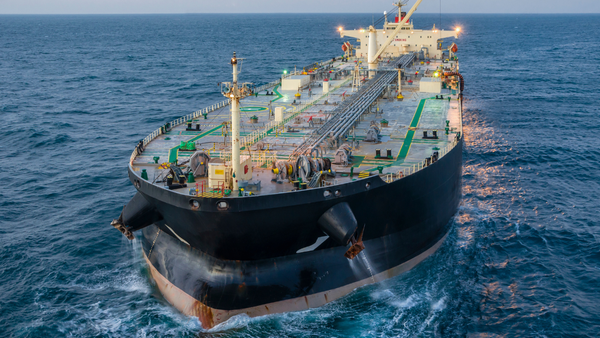
The Strait of Hormuz remains one of the most critical chokepoints in global trade. As tensions rise, shipping through the strait has become more complex, with increased security measures, higher insurance costs, and, in some cases, negotiated transit arrangements.
At the same time, there are growing discussions — and early signs — of transactions linked to shipping and energy trade being conducted in currencies other than the U.S. dollar, including the Chinese yuan.
This does not yet represent a systemic change. The dollar remains dominant in global energy markets. But the direction is notable.
If energy transactions, transit fees, or security arrangements begin to diversify into multiple currencies, it would signal a gradual shift away from a fully dollar-centered system toward a more fragmented, multi-currency landscape.
Who stands to gain — and who does not
The UAE emerges as a clear beneficiary. It gains full control over its production strategy and the ability to maximize output without external constraints.
The United States may also benefit indirectly from a weaker OPEC, particularly if increased competition contributes to downward pressure on oil prices over time.
China’s position becomes more interesting. If yuan-based transactions expand — even at the margins — Beijing’s role in global energy trade could strengthen, particularly as it deepens economic ties with Gulf states.
On the other side, OPEC itself is weakened. Its ability to coordinate policy and influence prices is reduced, and its long-term cohesion is increasingly uncertain.
Saudi Arabia faces a more complex landscape. While still the dominant player, it loses a key partner within the organization and must navigate a more fragmented producer environment.
Smaller OPEC members are also more exposed. With less collective leverage, they may find themselves increasingly vulnerable to market swings.
The bigger picture
The UAE’s decision reflects broader shifts already underway in the global energy system.
Markets are moving from coordination to competition.
Production decisions are becoming more national than collective.
And the financial architecture underpinning energy trade is beginning, slowly, to diversify.
None of these changes happen overnight. But together, they point to a system that is less centralized and more fluid than the one that defined the past several decades.
Bottom line
The UAE leaving OPEC is not about the decline of oil.
It is about the redistribution of control.
From cartels to individual states.
From coordinated limits to strategic expansion.
From a single dominant system toward a more fragmented global landscape.
And at the center of it all remains the Strait of Hormuz — where energy, security, and geopolitics continue to intersect in real time.
For ONEST+
ONEST+ members will receive ongoing Diplomatic Notes and Deep Dives, tracking OPEC’s internal response, developments in the Strait of Hormuz, and the evolving role of currency in global energy trade.