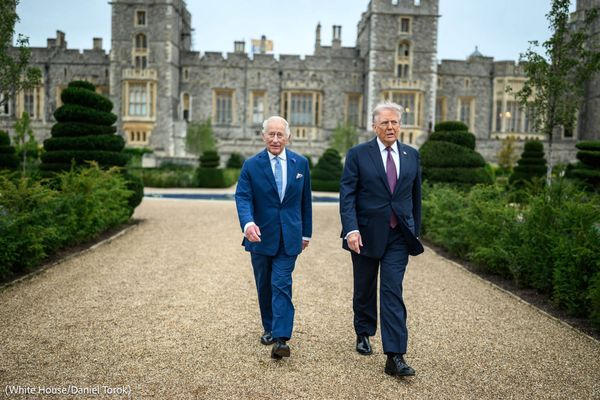
Donald J. Trump and First Lady Melania Trump will host King Charles III and Queen Camilla for an official State Visit from April 27 to April 30, 2026, marking the first State Visit of the President’s second term.
The visit comes at a symbolic moment, as the United States approaches 250 years of independence, and is expected to underscore the "longstanding political, military, and cultural ties" between the United States and the United Kingdom.
Ceremonial Welcome and White House Engagements
The visit will begin on Monday, April 27, with the President and First Lady welcoming Their Majesties at the South Portico of the White House. The leaders will proceed to a private tea in the Green Room, followed by a tour of the newly expanded White House beehive located on the South Lawn.
State Arrival Ceremony and Military Honors
On Tuesday, April 28, the White House will host a formal State Arrival Ceremony on the South Lawn, continuing a tradition dating back to the 18th century.
The ceremony will include:
- Military honors rendered by the United States Army Herald Trumpets
- Performances of both national anthems by “The President’s Own” United States Marine Band
- A 21-gun salute by the Presidential Salute Battery
- An inspection and review of troops
In what officials describe as a historic first for a State Visit, nearly 500 members of the U.S. Armed Forces representing all six military branches will participate, with 300 service members featured in the Pass in Review.
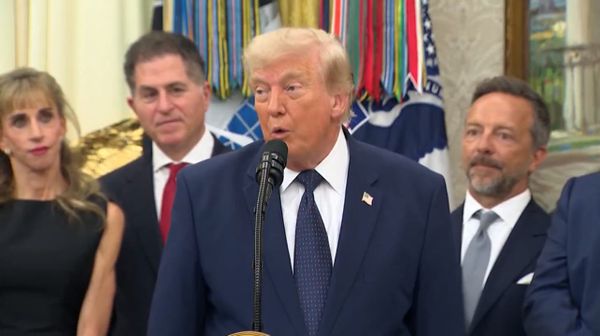
Following the ceremony, the President will deliver remarks before the delegation proceeds to the Blue Room Balcony for the troop review.
Attendees are expected to include Cabinet members, Members of Congress, official delegations from both countries, military families, and students from the British International School of Washington.
Diplomatic Engagements and Bilateral Meeting
After the ceremony, King Charles III will sign the White House guest book and participate in an official gift exchange. A receiving line with both national delegations will follow.
The President and King Charles III will then hold a bilateral meeting in the Oval Office, while the First Lady and Queen Camilla will take part in a parallel program.
Education and Technology Initiative
First Lady Melania Trump and Queen Camilla are scheduled to host a cross-cultural educational event at the White House Tennis Pavilion.
The program, tied to the First Lady’s “Fostering the Future Together” initiative, will bring together American students to explore U.K.–U.S. relations through emerging technologies. Participants will use virtual reality tools to experience the United Kingdom and AI-enabled devices to engage with historical artifacts from the White House Collection and the National Archives.
State Dinner and Closing Events
On Tuesday evening, the President and First Lady will host a State Dinner in the East Room of the White House, a centerpiece of the visit. Additional details are expected to be released by the Office of the First Lady.
The visit will conclude on Thursday, April 30, with a formal farewell in the Diplomatic Reception Room.
Strategic Context
While the State Visit is ceremonial in structure, it comes during a period of visible strain in U.S.–U.K. relations.
In mid-April, Trump criticized the U.K. government over its refusal to support U.S. military action against Iran and warned that the U.S.–U.K. trade deal “can always be changed.” The comments followed public disagreement from Prime Minister Keir Starmer and Chancellor Rachel Reeves, who opposed Britain joining the conflict and warned of the economic fallout from the war.
Trade is now one of the clearest pressure points. On April 24, Trump threatened to impose a “big tariff” on the U.K. unless it drops its digital services tax, a 2% levy introduced in 2020 that affects major U.S. technology companies including Apple, Google, Amazon and Meta.
The visit also comes as the British monarchy continues to face scrutiny over Prince Andrew’s past association with Jeffrey Epstein. Although Andrew no longer carries out official royal duties, the issue remains part of the wider reputational backdrop around the royal family’s public engagements.
Taken together, the visit is not only a celebration of the U.S.–U.K. “special relationship.” It is also a diplomatic test: whether ceremonial warmth between Trump and King Charles can soften a more difficult political environment shaped by trade disputes, disagreement over Iran, and ongoing scrutiny of both countries’ institutions.