The Next UN Secretary-General — Four Candidates, Four Visions for a Fractured World
A clear analysis of the four UN Secretary-General candidates, their visions, and what their leadership would mean for the future of the United Nations.
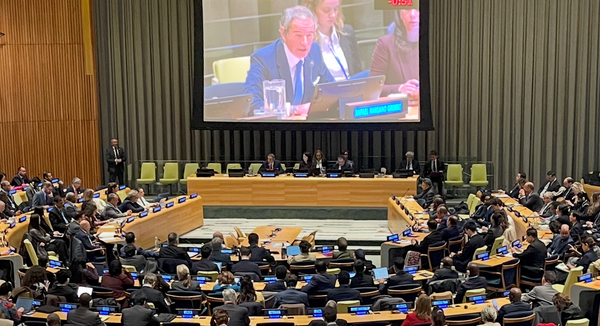
ONEST attended the interactive sessions with the four candidates for the next United Nations Secretary-General. The hearings came at a pivotal moment: the UN is facing a crisis of trust, a liquidity crisis, deepening geopolitical fragmentation, open violations of the UN Charter, and growing pressure to reform an institution built for a different era. The format allowed candidates to present their visions and respond directly to member states and civil society across two broad areas: leadership and institutional reform, followed by the three UN pillars — peace and security, development, and human rights.
The Central Question
The question running through all four sessions was not only who can lead the United Nations, but what kind of Secretary-General the moment requires.
Does the UN need a principled human rights defender? A pragmatic crisis manager? A reformer focused on delivery? A bridge builder who can restore trust among member states?
Each candidate answered that question differently.
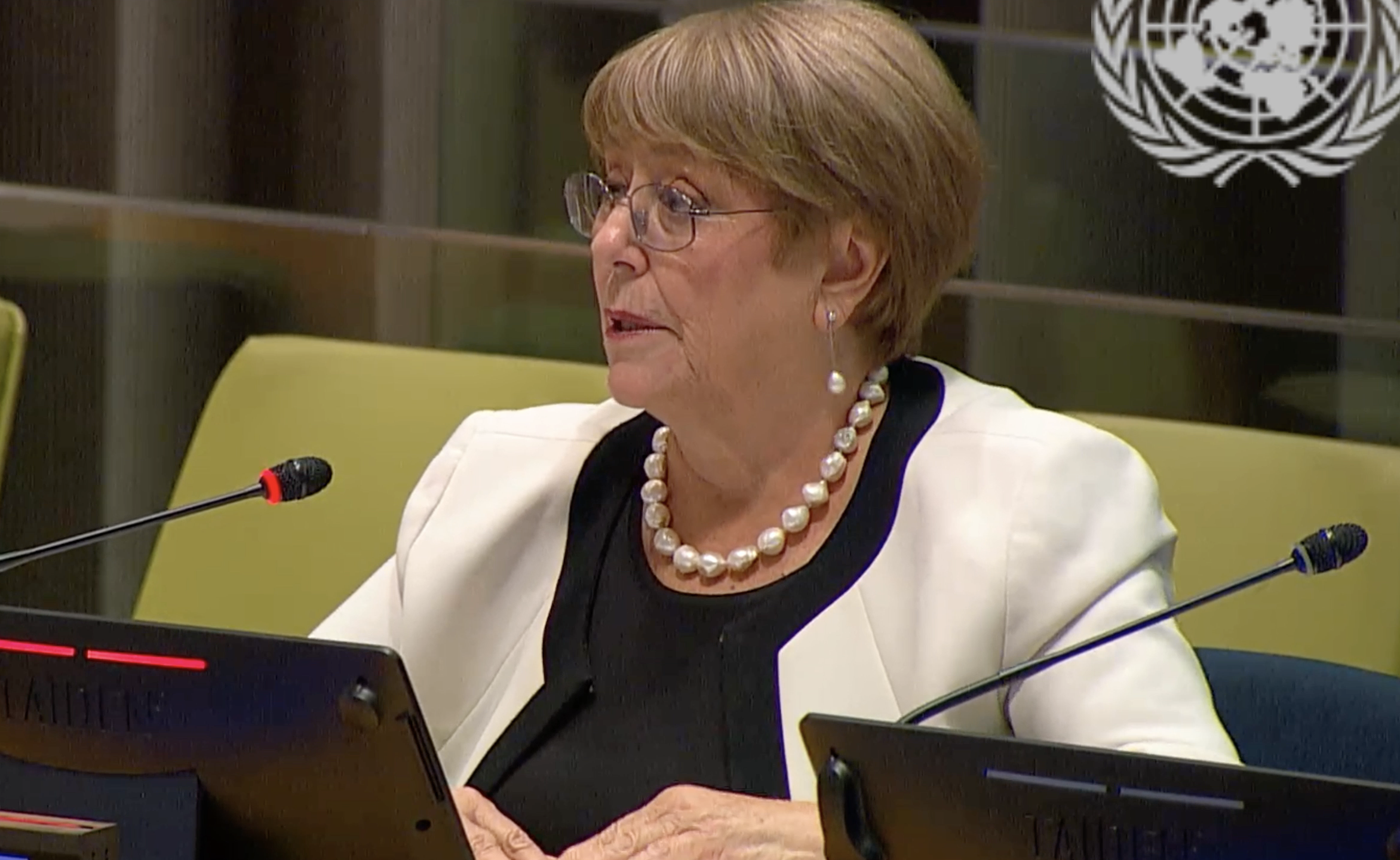
Michelle Bachelet: Hope, Human Rights, and the UN Charter
Michelle Bachelet framed her candidacy around what she called “the urgent need for hope.” Her opening statement tied her personal history to the rule of law, recalling Chile’s 1973 coup and the role of international solidarity in restoring democracy. She presented herself as someone who has lived the consequences of institutional breakdown and understands why the UN Charter matters not as rhetoric, but as protection.
Her strongest theme was the connection between peace, development, and human rights. Bachelet repeatedly argued that there can be no durable peace without human rights, and no meaningful reform unless the UN returns to the purposes and principles of the Charter. She emphasized dialogue, preventive diplomacy, accountability, reform, transparency, and the need to make the UN more effective without hollowing out its core mission.
Her approach was institutional and values-based. She spoke as a former president, former defense minister, former head of UN Women, and former High Commissioner for Human Rights — but also as someone who sees the UN as a moral and political platform that must regain public trust.
ONEST takeaway: Bachelet is the clearest human rights candidate. Her strength is moral authority, institutional experience, and a deep understanding of the UN’s founding purpose. Her challenge is political: a Secretary-General who speaks forcefully on human rights may be exactly what the moment requires, but not necessarily what powerful states prefer.
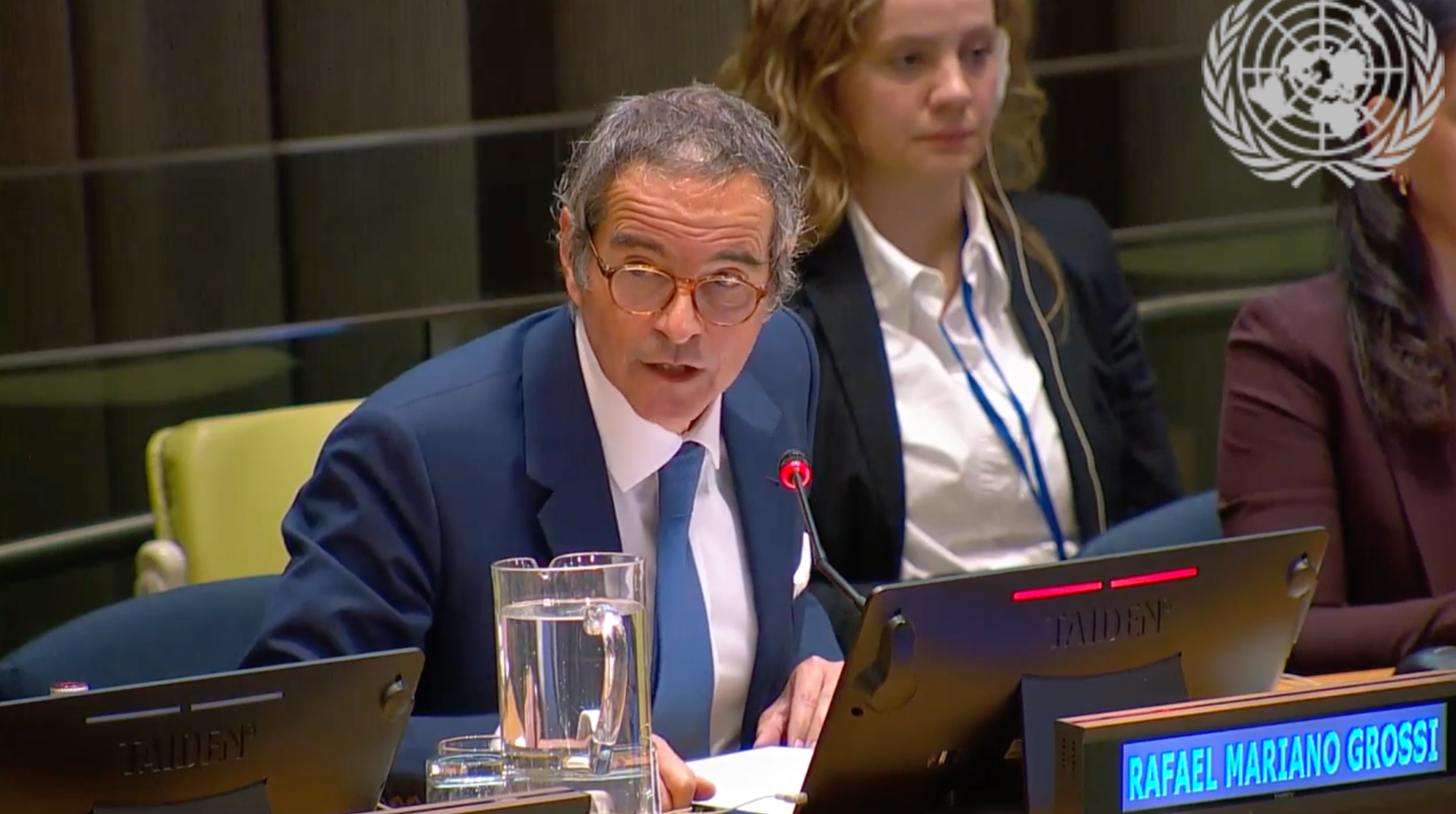
Rafael Mariano Grossi: Pragmatism, Crisis Management, and Talking to Everyone
Rafael Grossi’s presentation was more political and operational. He described this selection process as one of the most consequential in the UN’s 80-year history, arguing that the institution is facing not only global fragmentation, but doubts about its own relevance and capacity.
Grossi’s central argument was pragmatic: principles matter, but the UN cannot operate from an “ivory tower.” It must be present where conflicts are happening, speak to all sides, and focus on solving problems on the ground. He emphasized “enlightened pragmatism,” crisis engagement, and the need for the Secretary-General to be in constant contact with ambassadors, the Security Council, and member states.
His experience at the IAEA was central to his pitch. He referred to being present in conflict zones and argued that leadership is not demonstrated by statements alone, but by showing up where risks are real. His line — “nice words won’t do” — captured the core of his candidacy.
ONEST takeaway: Grossi may be the most electable candidate for power politics. He speaks the language of access, pragmatism, and engagement with all sides. That could appeal to permanent members of the Security Council. But his approach may also raise questions for those looking for a Secretary-General who will more clearly prioritize human rights and structural reform.
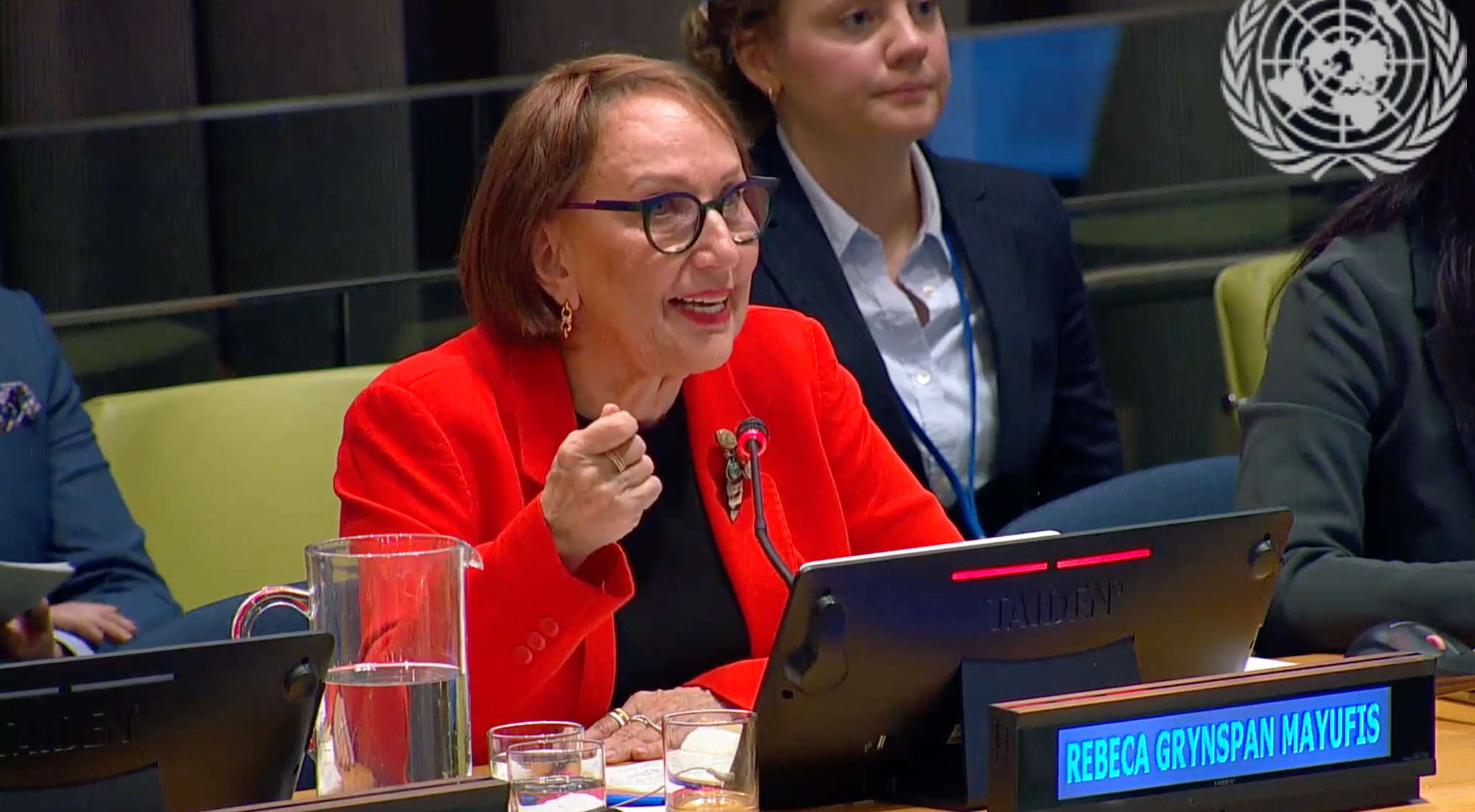
Rebeca Grynspan: Peace, Reform, and the Future
Rebeca Grynspan delivered perhaps the most personally grounded opening. She began with the UN Charter and described herself as “the daughter of this peace,” referring to her parents, refugees from World War II, who rebuilt their lives in Costa Rica. From there, she built her case around three priorities: peace, reform, and the future.
Her strongest section was on peacemaking. She argued that the UN must return to the table of peace, speak to every party, work with the Security Council and member states, and continue even after rejection. She pointed to the Black Sea Grain Initiative as a concrete example of persistence, saying she navigated many “no’s” until she heard a “yes.”
On reform, Grynspan was clear that defending the UN requires changing it. She spoke about reforming institutions she has led, cutting posts during a liquidity crisis, rebuilding trust at UNCTAD, and improving coordination during the global food, fuel, and financial crisis. She also emphasized that the UN is unique, but not alone — meaning it must partner better with regional organizations, civil society, the private sector, and others.
ONEST takeaway: Grynspan offered one of the clearest reform-and-delivery messages. Her candidacy is grounded in mediation, development, and institutional management. She may appeal to states looking for a Secretary-General who is accessible, practical, and focused on rebuilding trust through results.
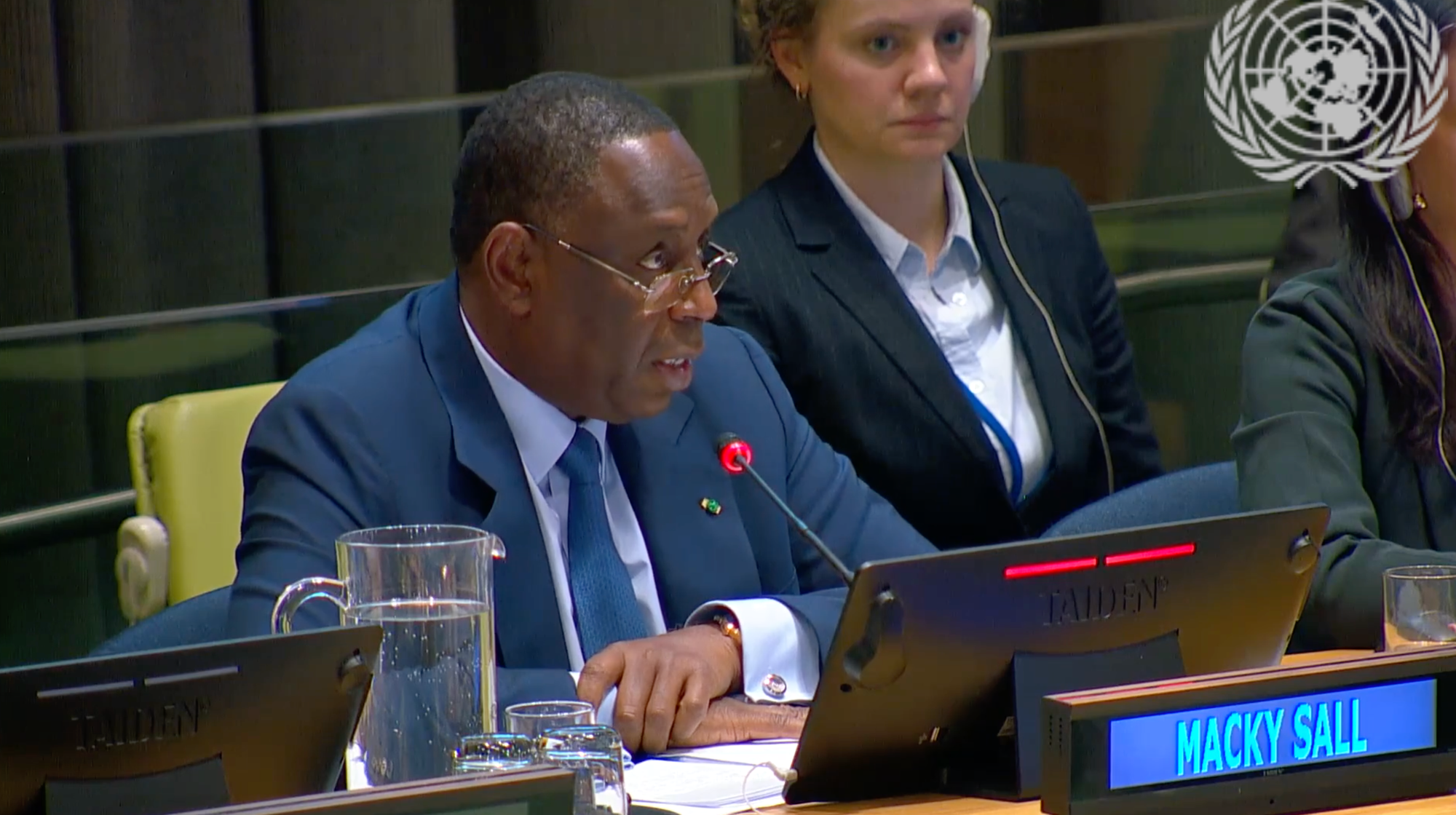
Macky Sall: Bridge Builder, Development, and Restoring Trust
Macky Sall presented himself as a “bridge builder” whose priority would be restoring trust in the United Nations. He leaned heavily on his experience as a former head of state, prime minister, minister, mayor, and public servant, emphasizing that he understands member states because he has governed from the national level.
His message was particularly focused on development, financing, debt, infrastructure, migration, and the need for the UN to deliver results governments can defend before their citizens. He called for a UN that can “do better with less,” while rationalizing, simplifying, and optimizing its work.
Sall also emphasized preventive diplomacy, regional organizations, and Security Council reform, including Africa’s long-standing demand for stronger representation. His pitch was less about transforming the moral voice of the UN and more about restoring trust through fairness, representation, and practical cooperation.
ONEST takeaway: Sall’s strength is statecraft and Global South credibility. He speaks directly to development financing, debt pressure, infrastructure, and Africa’s role in global governance. His challenge may be whether he can convince member states that his vision is not only representative, but operationally transformative.
Comparative Analysis
The four candidates reflected four different theories of what the Secretary-General should be.
Bachelet sees the role as a guardian of the Charter, human rights, and dialogue. Grossi sees it as a pragmatic crisis-management post requiring constant engagement with power. Grynspan sees it as a peacemaking and reform role built around delivery. Sall sees it as a bridge-building role focused on trust, development, and representation.
The sharpest contrast is between Bachelet and Grossi. Bachelet’s answer to distrust is to return to first principles: the Charter, human rights, rule of law, dialogue, and institutional purpose. Grossi’s answer is to become more operational: be present, speak to everyone, solve problems, and keep the UN relevant in real crises.
Grynspan sits somewhere between them: principled, but deeply focused on delivery and mediation. Sall brings the perspective of a former head of state from the Global South, with development and representation at the center.
The Political Reality
The next Secretary-General will not be selected only on vision. The Security Council will recommend the candidate, meaning the permanent members will have decisive influence. That matters.
A candidate who is too outspoken on human rights may inspire civil society and smaller states, but face resistance from major powers. A candidate who is highly pragmatic and willing to talk to everyone may be more acceptable to the P5, but may disappoint those who want the UN to speak more forcefully when the Charter is violated.
That is the tension at the heart of this process.
The candidate who best meets the moment may not be the candidate most likely to be selected.
ONEST Bottom Line
These hearings showed a UN system under pressure, but not without options.
The next Secretary-General will inherit an institution facing wars, veto paralysis, financial crisis, public distrust, climate disruption, technological upheaval, and widening inequality. The role will require more than diplomacy. It will require judgment: when to speak, when to mediate, when to confront, when to compromise, and when to protect the institution from becoming irrelevant.
Bachelet offered the clearest moral and human rights framework. Grossi offered the strongest power-facing pragmatism. Grynspan offered the most balanced reform-and-delivery agenda. Sall offered the clearest Global South bridge-building and development-centered pitch.
The real question now is whether member states want a Secretary-General who can manage the current system — or one willing to challenge it enough to make it matter again.
Olga Nesterova is a journalist and founder of ONEST Network, a reader-supported platform covering U.S. and global affairs. A former White House correspondent and UN diplomat, she focuses on international security and geopolitical strategy.