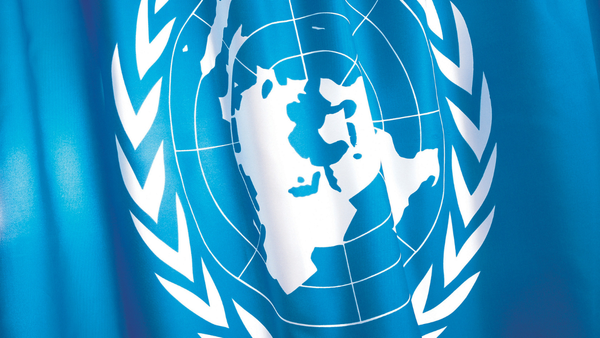
As the United Nations prepares to choose its next Secretary-General, the stakes extend well beyond succession politics. This is not simply about who occupies one of the world’s most visible diplomatic offices. It is about who will be asked to defend the UN Charter at a moment when the international system is under profound strain: wars are expanding, major-power rivalry is hardening, international law is being tested unevenly, and faith in multilateral institutions is weaker than it has been in years. Under Article 97 of the UN Charter, the Secretary-General is appointed by the General Assembly on the recommendation of the Security Council — which means the role is both global in symbolism and deeply political in practice.
The formal process for the 2025–2026 selection cycle is now underway. The process was launched by a joint letter from the Presidents of the General Assembly and the Security Council on November 25, 2025, and is being conducted under General Assembly resolution 79/327, with an emphasis on transparency, inclusivity, public vision statements, CVs, and campaign financing disclosures. Public interactive dialogues with the candidates are scheduled for April 21 and 22, 2026, and will be webcast live on UN WebTV. The current timetable lists Michelle Bachelet on April 21 at 10 a.m. EDT, Rafael Grossi on April 21 at 3 p.m. EDT, Rebeca Grynspan on April 22 at 10 a.m. EDT, and Macky Sall on April 22 at 3 p.m. EDT.
ONEST has been invited to observe this phase of the process, and we will be producing summaries and analysis of the upcoming Q&A periods. That matters because these dialogues are one of the few moments in a usually opaque selection process when the wider public can directly assess not only each candidate’s résumé, but also their judgment, priorities, political instincts, and ability to navigate pressure in real time.
At the moment, the active field is composed of four candidates: Michelle Bachelet, Rafael Grossi, Rebeca Grynspan, and Macky Sall. Virginia Gamba was also nominated earlier in the process, but her nomination was later withdrawn.
Michelle Bachelet
Michelle Bachelet enters the race with one of the strongest combinations of national and UN-level experience. She served twice as President of Chile, was the country’s first woman president, previously held the posts of health minister and defense minister, later became the first Executive Director of UN Women, and then served as UN High Commissioner for Human Rights from 2018 to 2022. That makes her one of the candidates with the deepest direct exposure both to executive government and to the UN system’s political and normative machinery.
Her candidacy, however, is also politically complicated. Chile withdrew its backing in March after a change in government, but Bachelet continued her campaign with support from Brazil and Mexico. That means she remains in the race, but with a more visibly contested political path than before.
Rafael Mariano Grossi
Rafael Grossi, nominated by Argentina, is best known internationally as the current Director General of the International Atomic Energy Agency, a role he has held since December 2019. The IAEA describes him as a diplomat with four decades of experience across disarmament, non-proliferation, and international security issues. In recent years, his profile has risen sharply because of the agency’s work on Iran, Ukraine, nuclear safety, and the broader geopolitical role of nuclear governance.
Grossi’s profile is distinct from the others because it is anchored less in elected national office and more in high-stakes technical diplomacy. In a period marked by nuclear risk, arms-control erosion, and security crises, that gives him a particular kind of credibility. But it also means one of the questions surrounding his candidacy will be whether expertise in a specialized multilateral agency translates into the broader political, developmental, and institutional balancing act the Secretary-General’s office requires.
Rebeca Grynspan
Rebeca Grynspan, nominated by Costa Rica, is the current Secretary-General of UN Trade and Development (UNCTAD) and the first woman to lead the organization. An economist by training and a former Vice President of Costa Rica, she has also served as Secretary-General of the Ibero-American Conference and as UN Under-Secretary-General and Associate Administrator of UNDP. Her background places her at the intersection of development policy, international economic governance, and multilateral diplomacy.
Her recent record at UNCTAD has further sharpened her candidacy. UNCTAD notes that she played a decisive role in efforts linked to the Black Sea Grain Initiative, has led the UN Global Crisis Response Group on food, energy and finance, and has represented the UN in G20 settings. In a moment when debt stress, food insecurity, uneven recovery, and development fragmentation remain central to global instability, Grynspan’s candidacy speaks directly to the argument that the next Secretary-General must understand not only peace and security, but also the economic fault lines driving global disorder.
Macky Sall
Macky Sall, nominated by Burundi, is the former President of Senegal, having served from 2012 to 2024. Before that, he was Prime Minister and also chaired the African Union from 2022 to 2023. His candidacy brings the experience of a former head of state from Africa — a region often central to UN peace operations, development debates, financing struggles, and demands for institutional reform, yet still underrepresented in the organization’s top office.
Sall’s supporters are likely to emphasize executive leadership, continental diplomacy, and familiarity with both statecraft and regional politics. Critics, meanwhile, are likely to scrutinize his domestic record and the political controversies that accompanied the later phase of his presidency. Either way, his candidacy ensures that debates over leadership style, legitimacy, and representation will remain part of the conversation.
Why this race matters more than usual
Every Secretary-General inherits crisis. But the next one may inherit something broader: a system in which the rules themselves are increasingly contested. The UN is being asked simultaneously to respond to war, humanitarian breakdown, climate stress, debt pressure, strategic competition, and a widening credibility gap between legal principle and political enforcement. The next Secretary-General will not be able to “fix” that alone. But the office still matters because it can set tone, frame legitimacy, convene governments, mobilize diplomacy, protect institutional memory, and defend the Charter when power politics tries to hollow it out.
This selection also matters because the process is more public than it once was, even if the decisive bargaining will still happen behind closed doors. Candidates are now expected to submit vision statements and financing disclosures, and to face public dialogues before Member States and civil society. At the same time, the final choice will still depend on whether a candidate can survive the Security Council — especially the veto power of the five permanent members. In other words, the world can watch more of the process, but it still cannot fully control it.
There is another dimension as well: no woman has ever served as UN Secretary-General. The UN’s own materials accompanying this cycle explicitly note that fact and encourage Member States to give serious consideration to women candidates. That does not determine the outcome, but it does shape the politics around this year’s field.
What to watch in the upcoming dialogues
The public dialogues next week should be watched not only for prepared talking points, but for what they reveal beneath them. The key questions are likely to be these: Which candidate treats reform as institutional repair rather than rhetorical branding? Who appears able to defend the UN Charter without sounding detached from political reality? Who understands that peace and security, development, human rights, and institutional legitimacy can no longer be separated? And who seems capable of leading an organization whose authority depends less on force than on credibility?
That is where this race becomes more than a diplomatic contest. It becomes a test of whether the UN system still has the capacity to produce leadership equal to the moment.
ONEST will be following the candidate dialogues on April 21 and 22 and will publish full summary coverage and analysis of the Q&A sessions. ONEST+ members will receive real-time Diplomatic Notes throughout the dialogues — with immediate insights, key moments, and contextual analysis as they happen.
Join ONEST+ — and follow the process not just as it happens, but as it matters.