On Friday, April 17, Keir Starmer and Emmanuel Macron convene a high-level international summit focused on one of the most consequential pressure points in the global economy: the Strait of Hormuz. Around 40 countries are expected to join what is being framed as the launch of a new multinational effort — the Strait of Hormuz Maritime Freedom of Navigation Initiative — designed to restore shipping flows amid escalating tensions linked to Iran.
While the UK has said that around 40 countries were expected to join the April 17 summit, it had not published a full participant list at the time of writing. What is publicly known is that a broad coalition had already backed the March 19 joint statement on the Strait of Hormuz, including the United Kingdom, France, Germany, Italy, the Netherlands, Japan, Canada, the Republic of Korea, New Zealand, Denmark, Latvia, Slovenia, Estonia, Norway, Sweden, Finland, Czechia, Romania, Bahrain, Lithuania, Australia, the United Arab Emirates, Portugal, Trinidad & Tobago, Croatia, Bulgaria, Kosovo, Panama, North Macedonia, Nigeria, Montenegro, Albania, the Marshall Islands, Chile, Moldova, Greece, Somalia, and Slovakia. This list should not be treated as exclusive to the April 17 gathering, nor as a final confirmed attendance list for the summit itself; further participation may have been added, and formal confirmation is expected through post-summit disclosures or official readouts.
At its core, this gathering reflects a simple reality: the Strait of Hormuz is not just a regional concern, but a structural vulnerability in the global system. A significant share of the world’s oil supply transits through this narrow corridor, connecting Gulf producers to international markets. When movement through the strait is disrupted, the effects are immediate and far-reaching — energy prices react, insurance markets tighten, and supply chains begin to absorb the shock. For governments like the United Kingdom, this is not being framed purely as a security issue abroad, but as an economic pressure point that directly affects domestic cost-of-living conditions.
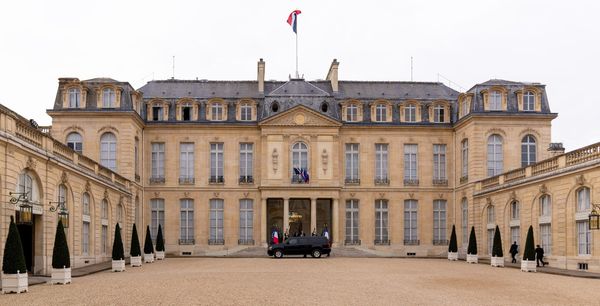
The initiative being discussed in Paris is designed to address both the physical and psychological dimensions of the disruption. Leaders are working toward the establishment of a multinational maritime mission that would operate in a strictly defensive capacity. The intent is to reassure commercial shipping by ensuring safe passage, deterring further interference, and supporting operations such as mine clearance where necessary. The emphasis on a defensive posture is deliberate, signaling an attempt to stabilize the situation without triggering direct escalation.
At the same time, reopening the strait is not simply a matter of naval presence. Even if conditions improve on the water, commercial vessels will not return at scale unless financial risk becomes manageable. This is why the discussions extend beyond military coordination into engagement with the insurance sector. Governments are effectively trying to rebuild confidence in the viability of the route, recognizing that markets often respond faster — and sometimes more cautiously — than states.
Institutional coordination is also a central component of the effort. The involvement of the International Maritime Organization anchors the initiative within an established regulatory framework, reinforcing the idea that this is not an improvised coalition but a response grounded in existing international maritime governance. Ensuring the safety of seafarers and maintaining navigation standards are being treated as essential elements of restoring normal operations.
This summit is not an endpoint but the beginning of a process. A follow-up military planning session is already scheduled to take place at the United Kingdom’s Permanent Joint Headquarters in Northwood, where operational details — command structures, logistics, and deployment timelines — will be further developed. The trajectory suggests a phased approach: diplomatic alignment first, followed by technical and military planning, and eventually deployment if conditions allow.
Beyond the immediate focus on maritime security, the meeting also carries broader strategic implications. While the initiative is clearly a response to Iranian actions, it reflects a deeper concern about the increasing use of critical trade routes as leverage in geopolitical disputes. Control, or disruption, of chokepoints like the Strait of Hormuz has the potential to reshape not only regional dynamics but global economic stability.
There is also a quieter dimension to the conversation. Countries heavily dependent on energy flows through the strait, particularly in Asia, have a significant stake in its stability, yet are not at the forefront of this initiative. This raises underlying questions about who ultimately guarantees the security of global trade routes, and under what framework that security is provided.
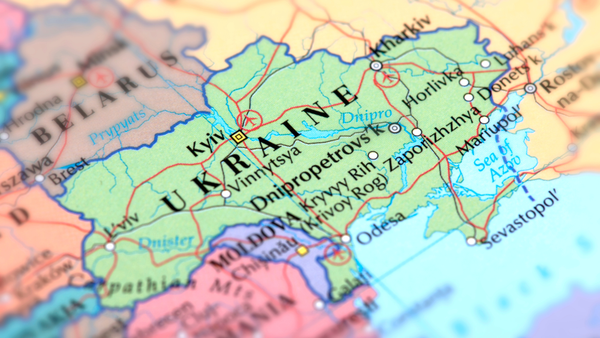
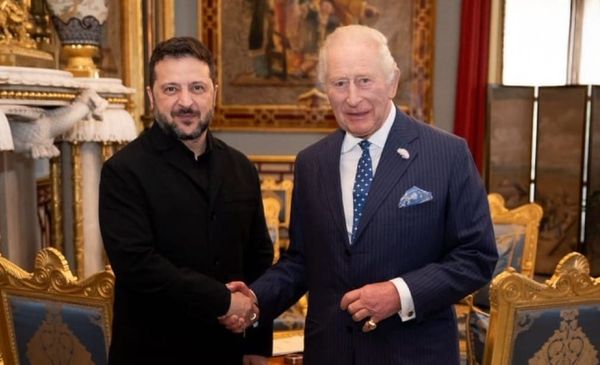
Alongside the Strait of Hormuz discussions, Starmer and Macron are expected to address other pressing issues during their bilateral engagement, including continued European support for Ukraine, migration challenges, and the broader question of strengthening European security cooperation. The overlap is not incidental. It reflects an emerging pattern in which economic security, military coordination, and geopolitical strategy are increasingly intertwined.
What emerges from this summit, therefore, is not simply a plan to reopen a shipping lane. It is a signal — directed at markets, at regional actors, and at global partners — that the free flow of trade through critical arteries remains a priority worth coordinating around. Whether this effort evolves into a sustained international presence or remains a temporary response will depend on how the situation develops in the weeks ahead.
At stake is something both technical and fundamental: whether global trade routes continue to function as stable, shared infrastructure, or whether they become persistent arenas of geopolitical contestation.
ONEST+
For a deeper analysis of the broader geopolitical dynamics behind the Strait of Hormuz — including China’s strategic positioning, energy dependence, and quiet role in shaping outcomes — see the latest ONEST+ Deep Dive.