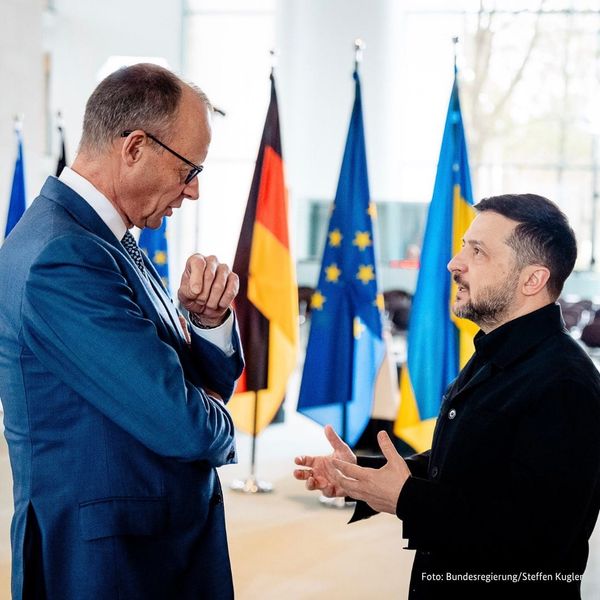
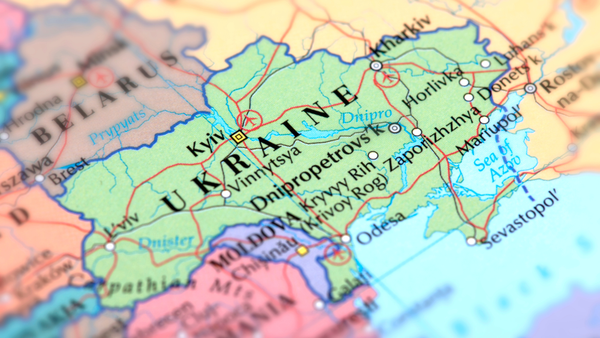
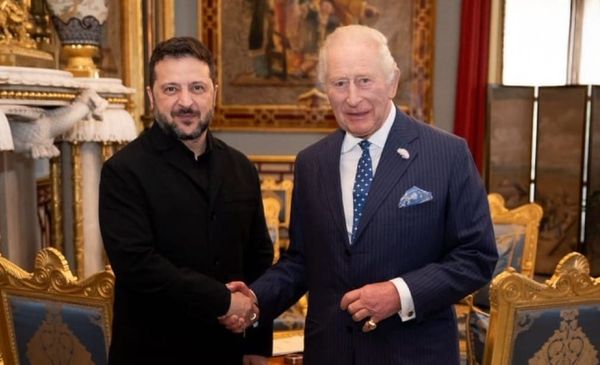
Germany and Ukraine’s new strategic partnership, signed in Berlin on April 14, is not just another statement of solidarity. It is an attempt to lock in a long-term wartime and postwar framework that ties Ukraine more deeply to Germany’s defense industry, Europe’s security architecture, and the EU accession process — while also introducing politically fraught language on returns, readmission, and men of military age leaving Ukraine.
At first glance, the declaration reads like a broad bilateral roadmap: security, recovery, trade, digitalization, science, housing, culture, and education. But read closely, and the agreement does something more consequential. It signals that Berlin no longer sees support for Ukraine as only an emergency response to Russia’s war. It is increasingly treating Ukraine as a strategic pillar in Europe’s future defense, industrial, and political order.
The clearest shift is in defense-industrial integration. The document goes well beyond pledging continued military assistance. It lays out regular strategic consultations on security and defense policy, high-level defense consultations, closer defense-industry coordination, expanded air defense cooperation, drone co-production, joint R&D, and data cooperation. Its annexes are especially revealing: they reference joint production of long-range strike drones Anubis and mid-range strike drones Seth-X, contracts for GEM-T Patriot missiles and additional IRIS-T launchers, and even an arrangement on providing drones for third countries, including in the Gulf. Reuters reported that German officials described the joint venture as one that would supply thousands of drones to Ukraine, with Berlin also agreeing to finance deep-strike capabilities worth several hundred million euros.
That matters because this is not merely aid. It is co-development, co-production, and strategic integration. In practical terms, Germany appears to be moving from being a supplier and financier to being a participant in Ukraine’s wartime innovation ecosystem. That is a significant evolution. Ukraine has developed one of Europe’s most combat-tested drone industries, and Germany is effectively saying that supporting it strengthens not only Ukraine, but German and European defense capacity too. This is one of the agreement’s most important messages: Ukraine is being treated not only as a recipient of Western support, but as a contributor to Europe’s rearmament and technological adaptation.
The political language is also notable. The declaration says the goal is a “comprehensive, just and lasting peace” backed by “robust, credible and legally binding security guarantees.” It also says Germany will work in close coordination with other European partners to ensure Europe is duly represented in the peace process, notably through the “Coalition of the Willing” and in cooperation with the United States. That wording matters. It reflects Europe’s growing concern that any future negotiations over Ukraine cannot be left to U.S.-Russia dynamics alone. Berlin is explicitly positioning itself not just as a supporter of Ukraine, but as a European actor insisting on a seat at the table in whatever peace framework emerges.
On Europe and NATO, Germany goes as far as current alliance politics realistically allow. It strongly supports opening all EU negotiation clusters and says it will work to overcome obstacles to Ukraine’s accession. On NATO, the language is careful but still meaningful: Germany backs Ukraine’s right to choose its own security arrangements, stands by NATO’s commitments on Euro-Atlantic integration, and says it will support efforts to build allied consensus for membership. That is not a membership offer, but it is a deliberate political signal that Berlin is aligning itself with the long-term objective rather than treating Ukraine’s NATO future as indefinitely frozen.
The economic sections show that Germany is also framing reconstruction as industrial policy. The agreement creates a new bilateral working group on economy and trade, encourages German companies to pursue joint business opportunities and investments, and explicitly links recovery to opportunities for German enterprise. It includes up to 233 million euros in new German development funding focused on industrial cooperation, energy resilience, housing, rehabilitation, skills, anti-corruption, local government, and EU readiness. It also points to cooperation in critical minerals, agriculture, biomethane, hydrogen, transport, cyber, digital infrastructure, and research. In other words, reconstruction here is not presented as charity. It is presented as a long-term economic and strategic project with mutual benefit.
One of the more interesting — and easy to overlook — parts of the declaration is digital and AI cooperation. The annex includes cooperation on GovTech, cyber capacity building, mutual recognition of Ukrainian qualified electronic signatures, and even “sovereign AI” in the public sector, including agentic AI, public-service applications, and language-specific AI for languages other than English. That language is striking because it places Ukraine not just inside Europe’s security and recovery agenda, but also inside debates about digital sovereignty, public-sector AI, and technological autonomy. It suggests Berlin and Kyiv are trying to build a partnership that is as much about future state capacity as it is about current battlefield survival.
But the part likely to generate the most immediate controversy is not about drones or AI. It is in the “Human Dimension” section. There, the declaration says Germany and Ukraine will coordinate returns of Ukrainian citizens from Germany to Ukraine, and adds: “Germany expects Ukraine to reduce the number of men of military age leaving Ukraine.” The annex goes further, referencing an implementing protocol related to the 2007 EU-Ukraine readmission agreement, coordination on temporary protection and returns, a Berlin “Unity Hub” meant partly to inform Ukrainians about employment opportunities and social guarantees in Ukraine, and cooperation formats to combat social benefit fraud using relevant data where legally feasible.
This is where the agreement becomes politically sensitive. It does not simply speak about reconstruction and return in optimistic terms. It inserts migration control, readmission, and wartime demographic pressure into the bilateral framework. That language will likely be read very differently by different audiences. In Berlin, officials may present it as a legal-administrative issue: managing temporary protection, encouraging return, coordinating reintegration, and addressing fraud concerns. In Kyiv, it can also be seen through the lens of manpower shortages, veteran reintegration, and state resilience. But for many Ukrainians abroad — especially men of military age, families with complex legal situations, or those who left under traumatic conditions — this wording will land as coercive, even if the text itself couches the issue in legal and administrative language.
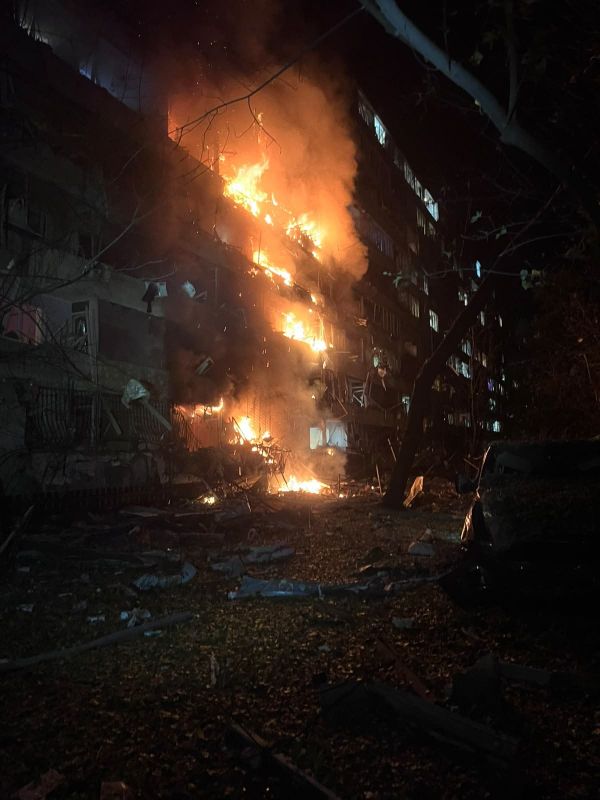
That is why this declaration should not be misread as purely symbolic diplomacy. It is a framework for wartime state-building and postwar alignment, but it also reflects hard pressures now shaping European policy: defense production, strained U.S. attention, reconstruction financing, social-system management, and the increasingly uncomfortable question of how host states deal with long-term displaced populations when a war drags on. AP noted that Ukraine continues to struggle with manpower shortages, while Reuters underscored the scale of the new drone and defense cooperation. The agreement sits at the intersection of both realities.
There is also a deeper strategic point here. Germany is not offering Ukraine a simple bridge until the war ends. It is helping embed Ukraine into European systems now: defense procurement, air defense production, energy resilience, local governance, social policy, science, digital infrastructure, and accession support. That is what makes this document consequential. It is less about one announcement and more about institutionalizing interdependence. If implemented seriously, it would make Ukraine harder to isolate, harder to pressure into a bad peace, and more central to Europe’s own security future.
Still, ambition on paper is not the same as execution. Many provisions are framed as intentions, working groups, declarations of intent, or cooperation formats rather than binding deliverables. The strongest parts of the document are the concrete defense and financing items; the rest will depend on follow-through, political will, budget choices, EU dynamics, and the evolution of the war itself. The agreement is strategically important, but it is also a test: of whether Germany is prepared to move from supportive partner to structural stakeholder in Ukraine’s future.
Bottom line: this declaration tells us that Berlin sees Ukraine as more than a frontline state in need of help. It sees Ukraine as a defense partner, an eventual EU member, a reconstruction market, a digital partner, and a central part of Europe’s future security order. But it also shows that as the war enters a longer phase, Europe’s support is becoming more conditional, more institutional, and in some areas, more politically uncomfortable. That tension — between solidarity and state interest — is what makes this agreement worth paying close attention to.