APRIL 20: Seizure Escalates, Ceasefire Nears End, Talks Uncertain

KEY DEVELOPMENTS
The fragile U.S.–Iran ceasefire is now entering its final hours — under pressure.
A direct U.S. military seizure of an Iranian cargo ship in the Gulf of Oman has triggered new threats from Tehran, raised oil prices, and cast serious doubt over whether a second round of peace talks will proceed.
At the same time, the structure of the conflict is shifting again: alongside military escalation, economic pressure is intensifying, and enforcement is expanding beyond the immediate region.
Across the system, the signals are no longer aligned.
NUMBERS TO WATCH
1 — Iranian cargo ship seized by U.S. forces in latest escalation
13+ — Ships turned back since U.S. blockade began
$166B — Tariffs now being refunded by the U.S. government
330,000 — Importers eligible for refunds across 53M shipments
44.7% — Vote share securing victory in Bulgaria’s election
THE STRAIT: REVERSAL, SEIZURE, AND TALKS AT RISK
The latest escalation is direct — and it is unfolding at sea.
Over the weekend, Iran signaled it would reopen the Strait of Hormuz to commercial vessels, a move that could have eased pressure on global shipping and energy markets.
That position did not hold.
After the United States refused to lift its naval blockade, Iran reversed course, once again tying access to the Strait to the broader standoff with Washington.
Events then escalated quickly — but not cleanly.
President Donald Trump reported that Iranian gunfire had struck French and British vessels in the region. Hours later, U.S. Central Command confirmed that American forces had boarded and seized an Iranian-flagged cargo ship in the Arabian Sea that was attempting to reach an Iranian port — the first such maritime seizure since the blockade was imposed.
Iran’s response followed.
Military officials warned of retaliation, while state-linked outlets reported drone attacks on U.S. ships in the Gulf of Oman.
At the same time, the diplomatic track is weakening.
Iran’s Foreign Ministry said there are “no plans” currently for the next round of talks in Pakistan, despite U.S. expectations that negotiations would resume within days under Vice President JD Vance. Spokesperson Esmail Baghaei accused Washington of actions that in “no way demonstrate seriousness in pursuing a diplomatic process.”
Yet within Iran’s leadership, messaging is not uniform.
President Masoud Pezeshkian stated that while Iran must stand firm against “excessive demands,” continued war “benefits no one,” emphasizing that issues should be managed “through reason and in a calm environment.”
Markets have already reacted.
Oil prices rose following Iran’s retaliation threats, reflecting how tightly global energy flows remain tied to developments in the Strait.
The next phase is approaching quickly.
The two-week ceasefire between the United States and Iran is set to expire Tuesday at 8pm ET, and there are currently no confirmed plans for the next round of negotiations. A U.S. delegation — led by Vice President JD Vance and expected to include envoy Steve Witkoff and adviser Jared Kushner — is expected to travel to Islamabad ahead of the deadline, though Iran has not confirmed participation.
What began as a signal of de-escalation has shifted back into direct confrontation — and the immediate question is whether talks resume before the ceasefire ends, or whether this becomes a sustained conflict at sea.
IRAN: CAPABILITY, PRESSURE, AND INTERNAL ACTIONS
Despite losses, Iran is adapting.
Iranian military officials claim that missile and drone launcher systems are now being replenished at a faster rate than before the war.
At sea, Iran continues to rely on what is often referred to as a “mosquito fleet” — small, fast vessels designed to harass larger ships and disrupt maritime traffic.
Internally, security measures are tightening:
- four individuals were arrested for alleged links to a U.S.–Israel espionage network
- two men accused of acting on behalf of Israeli intelligence were executed
At the same time, analysts estimate Iran could sustain a complete halt in oil exports for up to two months before being forced to curb production.
The pressure is significant — but not immediate collapse.
REGION: FRAGILE CEASEFIRE, ACTIVE FRONTLINES
The Israel–Lebanon ceasefire continues to hold — but remains fragile.
Israeli forces are still operating inside southern Lebanon, maintaining positions and warning civilians to avoid areas near the Litani River.
A second Israeli soldier has been killed during the ceasefire period, and targeted strikes against Hezbollah positions continue within Israel’s declared security zone.
At the same time:
- Israeli military maps now show expanded control over dozens of Lebanese villages
- Syria reported foiling a Hezbollah-linked missile attack
- Iraq is preparing to resume full oil exports
This is not a frozen conflict. It is an active one under partial pause.
GLOBAL ALIGNMENT: SIGNALS ARE NOT ALIGNED
The geopolitical response to the conflict remains fragmented — and, in some cases, contradictory.
From Washington, pressure is being applied on multiple fronts at once. While the United States continues to escalate enforcement against Iranian-linked activity, it has also extended sanctions relief on Russian oil shipments for another month, even as tensions around Iran intensify.
That move sits alongside new reporting that Russia’s foreign intelligence service compiled a document earlier this year containing coordinates of Iranian sites observed by U.S. reconnaissance satellites, which was then passed to Tehran.
At the same time, U.S. officials continue to frame the broader response as unified. In an interview, U.S. Ambassador to the UN Mike Waltz said:
“It’s disappointing the Russians and Chinese chose to side with Iran rather than our Gulf Arab allies… The entire world is united.”
Taken together, these developments point to a more complex reality:
public messaging suggests alignment — but actions indicate a far more fragmented and fluid geopolitical landscape.
EUROPE AND BEYOND: SECURITY, POLITICS, AND RISK
In Europe, security concerns are expanding beyond the battlefield — and increasingly intersecting with domestic politics and legal frameworks.
In the United Kingdom, counterterrorism police are investigating a series of arson attacks targeting Jewish sites in London. Authorities are examining possible links to an Islamist network with alleged connections to Iran, reflecting how tensions from the Middle East conflict are beginning to manifest inside European societies.
In Bulgaria, parliamentary elections delivered a decisive victory to former President Rumen Radev, whose political positioning has been described as more accommodating toward Moscow. His party secured roughly 44.7% of the vote — one of the strongest results in a generation — raising the possibility of a more independent or Russia-leaning stance within both the EU and NATO, at a time when unity on Ukraine remains a priority.
In Hungary, the debate is taking a different form — not electoral, but legal. Prime Minister Péter Magyar stated that if Israeli Prime Minister Benjamin Netanyahu were to visit Hungary, he would be arrested under the country’s obligations as a member of the International Criminal Court.
The statement highlights a growing tension between international legal commitments and political positioning within Europe, particularly as the ICC’s role becomes more prominent in ongoing conflicts.
At the same time, NATO is deepening coordination across multiple domains. Discussions are expanding to include energy security and the protection of critical infrastructure such as undersea cables, while cooperation with Indo-Pacific partners continues to grow. Support for Ukraine remains a central pillar of alliance activity.
Taken together, these developments point to a broader shift:
security in Europe is no longer defined only by military posture — but by how domestic politics, legal obligations, and external conflicts intersect within the same space.
ASIA: MILITARY, ECONOMIC, AND STRATEGIC MOVES
Across Asia, tensions and coordination are both increasing.
- Japan issued a formal protest over China’s unilateral development in the East China Sea
- Japan is joining U.S.–Philippines military exercises for the first time, alongside more than a dozen partner countries
- North Korea launched multiple short-range ballistic missiles, with reports indicating expanded nuclear production capacity
At the same time:
- China is expanding economic ties with Kazakhstan through multi-billion-dollar agreements
- new counter-sanctions frameworks are being introduced
- regional energy and security cooperation continues to evolve
UNITED STATES: POLICY, MILITARY, AND SOCIETY
Inside the United States, domestic developments are unfolding alongside an expanding global military and geopolitical posture.
At the Pentagon, planning reflects both immediate operational strain and longer-term strategic preparation. The Air Force is increasing funding requests for readiness and spare parts — a signal that sustained deployments and high operational tempo are placing pressure on existing fleets. At the same time, broader efforts are underway to expand capabilities across domains, from air power to space-based systems, as the U.S. prepares for a more prolonged period of multi-theater engagement.
In parallel, a separate but symbolic development is underway: a Boeing 747-8i aircraft donated by Qatar is being prepared for presidential use as a temporary Air Force One platform.
Beyond defense and infrastructure, pressure is also visible across society.
In Wisconsin, protests erupted over conditions at a large-scale animal research facility, where demonstrators attempted to breach the site amid concerns over the treatment of thousands of beagles used for testing. Law enforcement intervened, using crowd-control measures to prevent entry.
At the same time, hundreds of journalists — including Dan Rather, Sam Donaldson, and Jackie Judd — have written to the White House Correspondents’ Association, calling on it to take a stronger stand against "efforts by President Donald Trump to undermine press freedom".
Taken together, these developments point to a broader reality:
as the United States expands its role globally, domestic pressures — institutional, social, and political — are intensifying in parallel.
GLOBAL SYSTEM: ECONOMY AND STABILITY
The global system is not just under pressure — it is beginning to reorganize around it.
At the G20 level, discussions have shifted toward one of the most immediate consequences of the Middle East war: disruptions to food and fertilizer supply chains. The current U.S. presidency of the G20 is pushing for coordinated action to prevent shortages, as war-driven disruptions to energy routes — particularly through the Strait of Hormuz — threaten to cascade into global agriculture markets and leave millions more at risk of food insecurity.
This reflects a broader shift:
the conflict is no longer only about oil — it is now directly affecting the systems that sustain food production globally.
At the same time, countries are beginning to respond independently.
Japan has announced $10 billion in financial support to Southeast Asian partners, aimed at stabilizing economies facing rising energy costs and supply disruptions. The structure of the aid — delivered through financial institutions rather than direct resource releases — reflects a move toward financial buffering rather than emergency intervention.
Elsewhere, global financial institutions are re-engaging in areas previously cut off from the system.
The International Monetary Fund and World Bank are restoring formal ties with Venezuela, potentially unlocking access to billions in financial reserves.
Separately, U.S. Southern Command confirmed it carried out a strike on a vessel in the Caribbean, killing three individuals it described as drug traffickers, as part of an ongoing campaign targeting so-called “narco-trafficking” routes in the region.
At the same time, humanitarian pressure continues to deepen.
In Sudan, donors have pledged new aid as the conflict enters another year, while in Haiti, more than half the population is facing crisis-level food insecurity. Across South and Southeast Asia, nearly 900 Rohingya refugees were reported missing or dead last year — the deadliest year on record for maritime displacement in the region.
In South Sudan, instability is rising further, as budget cuts limit the ability of international missions to protect civilians.
Taken together, these are not isolated crises.
They point to a system where:
- energy disruption is translating into food insecurity
- financial institutions are re-engaging to stabilize fragile economies
- and humanitarian systems are operating under increasing strain
The effects of the conflict are no longer contained.
They are now shaping the conditions far beyond the battlefield.
UKRAINE AND RUSSIA: ESCALATION CONTINUES
The war in Ukraine is continuing on multiple fronts — military, internal security, and across Europe.
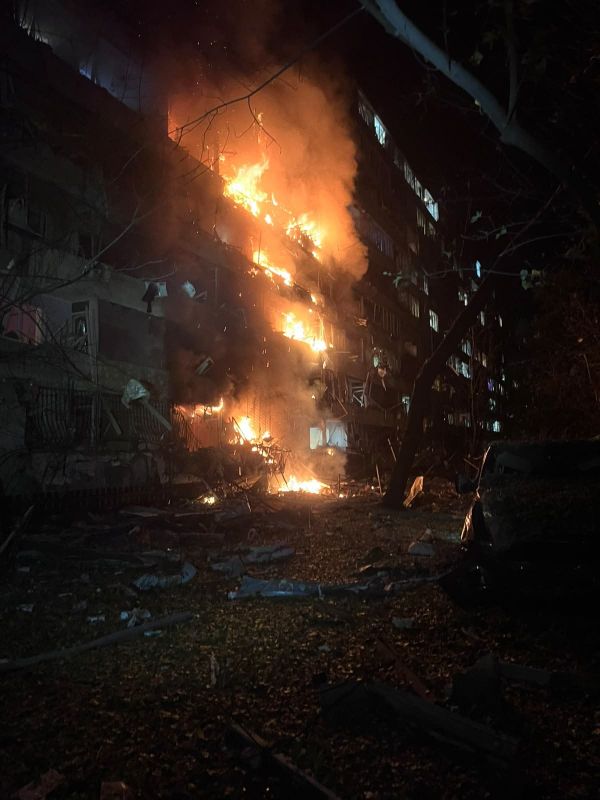
In Kyiv, a mass shooting and hostage incident that left at least seven people dead is being investigated as terrorism. While separate from battlefield operations, the attack underscores the continued vulnerability of civilian spaces years into full-scale war.
At the same time, Russia’s military campaign remains active, with continued strikes targeting Ukrainian territory.
But the escalation is no longer confined to Ukraine.
Russian rhetoric toward Europe has intensified, including direct warnings to defense companies — particularly in Germany — that support Ukraine’s military capabilities. Moscow has explicitly suggested that companies involved in drone production and long-range strike systems could be considered legitimate targets.
Germany has responded by summoning Russia’s ambassador, citing an increase in hybrid threats, including espionage and sabotage attempts targeting infrastructure linked to NATO operations.
This reflects a broader shift:
the war is not only being fought on Ukrainian territory — it is increasingly extending into the European security environment.
At the same time, within Ukraine itself, authorities are warning of additional risks, including coordinated disinformation efforts and security threats beyond the battlefield.
This conflict continues — alongside the Middle East war, not separate from it, and increasingly connected through pressure on the same global system.
HUMANITY
In the midst of conflict, a different kind of message was delivered.
The families of more than 100 schoolchildren killed in a U.S. bombing of an Iranian school wrote a letter to Pope Leo XIV.
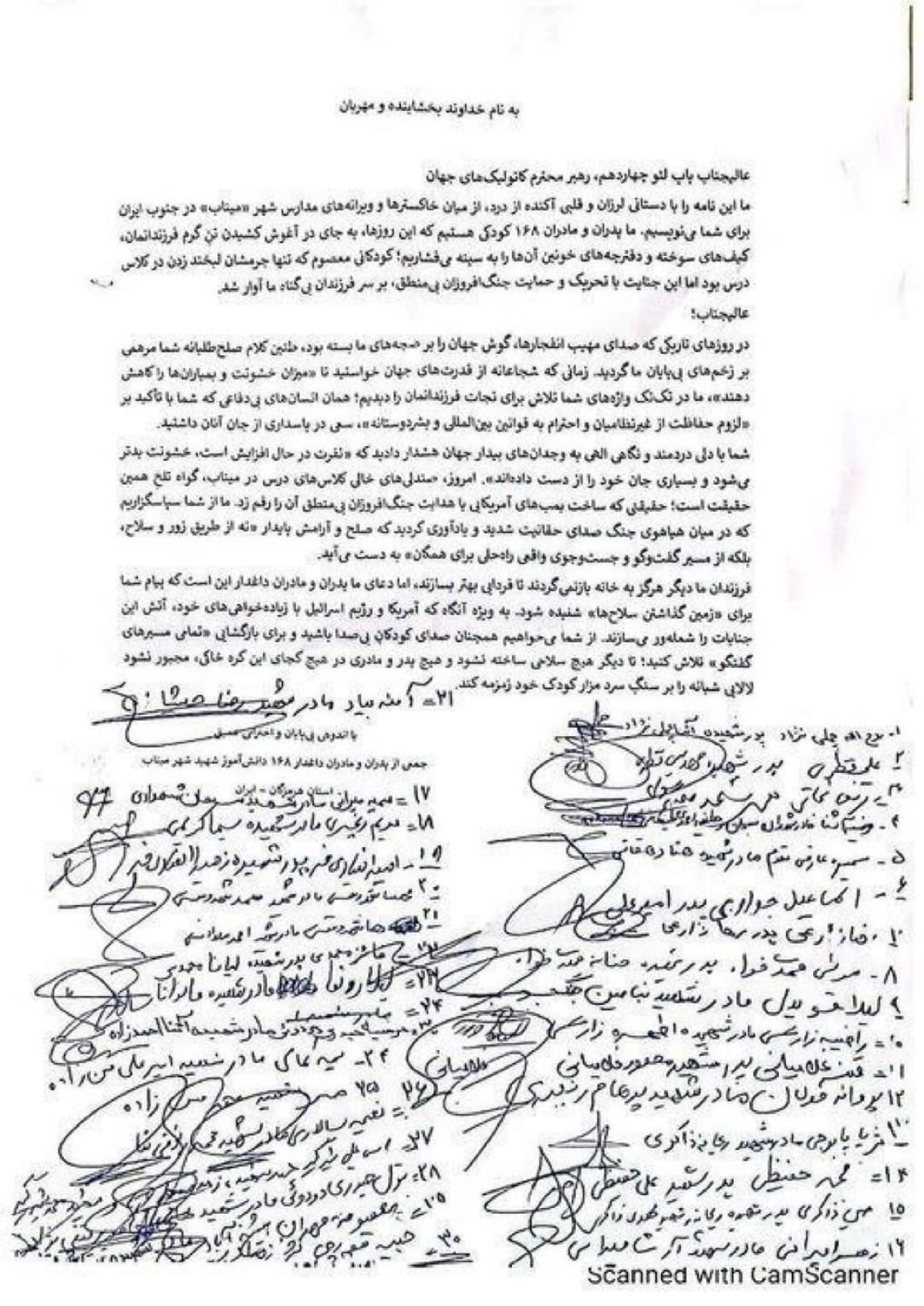
In it, they expressed gratitude.
For his voice. For his advocacy for peace. For remembering their children.
And then, something entirely different.
In a clip from Britain’s Got Talent, a young singer, Little Lucciano, surprised his grandfather with a duet — a moment that quickly spread for a very simple reason:
It made people smile.
ONEST+
Tomorrow, I will be reporting on location from the UN Secretary-General candidate hearings in New York.
Join ONEST+ for real-time updates, Diplomatic Notes, and behind-the-scenes insights.
Independent, reader-supported reporting — built on trust, not algorithms.
Written by
Comments