APRIL 17: Paris Coalition on Hormuz as Ceasefire Holds and U.S. Expands Enforcement
Middle East ceasefire holds as U.S. expands Iran blockade globally, over 40 countries coordinate on Hormuz security, and economic pressure builds worldwide.
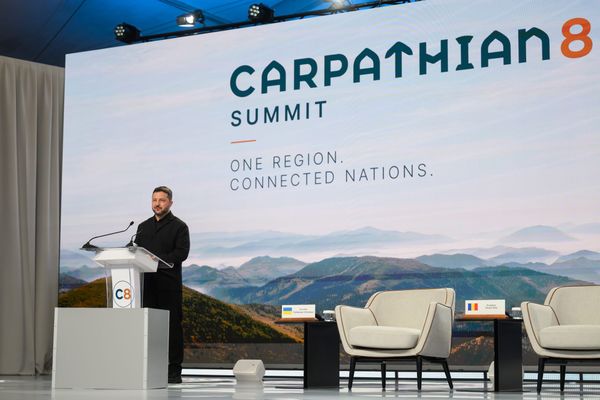
“The decisions made now on Hormuz will shape what other troublemakers might think about causing problems…” — Volodymyr Zelenskyy
KEY DEVELOPMENTS
A 10-day ceasefire between Israel and Lebanon has taken effect — and, for now, is holding.
But the pause is not the end of the war. It is a temporary alignment layered over unresolved conditions, competing interpretations, and an expanding global response.
At the same time, the United States has moved beyond a regional blockade and toward global enforcement, signaling it is prepared to intercept vessels tied to Iran anywhere in the world. That shift transforms the conflict from a regional confrontation into a system-wide pressure campaign.
And beyond the battlefield, the focus has moved to coordination: more than 40 countries have now aligned around securing the Strait of Hormuz — not just reopening it, but defining what control and security will look like after the war.
NUMBERS TO WATCH
10 — Days of the Israel–Lebanon ceasefire 13 — Ships that have already turned back under U.S. blockade enforcement 40+ — Countries now aligned on Hormuz security discussions 6 — Weeks of jet fuel reserves remaining in Europe $1.5 trillion — Proposed U.S. military budget under discussion 900 — Rohingya refugees missing or dead in 2025
MIDDLE EAST: A CEASEFIRE, BUT NOT A RESOLUTION
At midnight in Beirut, a ceasefire came into effect between Israel and Lebanon.
The agreement has, for now, held — allowing displaced civilians to begin returning home after weeks of fighting. The United Nations welcomed the truce, with Secretary-General António Guterres calling it a step toward broader negotiations.
Crucially, Iran announced that the Strait of Hormuz would remain open to commercial vessels for the duration of the ceasefire — a decision framed as stabilizing, but also conditional.
The structure of the agreement reveals its limits.
According to a U.S. State Department document:
Israel agreed to halt “offensive military operations” in Lebanon
Lebanon committed to preventing attacks by Hezbollah
Israel’s right to self-defense was explicitly reaffirmed
But Hezbollah — the central military actor in the conflict — is not formally bound by the agreement.
Its leadership has made clear its actions will depend on “how developments unfold.”
That is the core vulnerability:
the ceasefire depends on a party that is not fully part of it.
U.S. STRATEGY: FROM REGIONAL BLOCKADE TO GLOBAL ENFORCEMENT
The most significant shift is not the ceasefire.
It is the expansion of U.S. operational scope.
The United States has moved beyond blocking Iranian ports to authorizing forces worldwide to intercept and stop any vessel linked to Iran — whether carrying oil, metals, electronics, or weapons.
Chairman of the Joint Chiefs of Staff Dan Caine stated clearly that U.S. forces will “actively pursue” ships providing material support to Tehran.
This is no longer a localized maritime restriction.
It is a global enforcement regime.
Already:
at least 13 ships have turned back
trade flows are being disrupted
economic pressure is intensifying
At the same time, the U.S. is pairing military enforcement with financial pressure.
Treasury Secretary Scott Bessent described the approach as the “financial equivalent” of a military campaign, as Washington expands sanctions and warns foreign institutions — including Chinese banks — of potential penalties.
This is not a shift away from war. It is a shift in how the war is being conducted.
DIPLOMACY: TALKS CONTINUE, CONDITIONS REMAIN
Despite escalation, diplomacy is ongoing.
Pakistan continues to position itself as a central mediator, with:
Army Chief Asim Munir meeting Iranian officials in Tehran
Prime Minister Shehbaz Sharif holding parallel talks in Qatar
At the same time, no date has been set for the next round of U.S.–Iran negotiations.
Key issues remain unresolved:
Iran’s nuclear program
control and access to the Strait of Hormuz
Russia has offered to store Iran’s enriched uranium as part of a potential agreement — an offer the United States has declined.
And while President Donald Trump has suggested direct communication between Israeli and Lebanese leaders could take place, Lebanese officials say they are not aware of any imminent contact.
The diplomatic track exists — but it is not yet aligned.
STRAIT OF HORMUZ: FROM CRISIS TO COORDINATION
Attention has now shifted to what comes next.
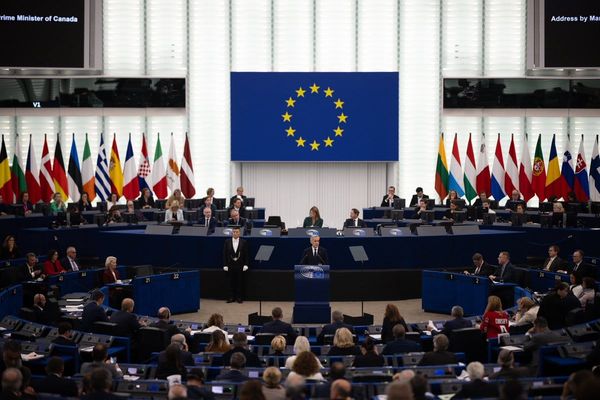
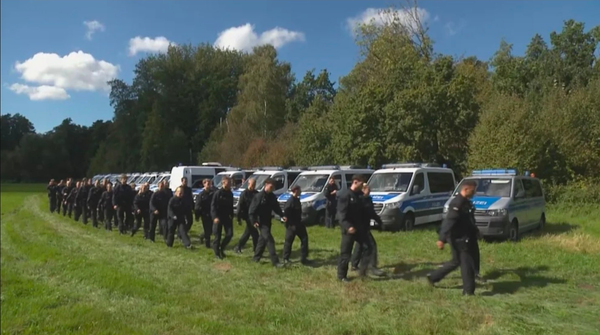
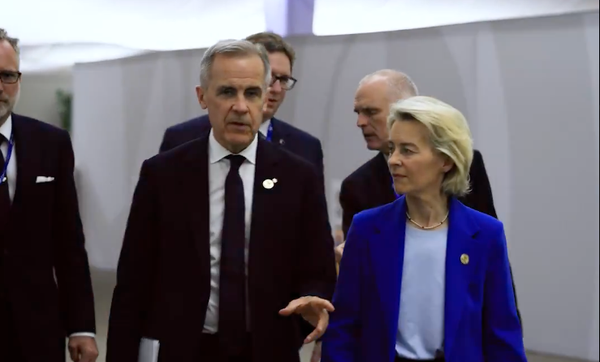
In Paris, more than 40 countries — most participating virtually — met to discuss how to secure the Strait of Hormuz under international law.
Led by Emmanuel Macron and Keir Starmer, the coalition is moving toward a coordinated presence in the region once conditions allow.
More than a dozen countries have already volunteered to participate in a defensive mission.
Canada signaled support through both diplomacy and security guarantees.
Ukrainian President Volodymyr Zelenskyy framed the stakes clearly:
“The decisions made now on Hormuz will shape what other troublemakers might think about causing problems — in other straits and on other fronts.”
His remarks go beyond the Middle East.
They reflect a broader concern:
how this conflict is resolved will shape the rules of global navigation going forward.
GLOBAL ECONOMY: PRESSURE IS NOW STRUCTURAL
The impact is no longer regional.
It is systemic.
The International Energy Agency has warned that Europe has roughly six weeks of jet fuel reserves remaining, with airlines already beginning to adjust operations.
At the same time:
KLM is cutting routes
Delta is monitoring supply risks
energy costs are rising globally
The effects are reaching beyond traditional energy markets.
From the Caribbean — facing rising fuel costs and climate vulnerability — to global aviation, the strain is visible across systems.
This is not a temporary disruption. It is a structural shock.
GLOBAL REALIGNMENT: ENERGY, SECURITY, AND POWER
Across regions, countries are repositioning.
In the Gulf:
Saudi Arabia is increasing domestic investment while supporting Pakistan financially
Qatar is rebuilding energy capacity after attacks
the UAE is undergoing economic adjustments amid reduced tourism
In Africa:
the Democratic Republic of Congo has created a strategic cobalt reserve
Algeria is expanding exploration to increase supply resilience
In Latin America:
the IMF and World Bank are restoring formal ties with Venezuela
In Asia:
China is openly criticizing the U.S. blockade as “dangerous”
new legal frameworks are being introduced to counter foreign sanctions
cross-Strait dynamics between China and Taiwan are shifting through political engagement
Across all regions, the pattern is consistent:
energy security, economic resilience, and geopolitical positioning are now inseparable.
ASIA: ECONOMIC ZONES AND STRATEGIC FOOTPRINT
Beyond the Middle East, the United States is continuing to expand its strategic footprint in Asia through economic and industrial policy.
Washington and Manila have announced plans to establish a joint high-tech manufacturing zone on the Philippine island of Luzon, a project that will operate under U.S. common law and be granted diplomatic immunity.
The details remain limited — including which companies will participate — but the structure itself is notable.
This is not a standard industrial park.
It is effectively a U.S.-aligned legal and economic enclave, designed to:
secure supply chains
anchor high-tech manufacturing in a partner country
and deepen long-term strategic ties in the Indo-Pacific
The timing matters.
As U.S. resources and attention are concentrated in the Middle East, this move signals that Washington is continuing to build parallel economic infrastructure in Asia — particularly in regions central to competition with China.
UNITED STATES: POWER, POLICY, AND PREPARATION
Inside the United States, policy continues to align with long-term strategic competition.
A proposed $1.5 trillion military budget is under debate
the Air Force is increasing funding for readiness and spare parts
hypersonic missile defense timelines are accelerating
At the same time:
new sanctions target foreign actors supporting authoritarian regimes
diplomatic efforts are being redirected toward trade-based frameworks
The U.S. is not preparing for a single conflict.
It is preparing for a multi-domain environment of sustained competition.
UKRAINE: WAR CONTINUES IN PARALLEL
While attention remains on the Middle East, the war in Ukraine continues.
Russian missile and drone strikes killed at least 17 people overnight — one of the largest attacks this year.
Despite a temporary Easter truce announcement, the intensity of strikes suggests no meaningful de-escalation.
President Volodymyr Zelenskyy and Sweden’s King Carl XVI Gustaf honored fallen Ukrainian soldiers in Lviv — a reminder that the human cost of this war remains constant.
This war has not paused. It has been overshadowed.
HUMANITY
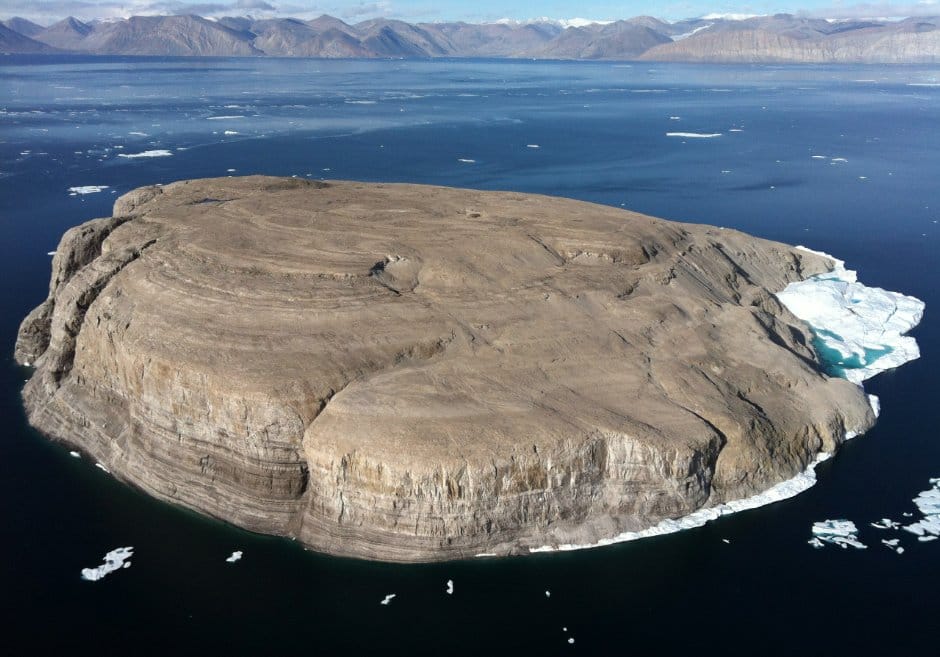
Did you know that Canada and Denmark are neighbors?
They share a land border on a small, uninhabited piece of rock in the Arctic called Hans Island.
For decades, the two countries engaged in what became known as the “Whisky War” — quietly taking turns visiting the island, raising their flag, and leaving a bottle behind for the other side.
In 2022, they officially settled the dispute by splitting the island in half.
No conflict. No escalation.
Just a border — and a long-standing exchange of gestures.
In a world where territory often leads to tension, this one ended differently.
ONEST+
For deeper analysis, behind-the-scenes insights, and early access to interviews, join ONEST+.
Olga Nesterova is a journalist and founder of ONEST Network, a reader-supported platform covering U.S. and global affairs. A former White House correspondent and UN diplomat, she focuses on international security and geopolitical strategy.