APRIL 13: Talks Collapse, Strait Blockade, Trump Targets the Vatican

– 11 min read

“The United States and Iran must continue talks… there is no military solution to the conflict.” — António Guterres
The diplomatic window has closed — at least for now.
Talks between the United States and Iran in Islamabad ended without agreement, and within hours, President Donald Trump announced plans to blockade Iranian ports, a move quickly formalized by U.S. Central Command.
At the same time, Iran signaled that the conflict cannot be contained to a single track — explicitly linking escalation in Lebanon to a broader response.
Beyond the region, the consequences are beginning to spread.
Energy flows remain constrained, pricing signals are shifting, and global systems — from shipping to food production — are beginning to reflect what may no longer be a temporary disruption.
By the end of a turbulent weekend, President Donald Trump opened a new front — this time not against a state, but against the head of the Catholic Church.
After sharing a picture portraying himself as Jesus — which he later denied posting, claiming he was “playing a doctor” — Trump publicly attacked Pope Leo XIV, saying:
“I don’t think he’s doing a very good job. He likes crime I guess. We don’t like a pope who says it’s ok to have a nuclear weapon. We don’t want a pope that says crime is ok. I am not a fan of Pope Leo.”
He then doubled down in a lengthy Truth Social post, calling the Pope “WEAK on Crime, and terrible for Foreign Policy,” accusing him of siding with the “Radical Left,” and suggesting that Leo’s election was politically driven and tied to Trump himself.
The tone was not casual criticism. It was an attempt to recast a spiritual leader as a political rival.
That drew immediate pushback.
Archbishop Paul S. Coakley, president of the U.S. Conference of Catholic Bishops, responded:
“I am disheartened that the President chose to write such disparaging words about the Holy Father. Pope Leo is not his rival; nor is the Pope a politician. He is the Vicar of Christ who speaks from the truth of the Gospel and for the care of souls.”
The Bishops of Scotland issued a message of support as well, thanking Pope Leo for his “clear and consistent voice in calling for peace” and describing his leadership as “a guiding light for the Church and the world at this critical time.”
One of the more unexpected defenses came from Iran.
President Pezeshkian wrote:
“Your Excellency Pope Leo XIV, on behalf of the great nation of Iran, I condemn the insult to Your Excellency and declare that the desecration of Jesus (peace be upon him), the Prophet of peace and brotherhood, is unacceptable to any free person. I wish glory for you from Allah.”
Meanwhile, Pope Leo did not respond in kind. He responded as Pope.
He has begun a ten-day visit to Africa, with his first stop in Algeria. After visiting the Great Mosque of Algiers, he left the following message in the guestbook:
“May the mercy of the Most High keep the noble Algerian people and the entire human family in peace and freedom.”
Speaking to reporters on the way there, he addressed Trump’s accusations directly, but without mirroring the tone:
“I have no fear of the Trump administration or speaking out loudly of the message of the Gospel, which is what I believe I am here to do, what the Church is here to do. We are not politicians. We don't deal with foreign policy with the same perspective he might understand it, but I do believe in the message of the Gospel, as a peacemaker.”
He later expanded on that message publicly:
“The future belongs to men and women of peace. Justice will always triumph over injustice in the end, just as violence will never have the last word, despite all appearances. Our world needs men and women of faith who thirst for justice and unity. In the face of a humanity yearning for fraternity and reconciliation, it is a great gift and a sacred duty for us to declare with conviction that we are always united as brothers and sisters, children of the one God!”
And in Algeria, he added a line that reached beyond the immediate clash:
“Today, this is more urgent than ever in the face of continuous violations of international law and neocolonial tendencies.”
This matters for more than the spectacle of a president attacking a pope.
It shows how quickly the language of geopolitics is now colliding with the language of moral authority. Trump tried to pull the Pope into a political frame. Leo refused that frame and answered with something else entirely: peace, law, justice, and the duty to speak even when power is offended.
The failure of talks in Islamabad was not due to lack of engagement — but due to incompatible end goals.
According to reporting cited by the New York Times, Iran proposed suspending its nuclear activities for up to five years. The United States rejected the proposal, insisting instead on a 20-year suspension.
This is not a technical disagreement.
It reflects two fundamentally different approaches:
With no alignment between those positions, talks ended without agreement.
UN Secretary-General António Guterres responded by urging both sides to continue negotiations, emphasizing that there is no military solution to the conflict.
Following the collapse of talks, President Trump announced plans to blockade Iranian ports.
U.S. Central Command then issued a formal statement outlining how the measure will be implemented.
Beginning April 13:
The language is precise — and intentional.
This is not a full closure of the Strait.
It is a targeted effort to isolate Iran economically while maintaining the broader structure of global shipping.
However, in practice, that distinction is becoming increasingly difficult to maintain.
The Latest: The United States has announced and begun implementing a blockade framework targeting Iranian ports, though full-scale enforcement has not yet been widely observed.
Iran’s response signals that it does not accept a limited framework.
The Revolutionary Guards warned that any military vessels approaching the Strait of Hormuz would be treated as a violation of the ceasefire and met with a “harsh and decisive” response.
At the same time, Iran is explicitly linking the Lebanon front to the broader conflict.
This is a strategic shift.
It means that escalation in Lebanon is no longer treated as a separate issue — but as part of the same war.
That directly challenges the U.S. approach of attempting to isolate negotiations to the U.S.–Iran track.
The Strait remains constrained.
Even without a formal closure, disruptions continue to affect flows, pricing, and expectations.
One of the clearest signals came from Kuwait.
The country raised the official selling price for its export crude to Asia for May deliveries to $17 above Oman/Dubai benchmarks, a dramatic increase from just $0.50 the previous month.
This reflects more than a market reaction.
It suggests that:
At the same time, limited movement is still occurring.
Shipping data showed that three supertankers managed to pass through the Strait — the first such movement since the ceasefire framework — highlighting that the system is not fully halted, but remains unstable.
The impact is extending beyond energy.
Disruptions in the Strait are beginning to affect:
The risk is not immediate collapse — but gradual destabilization.
And that process has already begun.
Lebanon remains one of the most active and consequential fronts in the conflict.
According to the country’s Health Ministry, at least 2,020 people have been killed since Israeli strikes began on March 2.
At the same time:
Lebanon’s government has responded by launching a unified national framework for humanitarian assistance, reflecting the scale of the crisis.
This is not a peripheral front.
It is central to how the conflict evolves.
Military activity continues beyond Lebanon.
In Gaza, Israeli airstrikes killed at least three Palestinians, even as mediators met with Hamas leaders to reinforce a U.S.-brokered ceasefire framework.
At the same time, Israel has approved the appointment of Roman Gofman as the new head of the Mossad intelligence agency.
The cost of the broader war is also becoming clearer.
Israel’s Finance Ministry estimates that its war with Iran has already incurred 35 billion shekels ($11.5 billion) in expenses, with the majority allocated to defense.
Inside Iran, efforts are underway to stabilize critical infrastructure.
A senior oil official stated that the country expects to restore 70–80% of its refining and distribution capacity within one to two months, following extensive damage from strikes.
At the same time, new intelligence suggests that China may be preparing to supply Iran with advanced air defense systems — a development that would significantly affect the balance of capabilities in the region.
The information space continues to evolve alongside the battlefield.
Mahdi Hemmat, the creator behind widely circulated “Lego-style” videos promoting Iran’s narrative, stated that his content is based on facts.
It is not.
The videos consistently portray Iran as dominant, despite contradictory realities on the ground.
At the same time, Iranian embassies have engaged in coordinated social media messaging, often using sarcasm and irony to critique U.S. negotiation tactics.
Narrative is no longer reactive.
It is strategic.
China is signaling its position carefully.
Defense Minister Dong Jun stated:
“We have trade and energy agreements with Iran; we expect others not to interfere… The Strait of Hormuz is open to us.”
This reflects a clear stance:
At the same time, Beijing is expanding "engagement" with Taiwan:
Taiwan’s government has accused China of attempting to create internal divisions through these moves.
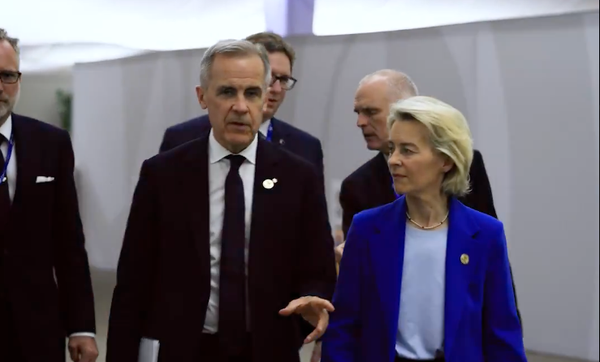
Canada is actively engaging diplomatically.
Prime Minister Mark Carney spoke with Pakistan’s Prime Minister Shehbaz Sharif, emphasizing:
Carney also thanked Pakistan for facilitating initial U.S.–Iran talks.
Separately, Finland’s President Alexander Stubb is set to visit Canada tomorrow, marking a step forward in bilateral cooperation across defense, energy, and technology.
Recommended Read: In a conversation with ONEST, Canada’s Ambassador to the United Nations, The Honourable David Lametti, reflects on AI, diplomacy, Canadian values, and global stability. Read it here.
The United Kingdom is leading efforts to restore maritime stability.
Foreign Secretary David Lammy emphasized the urgency of reopening shipping routes, while Prime Minister Keir Starmer announced a joint UK–France summit to coordinate a multinational plan to safeguard global navigation.
More than 40 countries are now involved in discussions.
At the same time, political tensions are rising.
UK Liberal Democrat leader Ed Davey criticized President Trump sharply, calling into question his role as a global leader.
ONEST Explained: Who Legally Controls the Strait of Hormuz? What the Law Says and Why It Matters for U.S.-Iran Talks. Read it here or watch on YT.
The war in Ukraine continues — and is evolving.
President Volodymyr Zelenskyy announced that, for the first time, an enemy position was captured entirely by robotic ground systems and drones, without infantry involvement.
“A robot entered the most dangerous zones instead of a soldier.”
In just three months:
This marks a shift not just in tactics — but in the nature of warfare itself.
At the same time, Russia is re-entering the global sports system.
World Aquatics announced that Russian athletes will once again compete under their national flag and anthem — a decision strongly criticized by Ukraine.
In Hungary, Prime Minister Viktor Orbán conceded defeat after 16 years in power.
Opposition leader Péter Magyar secured a two-thirds majority, pledging to restore EU funding and reform governance structures.
The transition is already generating tension.
Hungary’s outgoing foreign minister has reportedly barricaded himself and begun destroying documents related to Russia sanctions.
At the same time, public celebrations — including widely shared videos — reflect the scale of political change.
Elsewhere, electoral and political developments point to very different trajectories of governance.
In Djibouti, President Ismail Omar Guelleh secured a sixth term with 97.8% of the vote, according to preliminary results. Most opposition groups boycotted the election, raising ongoing concerns about political competition and legitimacy. Guelleh, who has been in power since 1999, recently oversaw a constitutional revision removing the age limit for presidential candidates — allowing him to remain in office beyond previous constraints.
In Peru, election authorities extended voting into Monday in several districts following logistical disruptions. Partial results — based on roughly half of the ballots counted — show conservative candidate Keiko Fujimori leading a crowded field. The outcome is expected to move to a runoff, reflecting a fragmented political landscape and continued volatility in the country’s electoral system.
In Iraq, parliament elected Kurdish politician Nizar Amedi as the country’s new president — a largely ceremonial role — following parliamentary elections last November. However, the process has already been contested. A major Kurdish party has rejected the outcome, claiming the vote was not conducted properly, signaling that political divisions remain unresolved even after the formal transition.
Recommended Read: The South Korea Lesson: How Democracy Holds — and What It Takes. In this ONEST Voices interview, Eungi Hong, a presiding judge at the Gwangju District Court in South Korea, reflects on democracy as a living process, the role of courts in moments of crisis, public trust, gender representation in the judiciary, and the country’s emerging approach to AI regulation. Read it here.
Across regions, structural shifts continue:
These developments reflect a broader pattern:
economic, security, and geopolitical systems are being reshaped simultaneously.
For the price of a dinner in Paris, someone may soon walk away with a Picasso valued at more than $1 million.
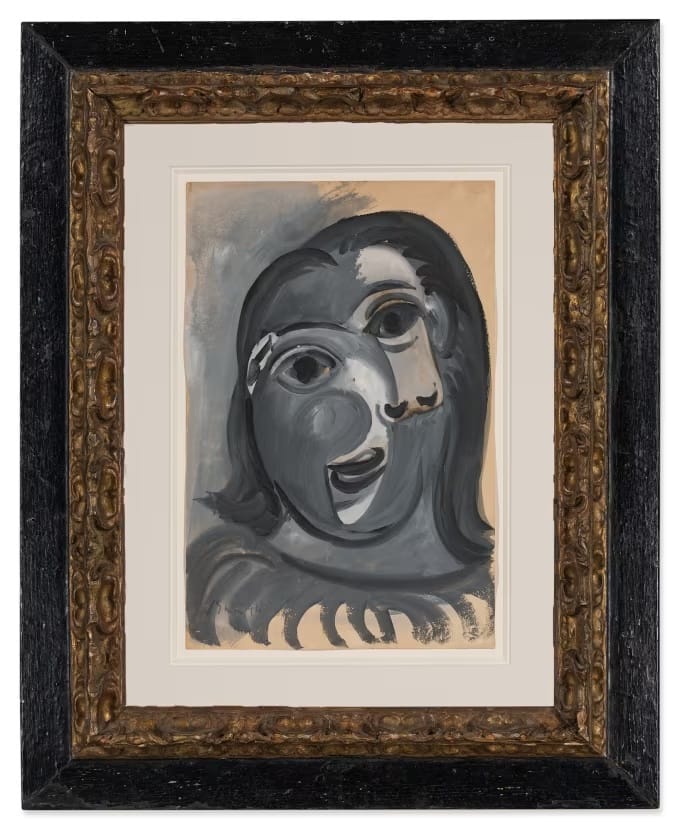
The “1 Picasso for 100 euros” raffle offers participants the chance to win Tête de Femme, a 1941 work created during World War II.
A total of 120,000 tickets are available, with proceeds supporting Alzheimer’s research across Europe.
The initiative reflects a different kind of value exchange:
Picasso’s grandson described it as a “modern vision of charity” — one that connects culture, innovation, and humanitarian purpose.
From April 27 to May 22, I will be covering the 2026 Review Conference of the Treaty on the Non-Proliferation of Nuclear Weapons at the United Nations.
It is one of the most important — and often least understood — global forums on nuclear weapons, risk, and international security.
I will be attending plenary sessions and following developments from inside the UN.
From May 5 to 8, coverage will continue at the United Nations during the Science, Technology and Innovation Forum.
The forum brings together governments, international organizations, and experts to examine how emerging technologies — including artificial intelligence — are shaping global development, security, and governance.
Insights from both events will be shared first in Diplomatic Notes, directly from the ground and in real time, followed by deeper analysis.
Regular public coverage, including ONEST Explained, will also be recorded on location.