At the Right Place, at the Right Time — Ambassador to the UN, The Honourable David Lametti on Law, Dialogue, and Canada’s Role in a Changing World
In a conversation with ONEST, Canada’s Ambassador to the United Nations, The Honourable David Lametti, reflects on AI, diplomacy, Canadian values, and global stability.
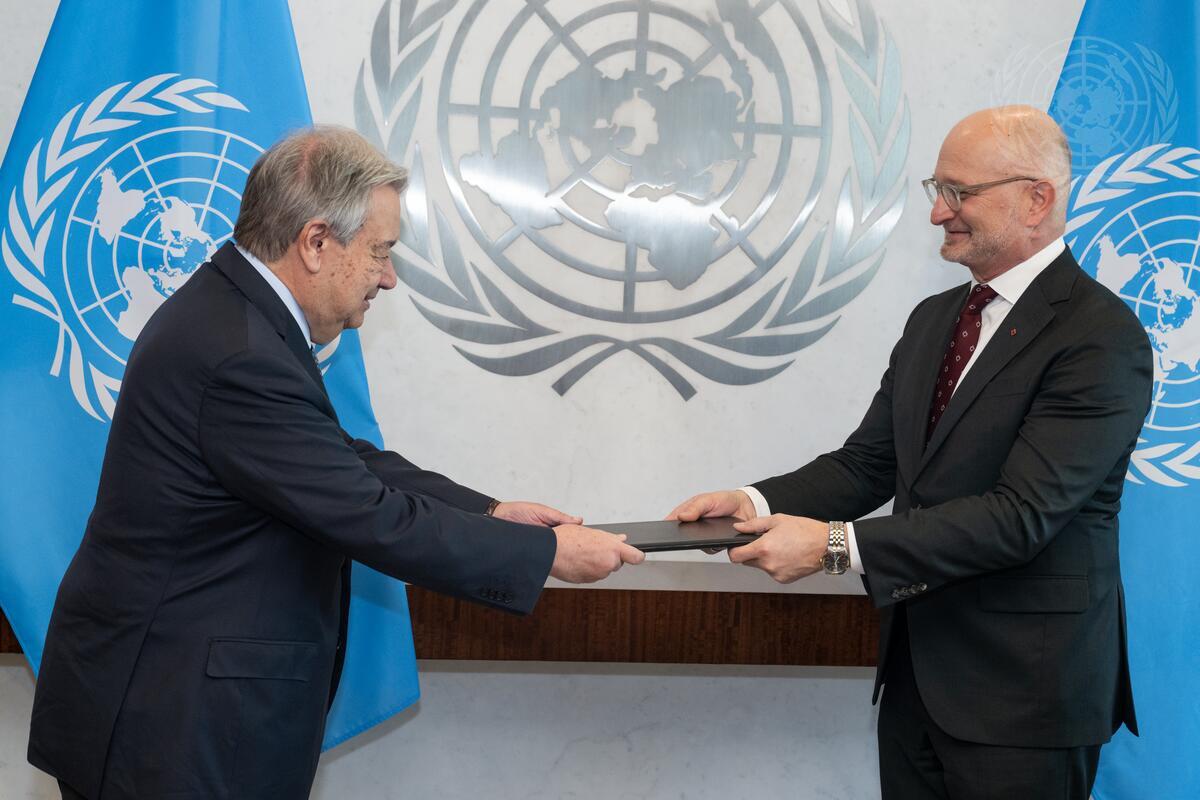
Permanent Representative of Canada Presents Credentials to Secretary-General, UN Photo / Manuel Elias
In a moment when the world feels increasingly uncertain — when rules are tested, institutions questioned, and technological change outpaces the ability of systems to respond — there is a tendency to look for simple answers.
What emerges instead, in conversation with David Lametti, serving as Canada’s Ambassador to the United Nations, is something more measured: a way of thinking grounded in law, shaped by governance, and consistently returning to fundamentals.
Stepping Into the Role
Five months into his tenure, Ambassador Lametti describes his transition into multilateral diplomacy with a sense of continuity.
The United Nations, he notes, is an institution that requires time to fully understand — its processes, its dynamics, and the particular nature of multilateral engagement. At the same time, the foundations of his work remain familiar.
Drawing on experience across Parliament, his time as Minister of Justice and Attorney General, academic work, and legal practice in the private sector, he approaches diplomacy through a lens shaped long before arriving in New York. He also reflects on his involvement during recent government transition periods, where maintaining continuity at moments of political change formed part of his responsibilities.
In discussing his legal background, he is precise in how he defines it. His expertise, he explains, lies primarily in property law — particularly at the intersection of ethics and intellectual property — rather than constitutional law alone. That distinction, while technical, carries through into how he approaches questions of governance at the international level.
Technology and the Limits of Governance
When the conversation turns to artificial intelligence, the challenge becomes immediately clear.
Ambassador Lametti notes that global discussions are evolving, but not yet at a level that fully matches the pace of technological development. The gap, in his view, may not be entirely resolvable.
Within that context, he sees the role of the United Nations as both practical and foundational. It is an institution that convenes expertise, facilitates dialogue, and contributes to the development of frameworks and guardrails that can later inform national regulation.
These discussions, he adds, are already taking place across multiple UN bodies, involving leading experts. Yet the scale and speed of technological change continue to challenge traditional approaches to governance.
What Is Often Overlooked
In reflecting on how the United Nations is perceived, Ambassador Lametti returns to a point that is rarely emphasized.
Much of the system, he notes, works — and works well.
From humanitarian assistance to poverty reduction, and from aviation to maritime coordination, a significant portion of the UN’s work operates consistently and effectively, even if it does not always receive public attention.
At the same time, he emphasizes that the work of diplomacy itself — particularly in negotiations — is more detailed and consequential than it may appear from the outside. Resolutions are shaped through continuous dialogue, where language is negotiated carefully, and where those choices ultimately influence how outcomes are implemented in practice.
Reform and Responsibility
The institution, however, is not static.
Ambassador Lametti points to ongoing reform efforts, including the UN80 initiative, which focuses on improving efficiency through budget considerations, the review of long-standing mandates, and discussions around the structure of UN agencies.
At the same time, he approaches these efforts with a degree of caution. While reform is necessary, many parts of the system are already functioning effectively, and any changes require careful evaluation to ensure that improvements do not come at the expense of what already works.
Canada’s Role in a Changing System
For Canada, the current moment presents both complexity and responsibility.
Ambassador Lametti describes it as a challenging time for multilateralism, while also pointing to the role that countries like Canada can play in strengthening coordination within the system. Referencing the broader direction outlined by Prime Minister Mark Carney, he highlights the importance of middle powers working together within multilateral frameworks.
At the center of this role is representation.
He emphasizes that his work at the United Nations is carried out on behalf of the Canadian people, and that Canada’s presence is grounded in implementing Canadian values in practice. These values, he notes, are not abstract — they are reflected in negotiations, in positions taken, and in the language that shapes international agreements.
In that context, he underscores that this work extends beyond perception. It is not simply about how Canada is seen, but about how those values are translated into outcomes.
Inside the Work of a Mission
Describing the day-to-day work of diplomacy, Ambassador Lametti points to a level of cooperation that is often not visible publicly.
Canada’s mission, he notes, is well-regarded among its peers, with strong working relationships with countries such as New Zealand and Australia. Much of the work focuses on coordination, negotiation, and maintaining a constructive approach to engagement.
He also returns to a broader point: that diplomacy, at its core, is about contributing to solutions. Maintaining a positive and forward-looking approach is not incidental — it is part of how progress is made within the system.
Why the UN Still Matters
At a time when international institutions are increasingly questioned, Ambassador Lametti frames the relevance of the United Nations through its foundational principles.
He describes the UN Charter as central to the system, emphasizing its role in balancing state sovereignty and human rights, and its influence on national legal frameworks.
While acknowledging that the institution is not without its limitations — and that there are clear instances where it has fallen short — he maintains that it remains essential to preserving a basis for international order.
For Canadians Following Global Events
When asked what Canadians should focus on in a rapidly changing and often overwhelming global environment, Ambassador Lametti’s response returns to fundamentals.
He encourages focusing on values — on what is truly important in making Canada a better place, and, in turn, contributing to making the world a better place.
The point, as he frames it, is not to disengage from complexity, but to remain grounded within it.
Dialogue as the Foundation
Throughout the conversation, one idea emerges consistently.
Dialogue.
Ambassador Lametti emphasizes that coordination, problem-solving, and economic stability are all fundamentally rooted in sustained communication. In his view, the vast majority of progress within the international system depends on dialogue — often continuous, and often behind the scenes.
Observation
There are moments when experience aligns closely with circumstance.
At a time when legal frameworks are under pressure, technological change is reshaping governance, and international institutions are being tested, the need for structured, values-based leadership becomes more visible.
Canada’s representation at the United Nations reflects that approach — grounded in law, shaped by dialogue, and anchored in values.
And in that sense, the role — and the moment — are aligned.
At the right place, at the right time.
Listen to this article
For those who prefer to listen or for accessibility, you can hear the full article below.
Listen: Ambassador David Lametti on Canada's Role at the UN
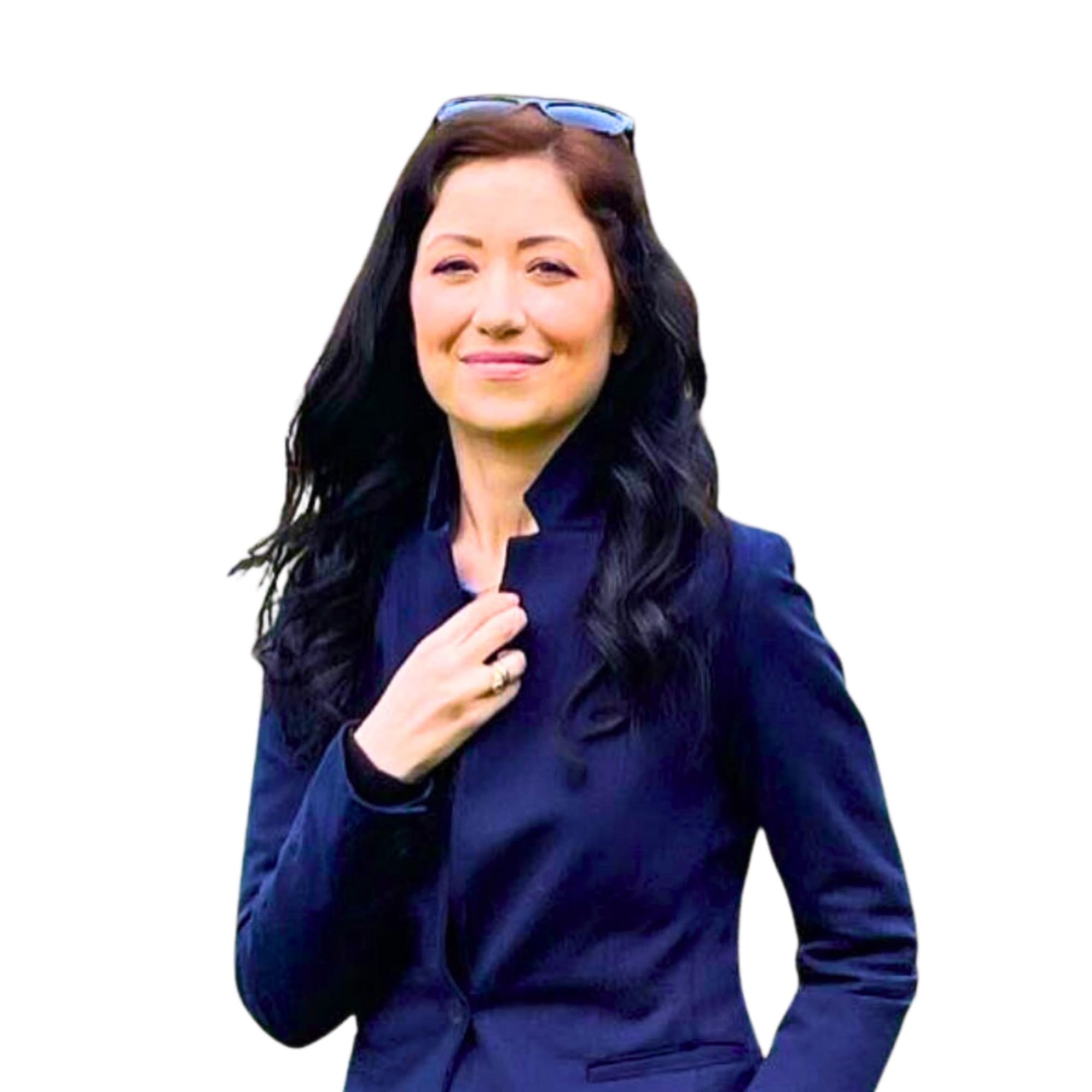
Olga Nesterova is a journalist and founder of ONEST Network, a reader-supported platform covering U.S. and global affairs. A former White House correspondent and UN diplomat, she focuses on international security and geopolitical strategy.