Some people work within institutions. Others help transform them.
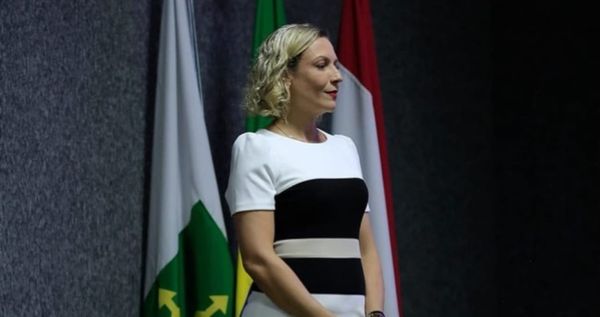
Federal Judge Mariana Queiroz Aquino of Brazil’s Military Justice of the Union has become one such voice: thoughtful, precise, and deeply committed to making justice more human from within the system itself. Her recent book, Manual Antiassédio no Trabalho, published by Editora Letramento, offers practical tools for preventing and confronting harassment and discriminatory practices in the workplace, including guidance for victims and an anti-harassment glossary designed to clarify concepts too often minimized or misunderstood.
Harassment and discrimination remain among the most persistent challenges inside workplaces and institutions worldwide — not only because of individual acts, but because silence, habit, and unequal power can allow harm to endure long after rules are written. And yet these conversations are often framed only through damage: through scandal, crisis, and institutional failure.
Aquino offers another perspective.
In conversation with ONEST, she reflects not only on the harms that harassment and discrimination cause, but on the long, deliberate work of changing the culture around them — through law, education, accountability, and daily institutional practice. What emerges is the portrait of a trailblazer who, while working within one of Brazil’s most structured systems, speaks about reform not as an abstract ideal, but as a lived responsibility.
For Aquino, that work begins with a simple but often overlooked reality: many people still do not know how to recognize harassment when they see it.
That was one of the central motivations behind her book. She wanted to explain, in clear and accessible terms, what harassment is, how Brazilian jurisprudence approaches it, and what avenues exist for those seeking accountability — whether through internal institutional channels or through the courts. Just as importantly, she wanted to help people understand how harmful behavior is often normalized through language, silence, and habit long before it is formally reported.
In her view, prevention cannot begin only at the moment of punishment. It has to begin much earlier — with literacy, awareness, and a shared understanding of dignity in the workplace.
She spoke about what might be called anti-harassment literacy: teaching people not only the legal concepts, but the language around them. Her book includes a glossary addressing discriminatory expressions and more respectful alternatives, because culture is often reproduced through words before it is ever challenged through rules. Restorative justice, too, matters in that framework. Accountability, in her telling, is not only about filing a lawsuit. It can also mean creating a process in which people understand what they have done, why it caused harm, and why that behavior must change if it is not to be repeated.
That broader view is what gives her work its depth. Aquino does not treat harassment as a narrow compliance issue. She sees it as part of a wider struggle over dignity, respect, and equality — one shaped by the realities of sexism, discrimination, and deeply embedded social habits that do not disappear simply because a policy is written.
From there, her reflections moved from theory into institutional practice.
Aquino described a major shift within Brazil’s judiciary after the adoption of a national anti-harassment and anti-discrimination policy that required courts across the system to comply. In her account, this marked a real turning point: complaints could no longer be brushed aside, and commissions were required to address them seriously. The system had to begin thinking not only about sanctions, but about prevention, internal structures, and even treatment pathways for those responsible. Brazil’s National Justice Council adopted Resolution 351 in 2020 to establish a policy for preventing and confronting moral harassment, sexual harassment, and discrimination across the judiciary, and Aquino described that broader framework as an important driver of change.
Still, she was careful not to romanticize the process.
Change, she made clear, takes time. Large institutions do not transform overnight. Culture shifts slowly, and only when rules are accompanied by education, repetition, and visible consequences. In her own work within the Military Justice branch, she now helps shape internal guidelines and practical tools for the courts. One example she described was especially telling: an educational game designed to teach people, through real-life situations, how to identify harassment, understand concepts, and reflect on consequences. Reform, in this view, is not a slogan. It is daily work.
That long view also shapes how she speaks about institutional culture. Harassment, she argued, cannot be reduced to the actions of one individual alone. When patterns persist, when people stay silent, when certain forms of humiliation are normalized, the problem is no longer just personal misconduct. It is institutional.
And yet, she noted, there are signs that culture can move. One of the clearest for her is when commanders themselves invite her to come speak, lecture, and educate. That willingness signals an openness to learning. The rules may take time to reshape behavior, but the fact that institutions are asking harder questions matters.
Nowhere was that clearer than in her reflections on women in the military.
Women, Aquino said, belong in all places. They are capable, and they must have opportunities at every level — not only in administrative or health units, but across all branches and ranks. Brazil has seen important progress. Women joined the Navy in 1980; voluntary military service has expanded; women are now present across all branches; and this year, she noted, the Army has its first woman general. Those are meaningful developments.
But inclusion alone is not enough.
Institutions must also become ready for women in practice. That means more than symbolic acceptance. It means creating safe environments, teaching men what respectful behavior looks like, and confronting the reality that women in positions of authority are still often denied the same instinctive respect afforded to men. Aquino spoke personally about that pressure: the need for women to remain calm, measured, and consistently excellent so as not to be reduced to sexist stereotypes about being overly emotional or irrational. Competence, she suggested, still has to be demonstrated again and again.
She also pointed to the practical realities that reveal whether an institution truly sees women as belonging there: whether there are bathrooms for women, whether bulletproof vests are designed for women’s bodies, whether health needs specific to women are treated as basic dignity rather than inconvenience. These are not marginal details. They are evidence of whether a system is genuinely adapting.
That same commitment has taken Aquino beyond formal hearings and into direct engagement with women serving across Brazil. She described visiting military units, including in the north of the country, where access to justice can be harder and institutional distance more pronounced. She has spoken not only with women, but with men, explaining what sexual harassment is, how to recognize it, and what justice options exist. She also described meeting indigenous soldiers and reflecting on how the judiciary itself can do better in reaching those who are too often left at the margins.
What stood out in that part of the conversation was her attention to human detail. Even how she dressed for those visits mattered: she wanted to be simple, relatable, and approachable enough for the work to function as intended. That instinct says a great deal about how she understands leadership. It is not only about authority. It is about trust.
Trust, however, remains difficult in hierarchical systems.
Aquino spoke candidly about the high cost of reporting in environments built on discipline, loyalty, and rank. Women may fear retaliation. They may believe they will not be believed. They may worry that speaking out will damage their careers while protecting the careers of men above them. And often, she said, when one woman finally comes forward, others follow — only to discover that statutes of limitation or institutional delay have already narrowed their options for justice.
Her message was direct: seek help.
Internal channels matter, but so do external ones. Women can go outside the military structure, including to the public prosecutor’s office. In her own setting, she noted, the Military Justice system is civilian, which creates an important degree of independence in the handling of cases. That outside avenue can be crucial, especially when internal structures fail to respond.
The consequences of silence can be devastating. Aquino referenced women whose health had deteriorated badly, including cases involving psychiatric medication and suicidal despair. Harassment, in that sense, is not merely an administrative issue. It can become a crisis of health, safety, and survival.
That is one reason her description of a gender-aware judicial response felt so important.
Aquino spoke about a gender protocol that guides judges in handling cases involving minorities and vulnerable victims with greater care and awareness. In her own hearings, she begins by making clear that the protocol will be followed. Questions that target or humiliate the victim are not acceptable. Prosecutors are warned accordingly. And, when appropriate, victims can testify virtually rather than facing the added intimidation of a courtroom or the distress of seeing the defendant in person.
For many women, she said, that makes a profound difference.
Her principle is simple, but powerful: the judiciary cannot reproduce violence while claiming to deliver justice. If the courtroom becomes another site of humiliation, then the institution has failed. Justice must not only punish wrongdoing; it must also model dignity.
The conversation became especially urgent when it turned to digital harassment.
Aquino said institutions still have much to learn in this area. The forms of harm are evolving quickly: fake profiles, manipulated images, anonymous abuse, and increasingly, AI-generated sexualized images of women in the military. She described cases involving racist and sexist online defamation, as well as violations of intimacy, including women being secretly filmed while changing clothes or showering. Under Brazilian law, she noted, such conduct is prosecutable. But the legal category alone does not capture the damage. One case she mentioned involved a pregnant woman who was filmed, with consequences that affected her pregnancy.
Digital violence is not less serious because it happens through a screen. In many cases, it spreads faster, humiliates more broadly, and lingers longer.
For Aquino, digital governance must therefore begin with education, not only reaction. People need to understand that what they post online is public, that online conduct has consequences, and that a phone or screen does not erase responsibility. But she was equally clear that women’s freedom must remain intact. A woman posting a photograph of herself on a beach is not inviting intimidation. Even where institutions have codes of conduct, those codes cannot become excuses for policing women while excusing abuse.
Courts, investigators, and internal systems also need to evolve, she said, especially when it comes to gathering and preserving evidence in digital cases. Without that, technology will continue to outpace justice.
On institutions more broadly, Aquino offered one of her sharpest critiques.
Too many organizations, she said, engage in what she called a kind of “wellness washing” — adopting the language of care, creating formal policies, and satisfying external expectations without changing much in practice. The existence of a policy, in her view, is only the beginning. What matters is implementation: whether there are real structures, confidential reporting avenues, ombuds offices, psychologists, and people prepared to act when harm occurs.
Even imperfect beginnings matter. She acknowledged that ideas do not automatically become effective change. But starting — seriously, visibly, imperfectly — is better than leaving victims with nothing but paper promises.
Although her work is rooted in Brazil, Aquino sees these questions as unmistakably global. The roots, she said, are often the same everywhere: lack of respect in the workplace, combined with sexism, racism, and institutional cultures that normalize silence. Through her international anti-harassment work, she exchanges ideas with peers in other countries about policies, prevention, and the need to adapt solutions thoughtfully across different cultures.
But on one point she was firm: anti-harassment literacy is essential, and because cultural change takes time, the work must begin now.
When asked what gives her hope, Aquino returned not to theory, but to practice. She spoke about workshops, seminars, safe spaces for sharing experiences, and real channels where victims can speak freely and in confidence. Institutions and companies, she said, need to put their rules into practice — not only because justice demands it, but because healthier environments are also more functional, more respectful, and ultimately more productive.
That may be what lingers most after speaking with her.
Aquino does not speak about justice as an abstraction. She speaks about it as responsibility: something that must be built, protected, and practiced within the structures people inhabit every day. Her voice carries legal rigor, but also conviction, discipline, and a deep sense of purpose.
In that sense, she offers something rarer than commentary. She offers example.
A judge can interpret the system. A leader can help transform it. Mariana Queiroz Aquino is doing both with grace.