MAY 1: War Powers Pressure, Global Health Trends, Escalation Risks

– 6 min read

President Donald Trump, speaking in Florida about the White House Correspondents’ Dinner shooting:
“It was good for one thing. People love my ballroom now. That’s the only thing. They love my ballroom.”
On U.S. seizures of ships during the conflict:
“It’s a very profitable business. We’re like pirates.”
These remarks come at a moment when the administration is facing scrutiny over both the security environment at home and the conduct of military operations abroad, highlighting the contrast between political messaging and operational realities.
The World Health Organization released two major global health updates that, at first glance, show improvement — but in reality highlight how fragile that progress is.
In March alone:
This represents a 17% drop in cases and a 10% drop in deaths compared to February. Compared to last year, the decline is even steeper.
But the key point: this is not a solved crisis.
WHO makes clear that outbreaks are being driven by:
These conditions are not improving — meaning outbreaks can return quickly, often across borders and in harder-to-control forms.
While some regions are seeing declines, others are seeing increases — showing that transmission patterns are shifting, not disappearing.
The takeaway: global health threats are now tightly linked to geopolitics and climate, not just medicine.
At the United Nations in New York, NATO used the Nuclear Non-Proliferation Treaty (NPT) review to deliver a clear message:
The world is becoming more dangerous — not less.
Officials pointed to:
NATO’s position is that nuclear deterrence is still necessary — not as a relic of the past, but as an active tool to prevent coercion and large-scale war.
This reflects a major shift from post-Cold War thinking: the goal is no longer just disarmament, but managing escalation in a more volatile system.
The United States has confirmed it will withdraw 5,000 troops from Germany, bringing levels back to roughly pre-2022 deployments.
The move follows rising tensions between Washington and Berlin over the handling of the Iran war, and signals a broader recalibration of U.S. military posture in Europe.
Germany has long served as a central hub for U.S. operations across the continent. Reducing troop presence at this moment raises questions about alliance cohesion, burden-sharing, and how the United States intends to position its forces globally going forward.
We broke this down in detail in today’s first edition of ONESTLY Weekly — including what this means for NATO, Europe, and U.S. strategy. Watch the replay here.
The Iran war is no longer just a regional conflict — it is affecting global systems.
Today marks 60 days since the U.S. formally notified Congress of military operations in Iran.
Under U.S. law:
The administration argues:
Critics argue:
This is not just legal — it determines who controls war-making authority.
Despite the ceasefire:
The reality: the ceasefire is a pause, not a resolution.
Iran has made its position clear:
This matters because:
Gulf states have openly expressed deep mistrust toward Iran’s intentions.
The war is now affecting:
This is how regional conflict becomes global economic pressure.
Secondary effects of the conflict are spreading:
This shows how conflict extends beyond battlefields — into societies and political systems.
Canada’s updates today focus on systems — how they function, and how to fix them.
Prime Minister Mark Carney spoke with Argentina’s President Javier Milei about a potential Canada–Mercosur trade deal.
Mercosur represents:
Canada is positioning itself in:
This is part of a broader diversification strategy.
Canada is addressing a major issue:
The response:
The goal is simple: rebuild trust in a system that has failed passengers.
Canada continues tackling its housing crisis:
This is part of a much larger national housing strategy aimed at increasing supply and affordability.
Ukraine is facing intensifying military pressure — while simultaneously restructuring its forces.
This reflects a shift toward high-density attacks designed to overwhelm air defenses.
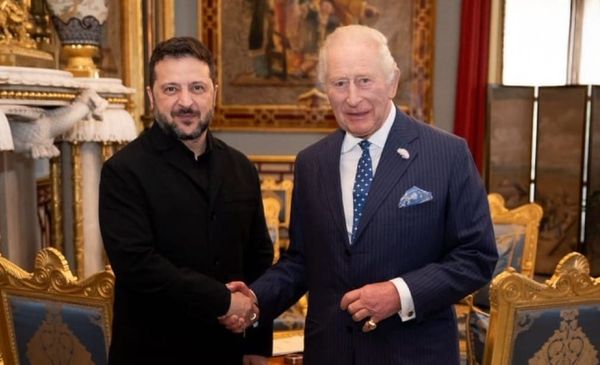
President Volodymyr Zelenskyy outlined major changes:
Infantry on the front line will receive:
The aim: improve retention, morale, and effectiveness.
Ukraine is also advancing governance:
The strategy is clear: fight the war and prepare for recovery.
A major trade agreement has entered into force:
This is South Korea’s first trade deal with a Middle Eastern country.
The bigger picture:
China issued new rules for gig economy workers:
At the same time:
This highlights two parallel realities:
The U.S. picture today is mixed: stability at the top level, pressure underneath.
Several domestic developments point to a mix of policy expansion, market instability, and legal pressure on major institutions.
The administration signaled a potential shift in healthcare policy, with President Trump stating that Medicare coverage would expand to include weight-loss drugs such as Ozempic, Wegovy, and Zepbound, at an estimated cost of $50 per month. If implemented, the move would mark a significant change in how these high-demand medications are treated within federal health programs.
At the same time, instability in the aviation sector is becoming more visible. Spirit Airlines is reportedly preparing to shut down operations following a second bankruptcy filing and failed bailout efforts, raising concerns about disruption for passengers and broader pressures within the low-cost carrier market.
Meanwhile, legal tensions continue to build within the technology sector. Ongoing court cases involving major figures and companies — particularly around artificial intelligence and corporate governance — are increasingly shaping the future direction of the industry, as regulators, executives, and investors clash over control, transparency, and long-term risk.
At a Buffalo Sabres game, the microphone cut out during O Canada. There was no music. No audio.
And then — the crowd filled it. Word for word. From start to finish. No cue. No coordination. Just instinct.
This is how you tell your neighbors you see them. Canada is loved.
ONEST is built on independent, reader-supported reporting — free from advertising pressure and algorithm-driven priorities.
For those who want to go beyond the headlines, ONEST+ offers:
Your support sustains this work.