APRIL 27: Royal Diplomacy, Escalation Risks, Global Realignments

– 7 min read

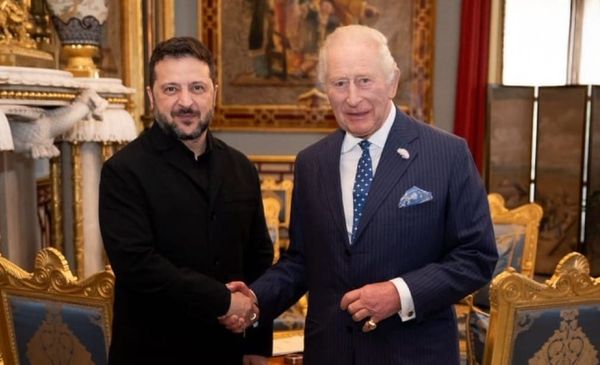
At the White House, President Donald Trump and First Lady Melania Trump welcomed King Charles III and Queen Camilla as part of a state visit marking the United States’ upcoming 250th anniversary.
The visit blended ceremony with symbolism: both couples participated in official engagements and inspected a newly installed beehive on White House grounds — a carefully curated moment reflecting sustainability themes within the broader program.
The visit marks a significant diplomatic moment early in Trump’s second term, reinforcing U.S.–UK ties amid broader geopolitical strain.
Recommended Read: U.S. to Host King Charles III for First State Visit of Trump’s Second Term Amid Trade and Policy Tensions
New details emerged today following the attempted attack at the White House Correspondents’ Dinner.
The 31-year-old suspect appeared in federal court and has now been formally charged with attempting to assassinate President Trump, alongside two federal gun charges.
According to U.S. Acting Attorney General Todd Blanche, preliminary findings suggest the attacker deliberately targeted administration officials, “likely including the president.”
The suspect exchanged gunfire with security personnel outside the event venue. One law enforcement officer was injured but is expected to recover. The Secret Service successfully prevented the individual from reaching the ballroom, where the president was attending an event with thousands of guests.
In the immediate aftermath, President Trump called for "unity and bipartisanship", describing the attacker as a “lone wolf” and commending the Secret Service response.
The incident prompted swift international reaction. Leaders across the globe — including India’s Prime Minister Narendra Modi and UK Prime Minister Keir Starmer — condemned the attack and reaffirmed that political violence has no place in democratic systems. U.S. lawmakers from both parties issued similar statements.
In a separate development, the Hilton repurposed approximately 2,600 uneaten meals from the event. The food was freeze-dried to extend shelf life and donated to shelters supporting women and children.
Diplomatic activity surrounding the Iran conflict remains active — but fragmented.
Iranian Foreign Minister Abbas Araghchi engaged in a multi-stop diplomatic tour, holding talks in Pakistan before traveling to Oman and returning briefly to Islamabad. Today, he arrived in Moscow, where he met with Russian President Vladimir Putin.
Following the meeting, Araghchi described discussions as extensive and constructive, covering bilateral ties, regional dynamics, and the ongoing war. He reaffirmed that Iran and Russia remain strategic partners.
Putin echoed this alignment, stating Russia would do “everything possible” to support Iran, while praising what he described as "the Iranian people’s resilience". The meeting builds on a deepening partnership formalized in a 20-year strategic agreement signed in 2025, alongside additional military cooperation deals, including reported air defense transfers.
Araghchi also signaled continued frustration with the United States, stating that “incorrect approaches and excessive demands” had prevented previous negotiations from reaching conclusions.
Meanwhile, U.S. officials indicated no immediate plans to resume talks. President Trump stated that Iran would need to initiate further engagement, while Secretary of State Marco Rubio emphasized that the United States would not accept Iranian control over access to the Strait of Hormuz.
Germany’s Chancellor Friedrich Merz publicly expressed frustration with both the United States and Israel’s handling of the conflict, noting that early claims of a quick resolution had not materialized.
Merz also confirmed that Europe is pursuing its own diplomatic pathways while remaining coordinated with Washington — marking a subtle but notable shift in transatlantic positioning.
New regional developments underscore Israel’s expanding defense posture.
For the first time, Israel deployed components of its Iron Dome missile defense system — including operational personnel — to the United Arab Emirates. The move reflects deepening security cooperation following normalization agreements in 2020 and highlights the UAE’s growing exposure to Iranian targeting in the current conflict.
Domestically, the Trump administration introduced new immigration guidance allowing permanent residency applications to be denied based on activities such as participation in pro-Palestinian protests, social media criticism of Israel, or acts deemed disrespectful toward U.S. national symbols. Officials stated the policy is tied to national security considerations.
Meanwhile, the Israel–Lebanon ceasefire remains fragile, with continued reports of strikes and casualties. At the United Nations, maritime security discussions are ongoing, with the Secretary-General urging all parties restricting navigation through the Strait of Hormuz to ease pressures on global trade.
The United Nations has condemned two recent drone attacks in Sudan, one of which resulted in seven deaths. Officials reiterated concern over escalating violence and its humanitarian consequences.
A new report confirms that global military spending reached nearly $2.9 trillion in 2025.
This represents 2.5% of global GDP — the highest proportion since 2009. While U.S. spending declined by 7.5% due in part to reduced Ukraine-related allocations, allied countries — particularly within NATO — significantly increased their defense budgets.
The data reflects a broader global trend: defense investment is rising not just in response to active conflicts, but as a structural shift toward long-term strategic competition.
At the United Nations, diplomats have convened to review the Treaty on the Non-Proliferation of Nuclear Weapons (NPT).
The Secretary-General warned that the treaty must evolve to remain effective in an era shaped by artificial intelligence and emerging technologies.
ONEST is attending the high-level diplomatic gathering, which runs from April 27 through May 23.
The World Health Organization has concluded Exercise Polaris II, a large-scale simulation designed to test global readiness for a hypothetical bacterial outbreak.
The two-day exercise brought together 26 countries, 600 emergency experts, and over 25 partner organizations. It tested real-time coordination systems, emergency workforce deployment, and cross-border information sharing.
The simulation also operationalized key WHO frameworks, including the Global Health Emergency Corps and national response systems, while integrating AI-enabled tools for workforce planning.
WHO leadership emphasized that such exercises demonstrate the necessity of global cooperation — not as an option, but as a requirement for effective crisis response.
The humanitarian situation in the Central Sahel continues to deteriorate.
Nearly 7.5 million children urgently require assistance, according to UNICEF, which warned that the crisis remains significantly underreported and under-addressed by the international community.
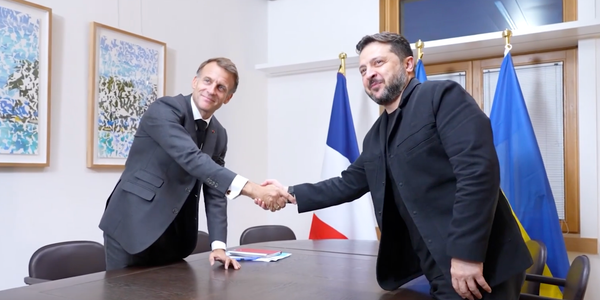
Ukrainian President Volodymyr Zelenskyy met with Azerbaijani President Ilham Aliyev.
Aliyev reaffirmed Azerbaijan’s recognition of Ukraine’s sovereignty and territorial integrity, reinforcing diplomatic alignment amid ongoing conflict.
Italy has extradited Xu Zewei to the United States, where he faces allegations of attempting to steal confidential COVID-19 vaccine data.
China’s government condemned the move, accusing the United States of fabricating charges, while Xu’s lawyer confirmed the extradition followed his arrest in Milan last year.
A new analysis from the Asia Society Policy Institute sheds light on China’s internal policymaking regarding the United States.
The report identifies three dominant strategic schools within China:
Despite internal variation, all operate within a broader framework set by President Xi Jinping — centered on long-term strategic rivalry with the United States.
Russia and North Korea are expanding military cooperation, with plans to formalize a defense agreement covering 2027–2031.
Estimates suggest North Korea has deployed between 14,000 and 15,000 troops to support Russian operations in Ukraine, with significant casualties reported.
Canada is advancing both international partnerships and domestic economic transformation.
Canada and Norway are deepening collaboration on Arctic research, focusing on climate data, modeling, and knowledge-sharing. The initiative emphasizes research security, Indigenous knowledge integration, and long-term climate understanding.
Prime Minister Mark Carney announced the creation of the Canada Strong Fund, a $25 billion sovereign wealth fund designed to invest in strategic sectors including energy, infrastructure, critical minerals, and agriculture.
The fund aims to:
Officials framed the initiative as a cornerstone of a broader strategy to build economic resilience and national independence.
Domestic developments span public health, business, and legal challenges:
What started as a short internet clip became something far bigger.
In 2009, Lithuanian composer and conductor Mindaugas Piečaitis saw a video of Nora the cat casually pressing piano keys — not in perfect form, but with a rhythm that caught attention around the world.
Rather than leaving it in the digital space, he built an entire orchestral work around it. The piece, titled CATcerto, was designed so that a live orchestra would follow Nora’s timing, turning her spontaneous notes into the structure of a full composition.
When it was performed, the result was unusual but striking: musicians on stage, a cat on screen, and a performance guided by something completely unexpected.
The audience responded the same way — with a standing ovation for both the orchestra and the cat that, in its own way, led the performance.
ONEST is built on independent, reader-supported reporting — free from advertising pressure and algorithm-driven priorities.
For those who want to go beyond the headlines, ONEST+ offers:
Your support directly sustains this work — and keeps ONEST independent.