APRIL 24: STRAIT OF HORMUZ, FRAGMENTED DIPLOMACY, SYSTEMIC PRESSURE

– 7 min read

The U.S.-brokered extension of the Israel–Lebanon ceasefire by three weeks is less a diplomatic breakthrough than a tactical delay.
The immediate goal is containment: preventing the Israel–Hezbollah front from escalating into a broader regional conflict at a moment when U.S.–Iran diplomacy is already stalled. Since April 11, there have been no formal negotiations between Washington and Tehran, and the continued exchanges between Israel and Hezbollah have effectively blocked any attempt to restart them.
Trump’s direct involvement — mediating between ambassadors at the White House — signals a more centralized U.S. role in managing the conflict. At the same time, his messaging reflects a dual-track approach: maintaining pressure through military threats while leaving the door open for negotiations, albeit under U.S. terms.
The structural limitation remains unchanged. Hezbollah, as a non-state actor, is not bound by state-level agreements and has already indicated it may not adhere to outcomes negotiated between Israel and Lebanon. This undermines the durability of any ceasefire and reinforces a recurring issue in the region: agreements between governments do not necessarily translate into compliance on the ground.
Humanitarian indicators are moving in the opposite direction of diplomacy. Shortages in Gaza and Iran are increasing, and the death of another UN peacekeeper underscores that reduced hostilities do not equate to stability.
At the same time, the U.S.–Iran confrontation continues to escalate. Trump has reiterated willingness to use additional military force while explicitly ruling out nuclear weapons. Iran, in response, is linking any return to negotiations to the removal of the U.S. naval blockade — a condition Washington has rejected, with Defense Secretary Hegseth confirming the blockade will continue without concession.
Context:
The region is operating under a temporary freeze rather than de-escalation. The absence of synchronized diplomacy across actors — states and non-state — limits the likelihood of a sustained resolution.
The Strait of Hormuz has shifted from a strategic chokepoint to an active instrument of pressure.
Iran’s seizure of vessels and deployment of mines, combined with U.S. interdictions and enforcement actions, has created a controlled disruption rather than a full closure.
This distinction matters: global markets react not only to supply interruptions, but to uncertainty around access and timing.
The Pentagon’s assessment that clearing the Strait could take up to six months indicates that even in a de-escalation scenario, economic effects would persist.
U.S. sanctions targeting a China-based refinery and associated shipping networks extend the conflict into the economic domain, signaling an effort to restrict Iran’s oil revenues while also testing China’s willingness to absorb secondary pressure.
The International Energy Agency’s warning of a historic energy security threat reflects both immediate and structural concerns. Europe, in particular, remains exposed to supply disruptions, with jet fuel shortages identified as a near-term risk if the situation continues.
Shipping behavior is already adjusting. Prices for alternative routes, including the Panama Canal, have surged as companies attempt to reroute flows away from the Gulf.
Context:
The Strait is now a leverage point in a broader geopolitical contest. Even partial disruption is sufficient to alter trade patterns, pricing, and long-term energy strategy.
Iran’s internal structure is also shifting. Reports indicate that power is increasingly concentrated among Revolutionary Guard leadership rather than a single dominant authority, affecting how decisions are made and communicated.
The U.S. is applying indirect pressure across the region:
At the same time, regional actors are repositioning:
The Middle East is no longer defined by a single conflict, but by overlapping pressure systems — military, economic, and diplomatic — operating simultaneously.
The cost and scale of U.S. involvement are becoming more visible.
Operational spending nearing $1 billion per day is beginning to intersect with concerns about long-term military readiness, particularly as munitions stockpiles are depleted faster than anticipated.
At the same time, the Pentagon is accelerating structural changes in warfare:
The $185 billion “Golden Dome” defense initiative reflects continued prioritization of missile defense and technological deterrence, even as current conflict demands strain resources.
Domestic pressure is increasing, with Trump’s disapproval rating reaching 58%, suggesting limited public tolerance for prolonged conflict without clear outcomes.
The U.S. is balancing immediate conflict demands with long-term transformation of its military capabilities, while managing domestic political constraints.
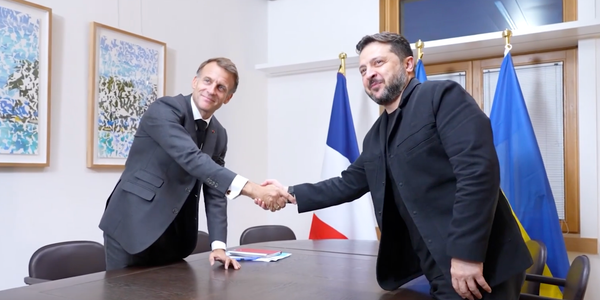
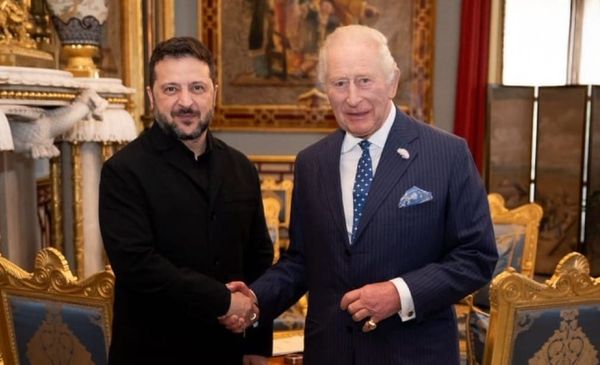
The EU’s approval of a €90 billion loan to Ukraine marks a significant financial and political shift. Hungary’s decision to lift its veto reflects changing domestic conditions, including political transition and energy considerations.
Ukraine is simultaneously expanding its external partnerships, with Zelensky advancing agreements in Saudi Arabia focused on energy, infrastructure, and security — an effort to diversify support beyond European channels.
Germany’s new national security strategy formalizes a broader European shift. By identifying Russia as the primary threat, Berlin is aligning its long-term defense posture with current geopolitical realities.
Context:
Europe is transitioning from reactive crisis management to sustained strategic positioning — financially, militarily, and politically.
China’s activity reflects a dual approach: internal consolidation and external positioning.
Domestically, inspections across 36 institutions indicate continued efforts to enforce political discipline and ensure alignment with central leadership priorities.
Externally, tensions with the U.S. are expanding into academic and mobility domains, reducing one of the remaining areas of stable engagement.
At the same time, China is benefiting from structural shifts:
The surge in exports of batteries, EVs, and solar technologies suggests China is positioned to capitalize on long-term changes in global energy demand.
China is not directly shaping the conflict, but is adapting in ways that strengthen its long-term economic and technological position.
WHO’s approval of a malaria treatment designed specifically for newborns addresses a longstanding gap in global health systems, particularly in high-burden regions.
The International Criminal Court confirmed that former Philippine President Rodrigo Duterte will stand trial for alleged crimes against humanity linked to killings carried out by security forces between 2011 and 2019. Duterte’s legal team has argued he is unfit to stand trial, but proceedings are moving forward following a pre-trial hearing.
The case will test the ICC’s ability to prosecute a former head of state for actions carried out under domestic security policy, particularly as enforcement depends on state cooperation.
The United States is continuing to expand third-country deportation arrangements, with Paraguay becoming the latest country to receive migrants removed from the U.S. Similar agreements have been reached with Costa Rica, El Salvador, Eswatini, and South Sudan, with at least $40 million spent on these transfers.
These arrangements allow the U.S. to relocate migrants outside its territory rather than process them domestically, raising questions about oversight, legal responsibility, and the long-term sustainability of the approach.
Canada is responding to rising global costs and supply disruptions with a mix of immediate relief measures and longer-term economic adjustments.
The federal government announced a temporary suspension of the fuel excise tax on gasoline and diesel until September 7, 2026, reducing prices by approximately 10 cents per litre for gasoline and 4 cents for diesel. This is intended to offset rising fuel costs linked to global supply disruptions, particularly those connected to the Middle East.
In parallel, a new Canada Groceries and Essentials Benefit will replace the existing GST/HST credit starting July 2026, increasing quarterly payments by 25% for the next five years and providing additional short-term support through a one-time top-up payment in June.
On the external front, Canada is expanding economic coordination with key partners. Discussions with Mexico focused on critical minerals, clean technology, energy, and advanced manufacturing, alongside preparations for the upcoming review of the Canada–United States–Mexico Agreement (CUSMA).
With Japan, Canada is advancing cooperation on climate and environmental policy, including methane reduction, biodiversity protection, and plastic pollution, ahead of upcoming global climate negotiations.
Domestically, new funding has been allocated to workforce retraining programs in sectors affected by global tariffs, including softwood lumber and steel, targeting over 350 workers in Prince Edward Island.
Separately, the European Union has agreed to end a longstanding testing protocol on Canadian flaxseed exports, originally introduced in 2009 after contamination concerns. The removal of this requirement reduces costs for Canadian producers and signals restored confidence in export standards.
Canada’s approach focuses on resilience — managing current pressures while positioning for long-term economic stability.
After years of laboratory work, NASA confirmed that a rock sample collected by the Curiosity rover contains the most diverse set of organic molecules ever identified on Mars, including several never previously detected.

Scientists cannot determine whether these molecules were formed through biological or geological processes. However, their presence confirms that ancient Mars had the chemical conditions necessary to support life.
As global tensions rise and nuclear risks re-enter strategic calculations, the upcoming NPT conference will test whether the international system can still enforce its most critical guardrail.
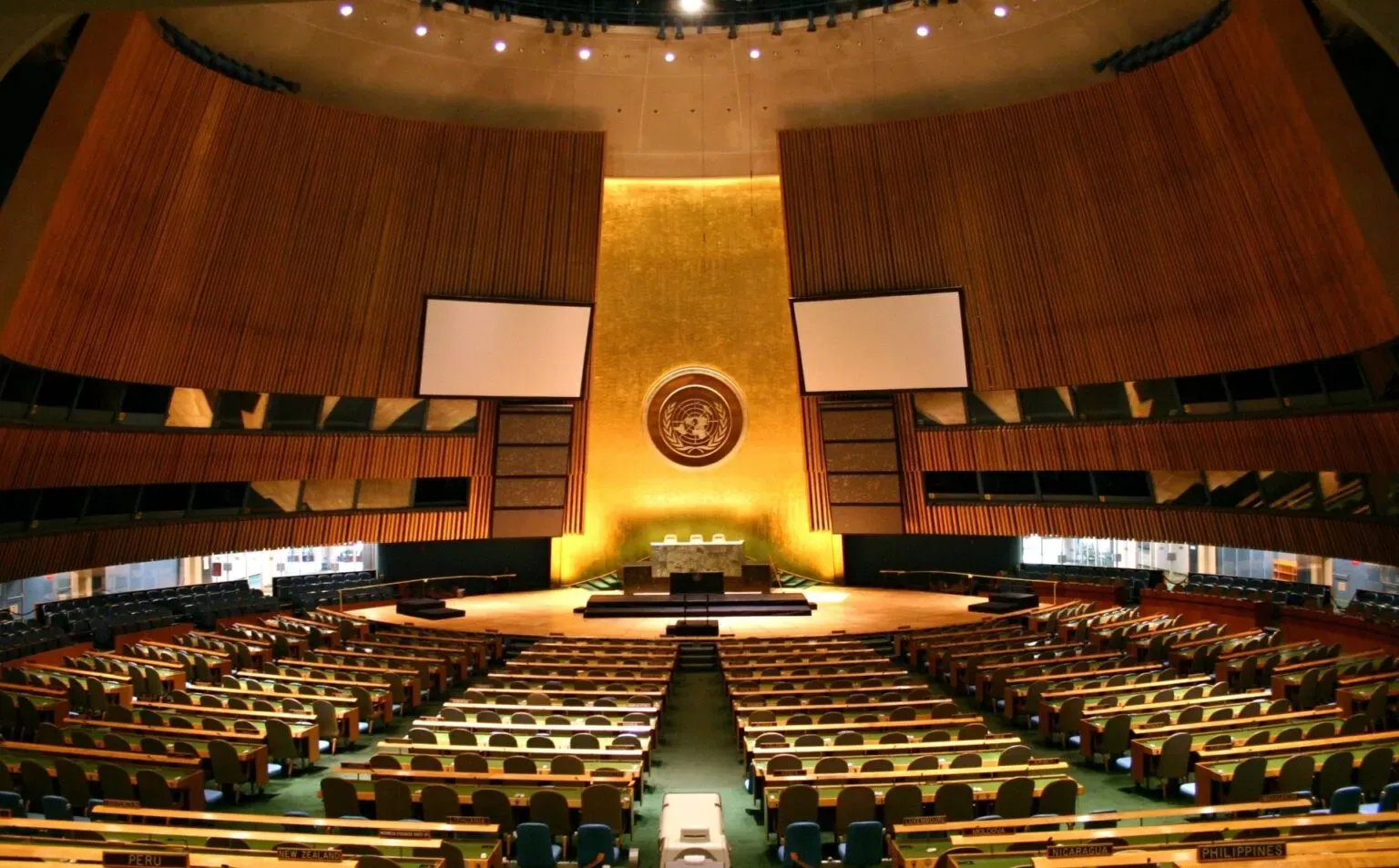
The question is no longer theoretical.
It is whether the framework designed to prevent nuclear proliferation can still function in a world where trust is eroding.
ONEST will be inside the rooms where these discussions unfold.
Join ONEST+ for real-time Diplomatic Notes and deeper analysis — and to support independent, fact-based reporting.