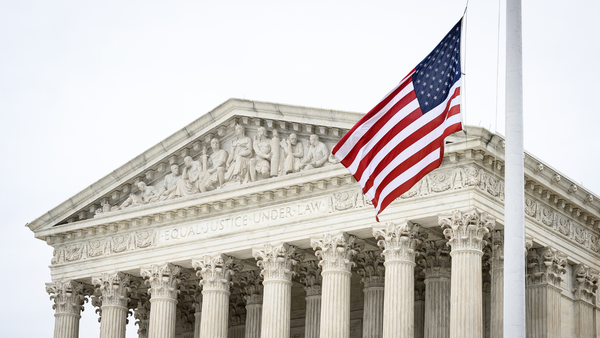
The Supreme Court appeared ready Wednesday to side with the Trump administration in a major immigration case that could reshape the future of Temporary Protected Status, the humanitarian program that allows people from countries affected by war, natural disaster or extraordinary instability to live and work temporarily in the United States.
The case before the Court centers on the administration’s effort to end TPS protections for Haitian and Syrian nationals. But the implications could reach far beyond those two communities.
More than 350,000 Haitians and roughly 6,000 Syrians are directly affected by the case, while the broader TPS program currently covers more than 1 million people from multiple countries. A ruling for the administration could make it significantly harder for TPS holders to challenge future termination decisions in federal court.
At the heart of the case is not only whether the Trump administration was right to end TPS for Haiti and Syria, but whether federal courts have the authority to review how the administration reached that decision.
Several conservative justices focused on a provision in the TPS statute stating that certain determinations by the Homeland Security secretary are not subject to judicial review. That line of questioning suggested that the Court’s conservative majority may accept the administration’s argument that TPS decisions belong largely — or entirely — to the executive branch.
If the Court adopts that view, the decision could sharply limit the ability of TPS holders to challenge future terminations, even when they argue the government failed to follow required procedures or ignored conditions on the ground.
The liberal justices focused on two major concerns: whether the administration properly consulted with the State Department before ending protections, and whether discriminatory intent played a role in the decision involving Haiti.
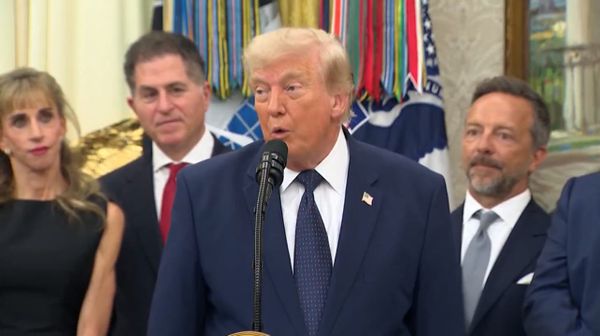
Justice Sonia Sotomayor and Justice Ketanji Brown Jackson pressed the administration over past statements by President Trump about Haiti and Haitian immigrants, questioning whether those remarks could be separated from the policy decision. The administration argued that those comments were not tied directly to race and were "too remote or context-specific" to determine the legality of the TPS termination.
Justice Elena Kagan focused on the procedural question of consultation. Under federal law, DHS must consult with appropriate agencies before making TPS decisions. Lawyers for TPS recipients argued that the consultation process was inadequate. The administration argued that simply seeking input was enough, even if the response from another agency did not meaningfully assess country conditions.
That exchange underscored the larger issue before the Court: whether TPS termination decisions must follow a reviewable legal process, or whether the Homeland Security secretary has broad discretion that courts cannot second-guess.
Justice Brett Kavanaugh, meanwhile, focused on Syria, noting that the Assad regime has fallen and pressing attorneys for Syrian TPS holders on whether that represented a major change in country conditions. Lawyers for the TPS holders argued that the issue was not whether Syria had changed in some respects, but whether DHS conducted the legally required review before ending protection.
The Court is expected to issue a decision by the end of June.
Why It Matters
Temporary Protected Status was created to protect people already in the United States from being returned to countries facing armed conflict, natural disasters or other extraordinary conditions. It does not provide a path to citizenship, but it does allow eligible recipients to live and work legally while the designation remains in effect.
The Trump administration has moved aggressively to narrow or end TPS designations, arguing that the program was intended to be temporary and that prior administrations allowed it to expand beyond its original purpose. Immigrant advocates argue that many countries remain unsafe and that ending protections without meaningful review could expose hundreds of thousands of people to deportation, job loss and family separation.
A broad ruling for the administration could affect ongoing and future TPS litigation involving other countries, not only Haiti and Syria. That is why the case is being watched closely by immigrant communities from Venezuela, El Salvador, Sudan, Ukraine and other countries with current or recent TPS designations.
Would This Affect Ukrainians on TPS?
Not immediately.
Ukraine is not directly part of this Supreme Court case. The current case concerns the administration’s attempted termination of TPS for Haiti and Syria.
But the ruling could still matter for Ukrainians because of the legal principle at stake. If the Supreme Court rules that courts generally cannot review TPS termination decisions, that precedent could make it much harder for Ukrainians or advocacy groups to challenge a future DHS decision ending or declining to extend Ukraine TPS.
For now, Ukraine TPS remains active through October 19, 2026, according to USCIS and the Federal Register. The extension applies to eligible existing beneficiaries who re-registered and continue to meet the requirements.
It is also important to separate TPS from humanitarian parole. Many Ukrainians entered the United States through parole programs created after Russia’s full-scale invasion. Those parole programs are legally distinct from TPS and have faced their own uncertainty under the Trump administration. Reuters reported that nearly 200,000 Ukrainians in the U.S. were thrown into legal limbo by delays and policy changes affecting humanitarian parole, separate from TPS protections.
So the clearest formulation is:
This Supreme Court case does not directly terminate Ukraine TPS. But if the Court sides broadly with the Trump administration, it could weaken future legal challenges by Ukrainians and other TPS holders if DHS later moves to end or not extend their protections.
Bottom Line
The Supreme Court appears poised to give the executive branch greater control over Temporary Protected Status decisions.
For Haitians and Syrians, the consequences could be immediate and severe. For other TPS holders — including Ukrainians — the danger is more structural: a ruling that limits judicial review could make future protections more dependent on the administration in power, and less subject to court oversight.