APRIL 29: The Cost of War, Escalation Pressures, Shifting Power Structures

KEY DEVELOPMENTS
- The Pentagon publicly estimates the cost of the Iran war at $25 billion, revealing the scale of U.S. engagement.
- Global economic disruption from the war intensifies, with cascading effects across energy, manufacturing, and supply chains.
- The United States signals a potential troop reduction in Germany amid rising tensions with Berlin.
- Iran faces mounting pressure: new sanctions, human rights warnings, and continued control over key maritime routes.
- The UAE exits OPEC, signaling a structural shift in global energy coordination.
- The U.S. Supreme Court decision on Louisiana redistricting opens the door to broader electoral changes nationwide.
- Canada launches a major workforce initiative to scale skilled trades and national infrastructure capacity.
- Ukraine expands long-range military capabilities and sanctions targeting Russia’s shadow economy.
NUMBERS TO WATCH
$4.23/gallon — Average U.S. gas price, highest since August 2022
35 — New sanctions targets tied to Iran’s war effort
1.24 million — People facing acute food insecurity in Lebanon
1.2 million — Displaced in Lebanon due to conflict
76% — Farmers displaced in southern Lebanon
$6 billion — Canada’s new skilled trades initiative
80,000–100,000 — Workers targeted under Canada’s workforce expansion
$145 million — Canadian funding for FIFA World Cup security
1,036 — Ukrainians returned from captivity this year
THE COST OF WAR
For the first time, the U.S. Department of Defense has publicly quantified the cost of the Iran war: $25 billion.
The figure emerged during a tense congressional hearing, where lawmakers pressed Defense Secretary Pete Hegseth on the scope and consequences of U.S. involvement.
Beyond the financial cost, the broader impact is unfolding across multiple dimensions.
The war has contributed to:
- Leadership shifts within Iran, including the rise of a younger supreme leader
- Consolidation of Iranian domestic unity against external pressure
- Fragmentation within OPEC
- Increased exposure of U.S. military bases to attacks
- Loss of U.S. military personnel and depletion of strategic stockpiles
- Disruptions to global shipping through the Strait of Hormuz
- Rising fuel prices and constrained supply
The economic ripple effects are global.
Textile production has stalled in India. Flights have been grounded in Poland. Vietnam has introduced energy rationing measures. While the United States has not yet absorbed the full economic shock, global indicators suggest that downstream effects are building.
U.S. – GERMANY
The United States is actively reviewing a potential reduction of its military presence in Germany.
President Donald Trump confirmed the review publicly, stating that a decision would be made “over the next short period of time.”
The announcement follows a sharp escalation in rhetoric between Washington and Berlin.
A day earlier, Trump criticized German Chancellor Friedrich Merz, accusing him of tolerating the possibility of Iran obtaining nuclear weapons and linking Germany’s economic performance to its geopolitical stance.
The development signals potential strain within transatlantic defense arrangements at a time of heightened global instability.
GULF
Leaders of the Gulf Co-operation Council convened in Jeddah for a consultative summit focused on the regional impact of the Iran war.
Key outcomes included:
- Calls to accelerate the development of a joint missile warning system
- Urgency around expanding oil, gas, and water infrastructure projects
The meeting reflects growing concern among Gulf states about regional security and economic resilience.
France is also stepping in diplomatically. Foreign Minister Jean-Noël Barrot is set to begin a three-day regional tour to strengthen defense partnerships and address conflicts in Iran and Lebanon.
IRAN
Pressure on Iran is intensifying across multiple fronts.
The United Nations’ top human rights official warned that civil liberties are being eroded in “harsh and brutal ways,” citing increased executions, arrests, and repression of dissent.
At the same time, Iran has defended its actions in the Strait of Hormuz, asserting its right to take “necessary and proportionate measures” while blaming the United States for ongoing shipping disruptions.
Despite tensions, limited movement through the strait is resuming:
- A Russian-owned superyacht successfully transited after maintenance in Dubai
- A UAE-linked liquefied natural gas tanker became the first fully loaded vessel of its kind to cross since the war began
The United States is simultaneously escalating economic pressure.
The Treasury Department has imposed sanctions on 35 individuals and entities tied to Iran’s war effort and warned that financial institutions working with Chinese refineries processing Iranian oil could also face penalties.
LEBANON
The situation in Lebanon is deteriorating rapidly.
Israel has issued forced displacement orders for residents across more than a dozen southern towns, warning of imminent military operations.
Humanitarian indicators are worsening:
- 1.24 million people face acute food insecurity through August
- Over 1.2 million people have been displaced
- 76% of farmers in southern Lebanon have been forced from their land
- 22% of agricultural land has been damaged
Officials warn that without sustained international support, conditions will continue to decline, with rising food costs and disrupted livelihoods placing additional strain on already vulnerable populations.
ISRAEL
Developments across Israel and the Palestinian territories reflect continued volatility.
Israeli forces have reportedly shifted the boundary of the “yellow line” in Gaza, encroaching on areas frequently used by civilians.
Political tensions remain high domestically, with Israel’s president attempting to broker a resolution in Prime Minister Benjamin Netanyahu’s ongoing corruption case.
Additional developments include:
- Israeli strikes in Gaza resulting in civilian casualties, including a child
- Ukraine accusing Israel of permitting the import of grain allegedly taken from occupied territories
- The Palestinian Football Association appealing to the Court of Arbitration for Sport over FIFA’s stance on settlement-based clubs
LIBYA
Libya’s National Oil Corporation has signed a memorandum of understanding with Chevron to assess shale oil and gas reserves.
The agreement signals renewed interest in Libya’s energy sector and potential expansion of U.S. involvement in its resource development.
UAE
The United Arab Emirates has announced its withdrawal from OPEC.
The move could significantly weaken the organization’s ability to coordinate global oil supply, marking a major shift in the energy landscape.
ONEST Explained: UAE Leaves OPEC: What It Means for Power, Oil, and the Strait of Hormuz
AFGHANISTAN
Tensions are rising along the Afghanistan–Pakistan border.
Afghanistan’s Taliban government accused Pakistan of carrying out airstrikes in Kunar province, injuring dozens. Pakistan denied the claims, calling them false.
Reports indicate that cross-border fire has continued despite a ceasefire mediated by China.
UNITED STATES
Domestic developments reflect a combination of policy shifts, legal battles, and economic pressure.
- Gas prices have risen to $4.23 per gallon, the highest since August 2022, driven by supply disruptions and rising oil futures
- The Federal Reserve held interest rates steady in what officials described as one of the most divided decisions in decades
- Fed Chair Jerome Powell confirmed he will remain at the Federal Reserve after his term ends, citing legal pressures on the institution
- The Supreme Court struck down Louisiana’s second majority-Black congressional district, a decision that could reshape electoral maps nationwide
- A federal grand jury charged former FBI Director James Comey with "making a threat against the president"
- The government has initiated a review of broadcast licenses tied to ABC, citing "concerns related to DEI policies"
Additional developments:
- The Pentagon is expanding AI partnerships, including agreements with Google, OpenAI, and Elon Musk’s xAI
- A tornado in Texas caused injuries and significant damage as severe weather continues across the Midwest and South
- The Space Force is proposing to cancel a $3.4 billion missile warning program for the polar region
In international legal developments, U.S. prosecutors have indicted the governor of Mexico’s Sinaloa state on allegations of cartel collaboration.
CANADA
Canada is advancing large-scale domestic initiatives focused on workforce development and national capacity.
Team Canada Strong
Prime Minister Mark Carney announced a $6 billion nationwide program aimed at expanding the skilled trades workforce.
The initiative targets the recruitment, training, and hiring of 80,000 to 100,000 workers over the next five years.
Key components include:
- Financial support for apprenticeships and job placements
- Modernization of certification systems, including digital credentials
- Direct financial incentives for training completion
- Expanded partnerships with unions, Indigenous communities, and the Canadian Armed Forces
The program is designed to accelerate infrastructure development across housing, energy, and defense sectors.
FIFA World Cup 2026
Canada is also preparing for the FIFA World Cup with an additional $145 million in federal funding for security operations in Toronto and Vancouver.
The tournament is expected to generate:
- Over 1 million visitors
- Approximately $2 billion in economic impact
Canada–Saudi Arabia
Prime Minister Carney also held discussions with Saudi Crown Prince Mohammed bin Salman, focusing on Middle East developments and expanding bilateral cooperation across energy, defense, and trade.
UKRAINE
Ukraine is expanding both its military reach and economic pressure strategies.
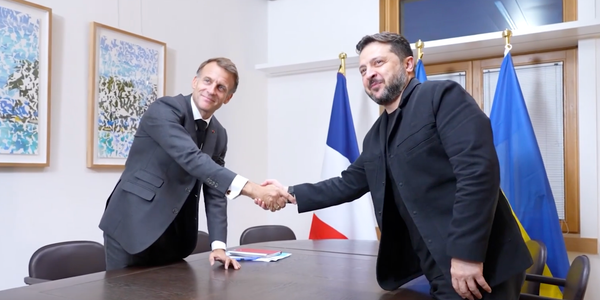
President Volodymyr Zelenskyy confirmed that Ukrainian long-range strike capabilities now extend beyond 1,500 kilometers, targeting Russian military logistics, production, and energy infrastructure.
Additional developments include:
- Approval of new military operations aimed at forcing Russia toward diplomatic engagement
- Continued prisoner exchanges, with 1,036 Ukrainians returned this year
- A new sanctions package targeting individuals involved in the abduction of Ukrainian children
- Sanctions on 23 vessels linked to Russia’s shadow oil fleet
Ukraine has also launched new categories within the International Register of Damage, allowing businesses and institutions to file claims related to destruction caused by the war.
The United States has committed $100 million to repair the Chernobyl containment structure damaged in a drone attack.
RUSSIA
Domestic pressure within Russia appears to be rising.
Government restrictions on popular messaging platforms have triggered growing public dissatisfaction. Polling indicates President Vladimir Putin’s approval rating has declined for seven consecutive weeks.
Authorities are promoting a state-developed messaging application as an alternative.
EUROPE
A multinational prisoner swap has resulted in the release of detainees across several countries, including Poland and Moldova.
At the EU level:
- Leadership changes are underway in the European Commission’s trade department
- Hungary is being referred to the EU’s top court over tax policy violations
- Discussions continue on unlocking frozen EU funds tied to rule-of-law concerns
ARMENIA – TÜRKIYE
Armenia and Türkiye are continuing normalization efforts, including discussions on restoring a long-defunct railway link.
The talks represent a continuation of broader regional stabilization efforts following the 2023 resolution of territorial disputes involving Azerbaijan.
TÜRKIYE
Internal tensions remain, as Türkiye’s pro-Kurdish DEM Party issued strong criticism of the government’s handling of peace negotiations with Kurdish groups.
CHINA – LATIN AMERICA
China continues expanding its economic footprint in Latin America.
A $1.7 billion agreement has been signed to develop a gold mine in Ecuador, reinforcing China’s dominance in the country’s mining sector despite U.S. pressure on regional governments to reduce reliance on Chinese investment.
AUSTRALIA
The World Health Organization has officially validated Australia’s elimination of trachoma as a public health issue.
The disease, once a leading cause of preventable blindness, has been eradicated through decades of targeted public health interventions, particularly in Indigenous communities.
This marks the first time Australia has eliminated a neglected tropical disease.
SRI LANKA
Twenty-two Buddhist monks appeared in court accused of smuggling cannabis products from Thailand, highlighting an unusual intersection of religious institutions and cross-border criminal activity.
HUMANITY
A century-old story — and a new chapter quietly delivered.
To mark the 100th anniversary of Winnie-the-Pooh, Queen Camilla has gifted the New York Public Library a newly crafted Roo.
Created by Merrythought, the piece made its journey from Buckingham Palace to New York aboard the royal flight.
A small gesture — but one that connects literature, history, and place, returning a beloved character to the city where the original stories have long been preserved.
ONEST+
ONEST is built on independent, reader-supported reporting — free from advertising pressure and algorithm-driven priorities.
For those who want to go beyond the headlines, ONEST+ offers:
- Deep Dives
- Diplomatic Notes
- Early access to interviews and reporting
Your support sustains this work.
Written by
Comments