The executive order creates a branded portal for private-sector IRAs, not a new public retirement program.
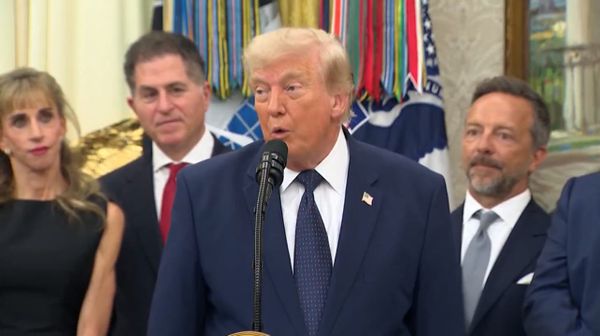
President Donald Trump signed an executive order on April 30 establishing TrumpIRA.gov, a federally administered website intended to help workers without employer-sponsored retirement plans find low-cost individual retirement accounts.
The White House framed the move as an effort to expand retirement-savings access for “often-left-out American workers,” including small-business employees, part-time workers, independent contractors, and the self-employed.
But the order is not creating a new federal retirement program.
Instead, it directs the Treasury Department to build a website that will list qualifying private-sector IRAs and provide information about the Federal Saver’s Match — a retirement-savings benefit that was already enacted by Congress in the bipartisan SECURE 2.0 Act in 2022.
That distinction matters.
The executive order may make it easier for eligible workers to find low-cost retirement accounts and understand how to access the federal match. But politically, it also allows Trump to attach his name to a benefit that was already scheduled to begin implementation in 2027.
What the Order Actually Does
The order directs the Treasury Secretary to establish TrumpIRA.gov by January 1, 2027.
The website is supposed to focus on workers who do not have access to employer-sponsored retirement plans. It will provide information about “high-quality, low-cost IRAs” offered by private financial institutions.
Under the order, listed institutions must offer IRAs that accept the Federal Saver’s Match and meet certain criteria. Those include low administrative costs, no minimum contribution or balance requirements, and access to diversified investment options such as target-date funds, balanced funds, or principal-protection options.
The order caps overall net-expense ratios at 0.15 percent, including operating costs, management fees, and administrative expenses.
In plain English: the administration wants to create a government-run comparison platform for private retirement accounts that meet federal standards.
It is access infrastructure — not a government-run retirement plan.
The Federal Match Was Already Created
The most important feature highlighted by the order is the possibility that qualifying workers could receive a federal match of up to $1,000 for their retirement contributions.
But that benefit does not originate in this executive order.
It comes from the SECURE 2.0 Act, passed in 2022, which created the Federal Saver’s Match under the tax code. The order itself cites that law repeatedly. SECURE 2.0 was passed by Congress in 2022 and signed into law by President Joe Biden.
That means the administration is not inventing the match. It is directing Treasury to promote it, facilitate access to it, and ensure qualifying IRAs can receive it.
That is still meaningful. Many workers who qualify for benefits never claim them because they do not know they exist, do not understand eligibility rules, or do not have easy access to compliant accounts.
But the political framing is much bigger than the administrative reality.
Trump is taking a benefit already created by Congress and branding the access point around himself.
The Branding Is the Point
The name TrumpIRA.gov is not incidental.
This is a classic political ownership move: take a scheduled benefit, build a public-facing portal around it, and give it a name that makes the program feel personally associated with the president.
That does not mean the website would be useless. It could help workers compare low-cost options and avoid high-fee products. It could also increase awareness of a federal match many people might otherwise miss.
But the branding turns implementation into authorship.
For workers who do not follow legislative history, the message is simple: Trump is giving them retirement access.
That is the political value.
Retirement security is a powerful issue because it reaches across ideology. Gig workers, freelancers, part-time workers, small-business employees, caregivers, and self-employed people often lack stable access to employer-sponsored plans. They may not have a 401(k), an HR department, or automatic payroll deductions.
A simple, portable, low-cost option is an appealing promise.
The question is whether this order delivers that promise — or mainly repackages a benefit already on the books.
A Private-Finance Funnel
The order repeatedly emphasizes that the IRAs listed on TrumpIRA.gov will be offered by private-sector financial institutions.
That is important.
This is not a public retirement account comparable to the federal Thrift Savings Plan, which serves federal employees. The order invokes the TSP as a model of low-cost access, but it does not create a government-run version for everyone else.
Instead, it channels workers toward private IRA providers that meet Treasury’s criteria.
There are consumer-friendly guardrails in the order: low fees, transparency, fiduciary responsibility, no minimum balances, and protections against prohibited transactions. Those details matter, especially in a market where fees can quietly erode long-term savings.
But structurally, this is still a federally promoted marketplace for private financial firms.
That creates a real policy tension. The government is using its credibility to steer workers toward retirement products, while private institutions remain the providers.
The best version of this system could help workers find simple, low-fee options. The worst version could become another branded portal that drives public trust into private-sector accounts without solving the deeper retirement crisis.
The Bigger Problem: Access Is Not the Same as Affordability
The central weakness of the order is that it treats retirement insecurity primarily as an access problem.
For some workers, that is true. They may have money to save but no easy retirement vehicle. They may be self-employed, working part-time, or employed by a small business that does not offer a plan.
For those workers, a low-cost IRA with a federal match could help.
But for many Americans, the barrier is not simply the absence of an account.
It is the absence of disposable income.
Workers cannot save money they do not have. Rent, groceries, health care, child care, debt, and irregular income all limit the ability to contribute to retirement accounts. A federal match is useful only if a worker can first afford to make a contribution.
That is the limitation at the heart of the policy.
The order may improve access to retirement-savings tools. But it does not address wages, housing costs, medical debt, job instability, or the broader economic pressures that prevent many workers from saving in the first place.
A website can reduce friction. It cannot manufacture financial security.
The Legal Fine Print Is Also Important
The order contains several limiting clauses.
It says implementation must be consistent with applicable law. It is subject to the availability of appropriations. And it explicitly states that the order does not create any enforceable right or benefit.
That language is standard in many executive orders, but it matters here because the public rhetoric is much stronger than the legal guarantee.
The order tells workers the administration intends to expand access and facilitate participation. But the actual legal power remains bounded by existing statutes, agency authority, future regulations, and available funding.
In other words, the executive order can organize, promote, and guide. It cannot by itself create the full retirement-security system the branding implies.
Why This Matters Politically
The order gives Trump a worker-facing economic message at a time when retirement insecurity remains a major concern.
It allows him to speak directly to people who often feel excluded from traditional benefits systems: independent contractors, gig workers, part-time employees, and small-business workers.
It also lets the administration claim a pro-worker policy while staying aligned with private financial markets.
That combination is politically useful.
The proposal sounds populist: workers deserve the kind of low-cost retirement access federal employees enjoy.
But the mechanism is market-based: private institutions provide the accounts, and the government promotes qualifying options.
That is the real architecture of the order.
It is not a new public benefit in the way the name may suggest. It is a government-branded gateway into private retirement products, built around a federal match created by earlier legislation.
What Comes Next
The order also directs Treasury, in consultation with the White House economic team, to prepare legislative recommendations to codify and potentially expand the policy.
That means this may be the opening move.
The administration could use TrumpIRA.gov as the public-facing platform, then ask Congress to broaden eligibility, increase matching contributions, or create additional incentives for workers without employer plans.
If that happens, Trump will have already claimed the political brand.
The question for Congress will be whether the expansion meaningfully improves retirement security — or simply sends more workers into private accounts while leaving the underlying affordability crisis untouched.
The Bottom Line
This is not nothing.
A well-designed portal could help workers find low-cost IRAs, avoid excessive fees, and access a federal match that many eligible people might otherwise miss.
But it is also not what the branding suggests.
The order does not create the Federal Saver’s Match. It does not establish a new public retirement plan. It does not guarantee that workers struggling with basic expenses will suddenly be able to save.
What it does is attach Trump’s name to a retirement benefit already created by Congress, build a federal platform around private-sector IRAs, and position the administration as the champion of workers left out of employer-sponsored retirement plans.
The policy may help some workers.
The politics are much larger.
Trump is taking an already-enacted retirement benefit, branding the access point, and using executive power to turn implementation into ownership — while keeping the retirement system firmly inside private-sector finance.