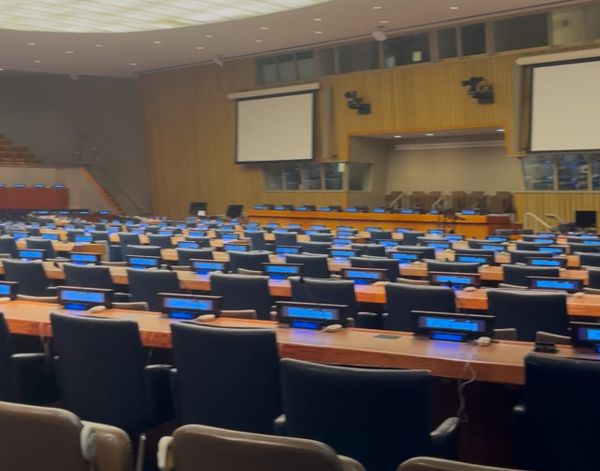
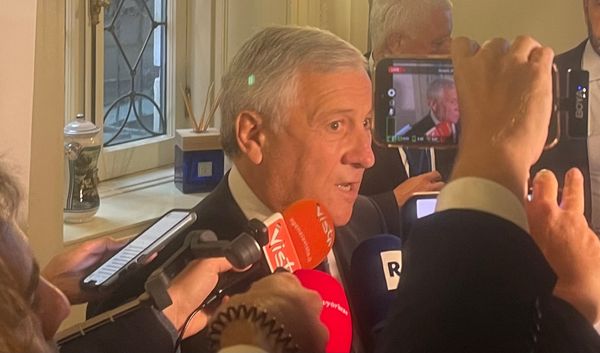
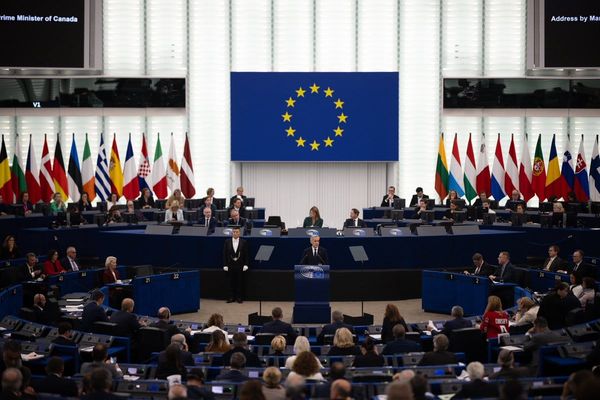
Reporting from the United Nations, New York — NPT Review Conference, 2026
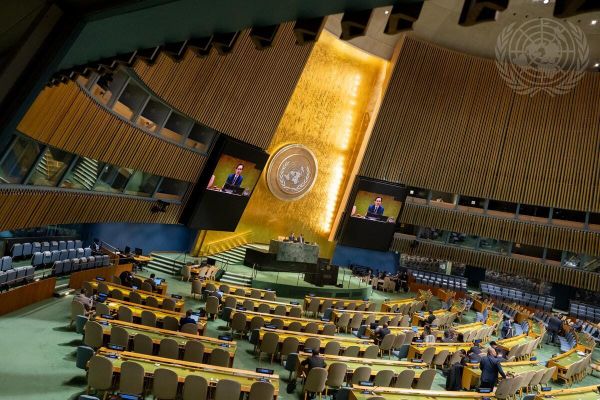
At the United Nations this month, as diplomats, lawmakers, and civil society representatives gather for the 2026 Review Conference of the Nuclear Non-Proliferation Treaty, a quiet but consequential shift is taking place.
For decades, global security has been built on a single, uncomfortable premise:
that peace is maintained not by cooperation, but by the threat of catastrophic destruction.
Nuclear deterrence — the idea that possessing nuclear weapons prevents war — has shaped military doctrines, alliances, and geopolitical strategy since the Cold War.
But inside the UN, that assumption is now being directly challenged.
A coalition of over 170 civil society organizations from 37 countries has put forward a different vision — one that asks a fundamental question:
What if security did not depend on nuclear weapons at all?
Moving Beyond Deterrence
Today, nine countries possess nuclear weapons. Dozens more depend on them indirectly through military alliances. Together, these states represent a majority of the global population — and a system that continues to rely on the logic of deterrence.
The argument is familiar: nuclear weapons prevent conflict because the cost of escalation is unthinkable.
But critics increasingly argue that this logic is not stabilizing — it is precarious.
They point to a world where risks are no longer limited to deliberate war, but include miscalculation, technical error, escalation spirals, and the growing complexity of geopolitical tensions. In that environment, the margin for error is shrinking.
Instead of managing these risks through deterrence, advocates are proposing a different framework: common security.
What Common Security Actually Means
Common security does not imply the absence of defense. It proposes replacing nuclear-based security with systems grounded in law, cooperation, and shared accountability.
At the UN, proponents argue that many of the tools already exist — but remain underutilized.
The UN General Assembly has demonstrated its capacity to respond to major violations of international law, including formally recognizing acts of aggression. The International Court of Justice has the authority to adjudicate disputes and clarify the legality of the use of force, including nuclear weapons. Regional organizations such as the Organization for Security and Co-operation in Europe provide additional frameworks for conflict prevention and dialogue.
The proposal is not to create an entirely new system, but to strengthen and rely on these mechanisms as credible alternatives to nuclear deterrence.
Advocates argue that, in an interconnected world, security cannot be sustained unilaterally. It must be shared — and enforced through institutions that apply equally to all.
The Trust Problem
Yet the debate quickly runs into a central obstacle: trust.
The credibility of any non-nuclear security system depends on whether states believe they will actually be protected.
Recent history has made that belief harder to sustain.
Countries that have relinquished nuclear capabilities have not always been rewarded with security. Libya dismantled its nuclear program, only to face years of instability and external intervention. Ukraine gave up the nuclear arsenal it inherited after the collapse of the Soviet Union in exchange for assurances of territorial integrity — assurances that did not prevent invasion.
These examples are not theoretical. They shape how governments calculate risk.
As parliamentarians addressing the NPT conference made clear, disarmament cannot advance without credible and enforceable security guarantees.
Without them, nuclear weapons remain, in the eyes of many states, the ultimate insurance policy.
Why Parliamentarians Matter
One of the most notable shifts at this year’s conference is the emphasis on political leadership — not just diplomacy.
At a UN side event focused on disarmament and international law, lawmakers from multiple countries underscored their role in shaping security policy. Parliamentarians are not observers in this process; they are responsible for approving military spending, ratifying treaties, and defining national security strategies.
Their involvement signals a recognition that nuclear policy is not only a strategic issue — it is a political one.
And increasingly, it is being debated not just behind closed doors, but in public forums where accountability matters.
What Was Said Inside the Room
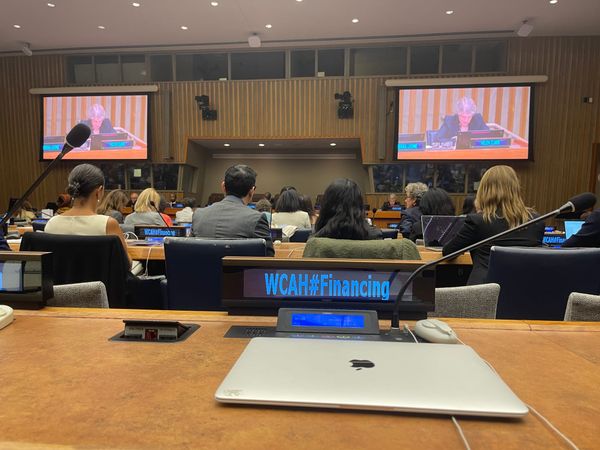
At a May 6 side event at the United Nations titled “A Nobel Effort: The Roles and Actions of Parliamentarians to Support Diplomacy, Disarmament and International Humanitarian Law,” the tone was notably realistic.
Panelists did not argue that current frameworks would eliminate nuclear weapons in the near term. Instead, they emphasized that today’s discussions are laying a foundation for future progress — built through sustained political engagement, international law, and institutional development.
Jonathan Granoff, President of the Global Security Institute, pointed to a fundamental disconnect between public sentiment and political decision-making. Drawing on his experience across dozens of countries, he noted that opposition to nuclear weapons is widespread — yet the authority to determine nuclear policy remains concentrated.
“There are nine men who hold the planet’s future in their hands,” he said, underscoring how decisions around nuclear deterrence continue to rest with a small number of leaders.
The discussion also highlighted that while progress can be slow, it is not absent.
Examples such as nuclear-weapon-free zones were raised as under-recognized successes. These regional frameworks demonstrate that collective security arrangements without nuclear weapons are possible, even if they remain limited in scope and visibility.
At the same time, their constraints are clear. In regions such as the Middle East, efforts to establish similar arrangements remain stalled, reflecting ongoing disagreements over participation and sequencing — including whether negotiations should proceed only with all key states involved, or begin incrementally.
Parliamentarians were positioned as playing a practical role in advancing this agenda. Initiatives that bring lawmakers from different countries together to collaborate on non-proliferation efforts were presented as one way to build political momentum beyond traditional diplomatic channels. One example of this is parliamentary diplomacy facilitated by the Inter-Parliamentary Union, which provided possibilities for parliamentarians from North and South Korea – who are prohibited from visiting each other’s countries – to meet in neutral territory to discuss a proposal for a North-East Asian nuclear-weapon-free zone.
Some of the most direct exchanges, however, pointed to the limits of the current system.
In response to a question about whether stronger legal frameworks could have prevented tensions such as those involving Iran and Israel, the answer was unambiguous: such conflicts often operate outside existing legal structures altogether.
That acknowledgment reinforces a central tension running through the NPT discussions:
While international law and institutions are essential to the idea of common security, they are not yet sufficient to constrain all forms of geopolitical conflict.
Participants at the event discussed concrete proposals for strengthening the institutions, including to a) provide capacity for the International Criminal Court to try national leaders for the crime of aggression (launching a war), b) increase the acceptance of compulsory jurisdiction of the International Court of Justice to help resolve international conflicts through law not war, and c) prevent the use of the veto power in the Security Council in cases of aggression and atrocity crimes, in accordance with the UN Charter.
A World on Edge
The urgency behind these discussions is difficult to ignore.
In January 2026, the Bulletin of the Atomic Scientists set the Doomsday Clock to 85 seconds to midnight — the closest it has ever been to a theoretical global catastrophe.
This reflects a convergence of risks: nuclear escalation, climate instability, biological threats, and emerging technologies such as artificial intelligence. In this context, nuclear weapons are no longer seen solely as deterrents, but as part of a broader system of global vulnerability.
At the same time, the scale of resources devoted to nuclear arsenals remains significant. Approximately $100 billion is spent annually on nuclear weapons — funding that advocates argue could instead support conflict prevention, climate action, and sustainable development.
A Broader Push for Disarmament
The call for common security is part of a wider movement gaining traction across international institutions and civil society.
Efforts are underway to establish new frameworks for disarmament, including regional initiatives such as proposals for a Weapons of Mass Destruction–Free Zone in the Middle East — an approach aimed at addressing security concerns collectively rather than through deterrence.
At the global level, campaigns tied to the International Day for the Total Elimination of Nuclear Weapons are pushing governments to commit to concrete timelines to achieve nuclear disarmament (no later than the 100th anniversary of the UN) and to redirect investments from nuclear weapons programs to instead support peace, climate protection and sustainable development.
These initiatives reflect a growing consensus among non-nuclear states and civil society actors: that the current system is not only unsustainable, but increasingly misaligned with the realities of modern security threats.
Is a Shift Actually Possible?
Despite this momentum, the gap between vision and reality remains significant.
Nuclear deterrence continues to underpin the security strategies of major powers. Strategic competition between states is intensifying, not diminishing. And in a world where trust is limited, the incentives to maintain nuclear capabilities remain strong.
Yet something is changing.
The conversation is no longer confined to whether nuclear weapons should be reduced. It is expanding to whether the entire framework that justifies them should be reconsidered.
That shift — from managing nuclear risk to questioning its foundation — is subtle, but consequential.
The Bottom Line
What is being debated at the UN is not just policy.
It is a competing vision of how the world defines security.
One model is built on deterrence — on the assumption that peace is preserved through the balance of fear.
The other is built on common security — on the idea that stability comes from cooperation, law, conflict resolution and shared responsibility.
The outcome of that debate is far from settled.
But for the first time in a long time, it is being asked openly:
Can global security exist without the threat of nuclear weapons — and if so, what would it take to get there?
Coming up:
ONEST+ Analysis: Why Nuclear Deterrence Is Being Challenged — And Why It Still Isn’t Going Away